


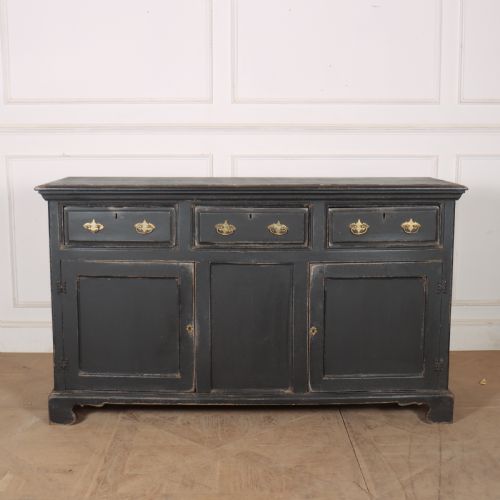


Painted Oak Dresser Base
These painted oak dresser base pieces offer sturdy storage and timeworn character, bringing practical history and enduring surface texture to any room.
Painted Oak Dresser Base
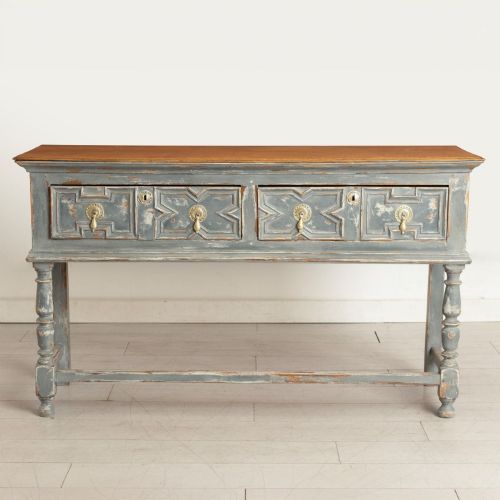
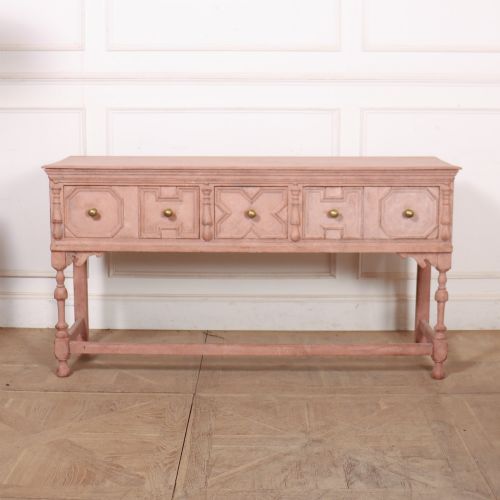
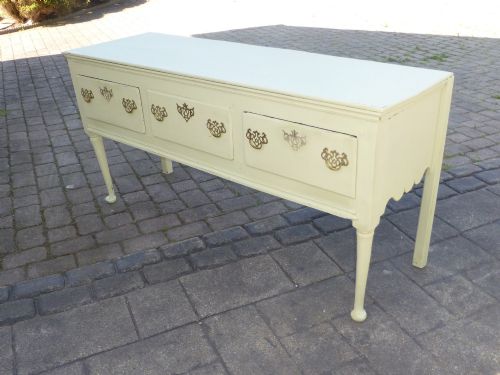
A painted oak dresser base provides a low, heavy sideboard or serving surface equipped with drawers and sometimes a lower shelf, originating mainly from English and French traditions. When exploring this selection, buyers encounter sturdy forms designed for domestic storage and food preparation across centuries.
The pieces appearing here span from the seventeenth century through the Georgian era up to nineteen hundred, with eighteenth-century examples forming a major part of the selection. Alongside authentic period pieces, buyers will also find later painted iterations that combine older timber with subsequent decorative finishes.
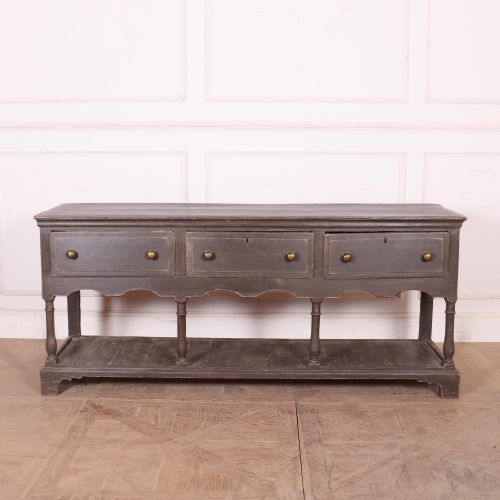
Formations vary from three-drawer layouts to potboard designs featuring an open lower tier for displaying crockery. English country styles and Jacobean revivals sit alongside continental French examples, each offering distinct proportions and timber characteristics.
Construction and materials
Construction relies primarily on solid oak frameworks, frequently combined with secondary timbers such as pine for internal framing or drawer linings. Woodworkers joined these heavy components using traditional mortise and tenon joinery to ensure long-term structural stability.
Surfaces bear historical paint layers or later decorative pigments applied over the bare timber, creating a matte, aged finish. Original brass hardware or period-appropriate metal pulls complete the construction, fastened securely to the drawer fronts.
Many a heavy oak potboard base has spent centuries quietly holding everything from earthenware crocks to sleepy cats.
Assessing quality and authenticity
Quality rests upon the integrity of the original timber frame and the historical honesty of the painted surface. Pieces retaining early or original paint finishes command greater interest from collectors than those with heavily stripped timber or unsympathetic modern overpainting.
Proportion and construction depth separate standard examples from finer specimens, particularly where drawers retain their original hand-cut dovetails and internal partitions. The balance between the heavy oak carcass and the patination of the painted finish determines the overall visual presence.
The Painted Oak Dresser Base Glossary
- Potboard
- An open lower shelf built into the base of a dresser, traditionally used for storing pots and heavy kitchenware. This lower tier sits just above the floor on extended stile feet.
- Dresser base
- The lower half of a traditional kitchen dresser, functioning as a standalone sideboard with a flat top and storage drawers. These items were built for daily utility in domestic kitchens and dining rooms.
- Jacobean Revival
- A nineteenth-century architectural and furniture style reviving the heavy, geometric ornamentation of the early seventeenth century. Pieces in this style often feature bold mouldings and dark, imposing oak structures.
- Patina
- The surface sheen and softening of colour developed through decades of handling, cleaning, and exposure to light. This gradual ageing process distinguishes ancient timber and paint from recent alterations.
- Dovetail
- A traditional joint formed by interlocking wedge-shaped fingers, securing drawer corners without relying on metal fasteners. Hand-cut variations indicate older cabinet-making methods.
Painted Oak Dresser Base: Frequently Asked Questions
What is a painted oak dresser base?
A painted oak dresser base is a heavy, low storage unit featuring a flat top surface above a configuration of drawers, often finished with paint. These items served as functional worktables and storage cabinets in traditional homes.
Today, they function as sideboards in dining rooms or living spaces, providing substantial surface area and enclosed storage for household items.
How do I date an old dresser base?
Dating relies on examining construction methods, timber characteristics, and hardware fixings. Hand-cut joints, drawer construction, and the nature of the wood grain help distinguish seventeenth and eighteenth-century examples from later revivals.
Paint analysis also provides clues, as original or early surface layers exhibit different cracking patterns and wear compared to modern decorative applications.
Can I use one in a modern kitchen?
These robust pieces integrate well into contemporary kitchens, offering durable workspace and practical drawer storage. Their solid timber construction handles daily use effectively.
When placed in modern settings, they introduce historical texture and contrast cleanly with minimalist cabinetry and contemporary finishes.
What does potboard mean?
A potboard is the low, open shelf situated near the floor between the legs of a traditional dresser base. It provided a stable platform for heavy ceramic pots and metal vessels.
In modern homes, this lower shelf offers an ideal space for stacking large books, baskets, or decorative ceramics.