
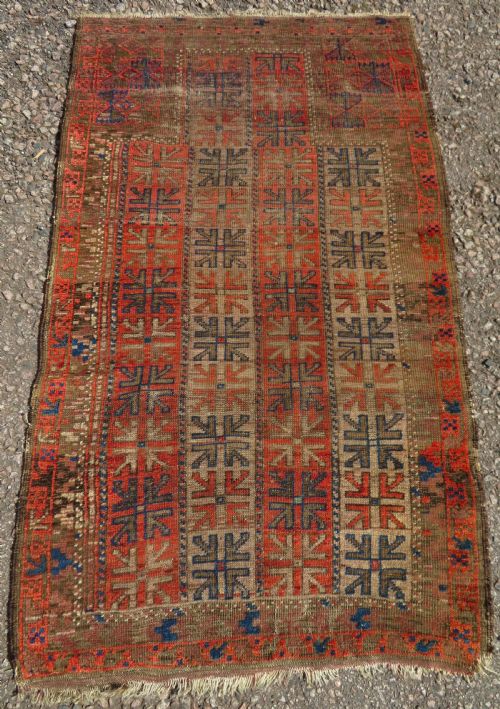
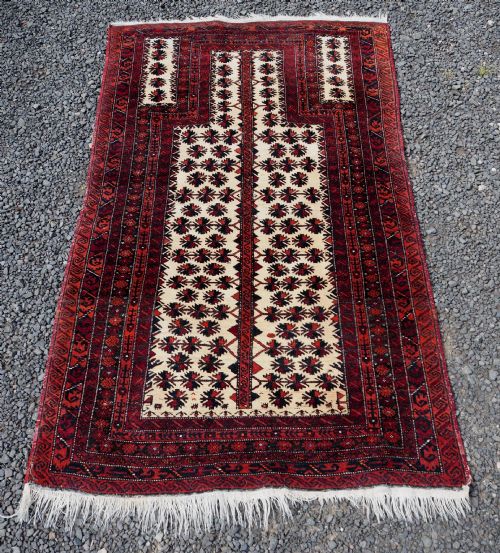
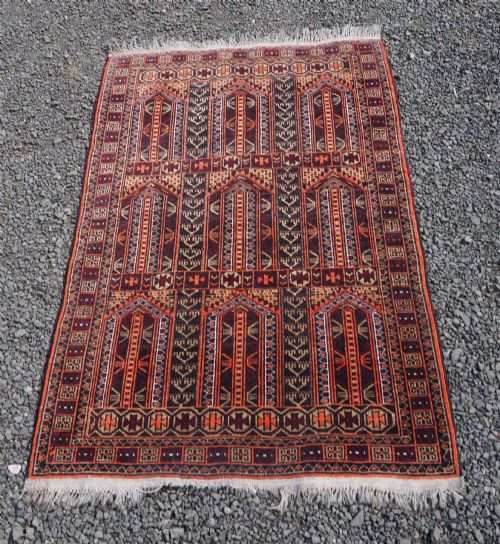
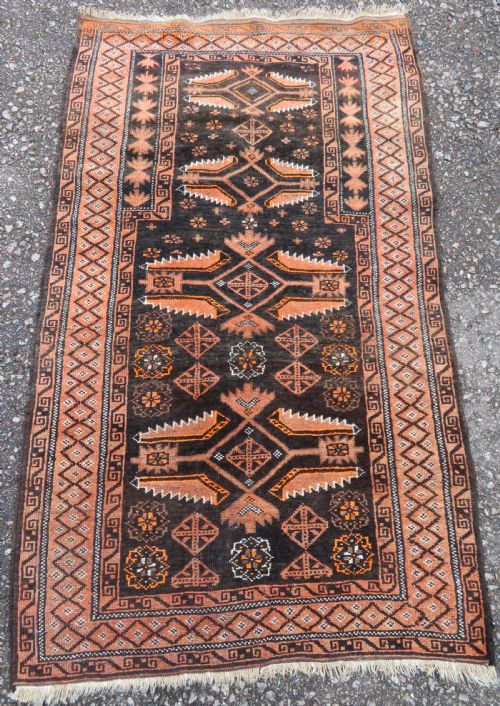


Vintage Oriental Prayer Mat
A vintage oriental prayer mat brings rich tribal heritage and intricate geometric or floral mihrab designs into a modern interior.
Vintage Oriental Prayer Mat
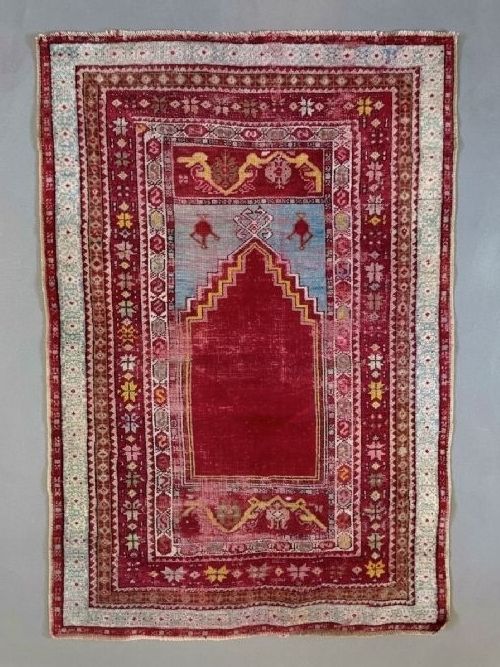
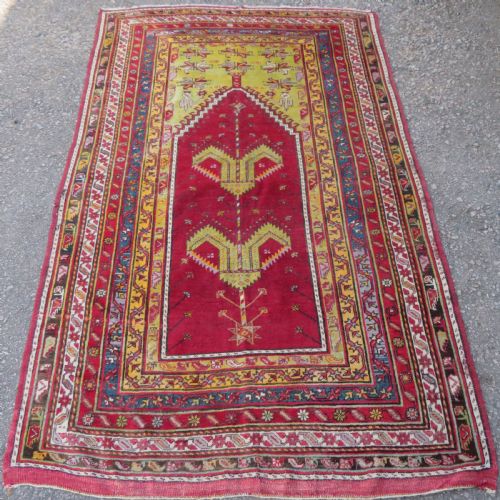
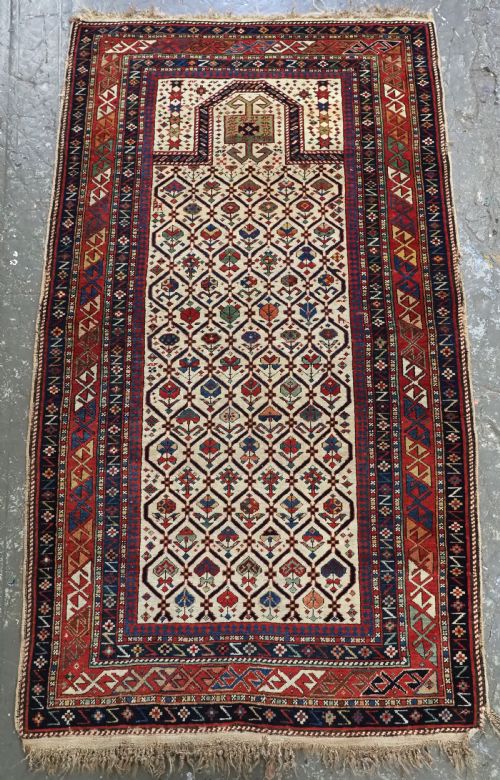
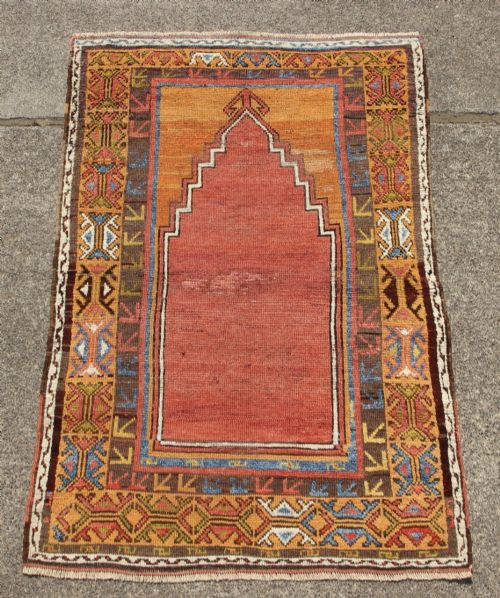
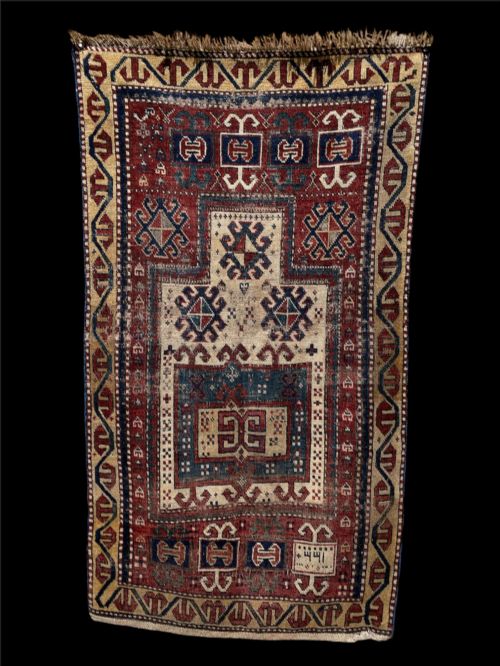
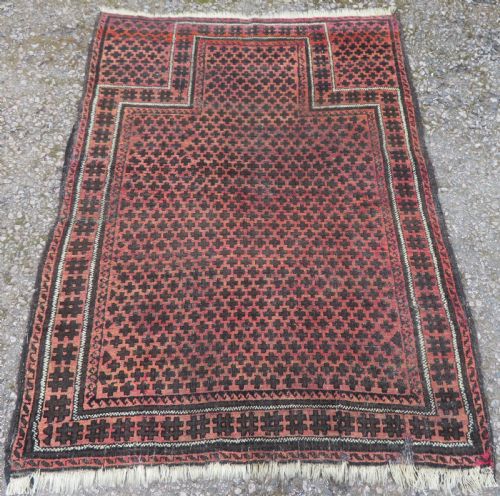
A vintage oriental prayer mat is a portable textile designed for personal devotion, defined by its characteristic architectural arch or mihrab motif indicating the direction of prayer. These woven works originate from diverse regional traditions across Anatolia, the Caucasus, Persia, and Afghanistan, spanning production periods from the nineteenth century into the early twentieth century.
The most common examples on this page are village and tribal floor coverings constructed by weavers working within established regional aesthetics, such as Baluch, Kazak, Konya, and Kirsehir styles. They arrive in various formats including area rugs and small formats utilising wool, cotton, and occasionally silk thread.
Makers ranged from nomadic family groups to settled village workshops, each imparting local symbolism and colour palettes onto the wool foundation. Buyers seek these textiles for their historical depth, tactile quality, and the rich narrative woven into every border and field.
How they were made
Construction relies primarily on hand-spun wool and cotton foundations, utilising sturdy knotting techniques that ensure durability across centuries of use. Natural dyes provide the enduring palette, yielding deep madder reds, rich indigos, and soft ivory grounds that age gracefully over time.
Certain pieces incorporate mixed materials such as camel wool or delicate silk thread for heightened detail, alongside long kilim ends left flat-woven for structural integrity. Each rug reflects the specific materials accessible to the weaver's region, from Caucasian mountain workshops to Anatolian looms.
Regional styles represented include Caucasian, Anatolian, Afghan Tribal, and Persian traditions across various village and nomadic formats.
What varies in quality
Quality in these textiles rests upon the precision of the knotting, the saturation and clarity of the natural dyes, and the crispness of the design execution within the mihrab field. Tightly packed foundations and balanced proportions separate utilitarian pieces from exceptional examples created by master village weavers.
The sophistication of the border patterns, the rarity of the ground colour - such as scarce blue or ivory fields - and the overall integrity of the pile contribute significantly to the standing of an individual rug.
Kizil Ayak Turkmen·Baluch tribal weavers·Kirsehir village workshops
The Vintage Oriental Prayer Mat Glossary
- Mihrab
- The arched niche depicted on a prayer rug, symbolising the direction of prayer and pointing towards Mecca. Its shape often helps identify the specific weaving origin.
- Natural Dyes
- Colourants derived from plants, insects, and minerals rather than synthetic compounds. They produce harmonious tones that mellow pleasingly with age.
- Kilim Ends
- The flat-woven portion at the ends of a pile rug, often featuring geometric bands that protect the structural foundation from fraying.
- Pile
- The upright loops or cut ends of yarn that form the soft surface of the rug. Its density and height vary depending on the tribal tradition.
- Madder
- A perennial plant used historically to produce deep, lasting red dyes for wool foundations. It remains a hallmark of traditional oriental weaving.
Vintage Oriental Prayer Mat: Frequently Asked Questions
How do I identify a prayer rug?
A prayer rug is easily identified by the distinct architectural arch, known as a mihrab, woven into one end of the field to direct the user during daily devotions. These designs often feature stylised floral lattice motifs or mosque lamps suspended within the arch.
Unlike standard area rugs intended for general floor coverage, the composition focuses attention toward this central niche. Regional variations in the arch shape point directly to specific weaving groups in Anatolia, the Caucasus, or Persia.
Where were these rugs made?
These textiles originate from traditional weaving centres across Anatolia, the Caucasus, Persia, and Afghanistan, created by village and nomadic communities. Specific regions like Konya, Ghiordes, and Dagestan developed distinct decorative vocabularies.
Nomadic groups such as the Baluch and Turkmen produced smaller formats using local materials like hand-spun wool and camel hair. Each geographical area imparted unique structural traits and colour palettes onto the loom.
How do I care for antique wool?
Antique wool textiles require gentle treatment, beginning with regular, light vacuuming using a suction-only attachment without a rotating brush bar. Keeping the rug out of direct sunlight prevents the natural dyes from fading prematurely.
Professional cleaning should be undertaken sparingly by specialists experienced in antique oriental carpets. Allowing the rug to breathe and occasionally rotating it ensures even wear across the surface.
Can I use these on the floor?
These historical textiles were constructed for daily use and withstand moderate foot traffic when placed over a quality, breathable underlay. The sturdy wool pile and cotton foundations provide durable service in low-traffic areas of the home.
Many collectors also choose to display them on walls as textile art to protect the pile from friction. Either method allows the intricate geometric patterns and rich natural dyes to be appreciated daily.