
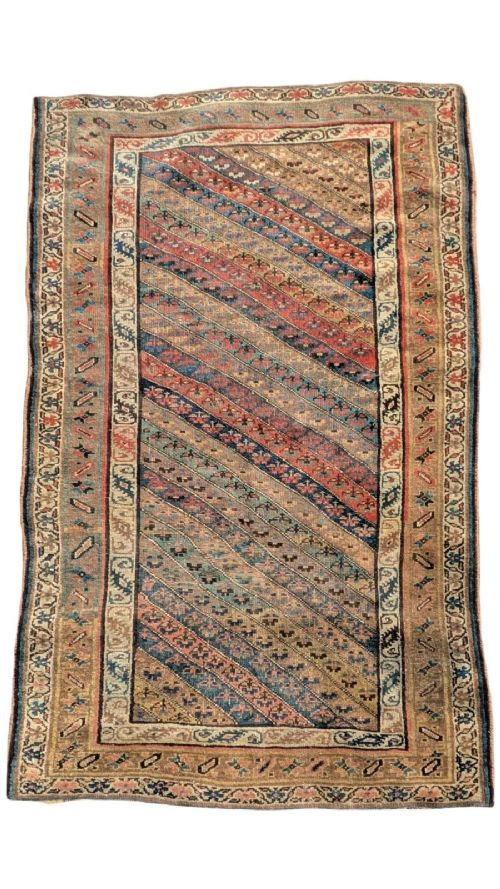
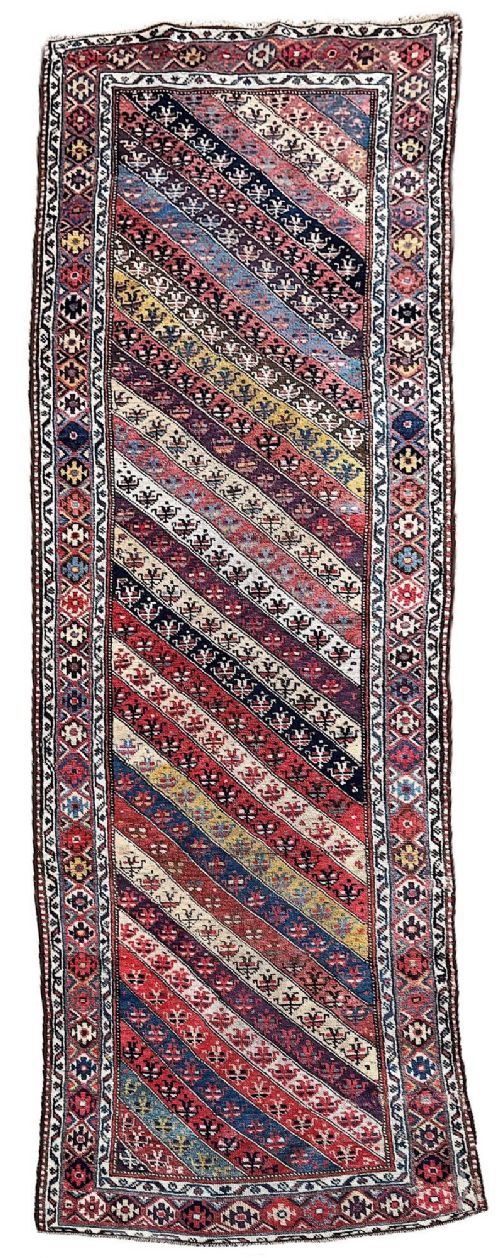


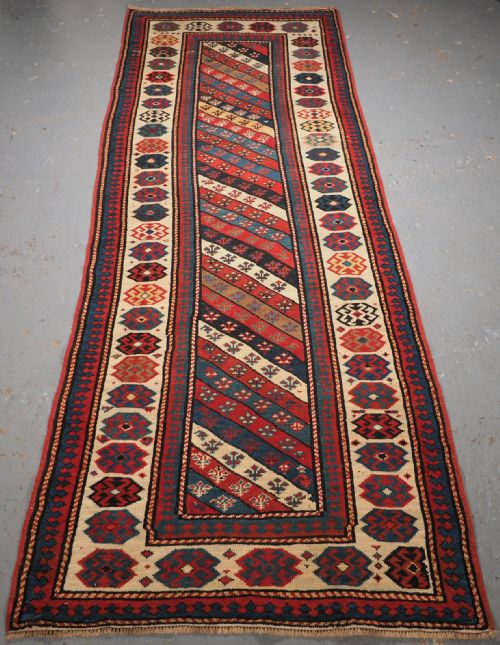
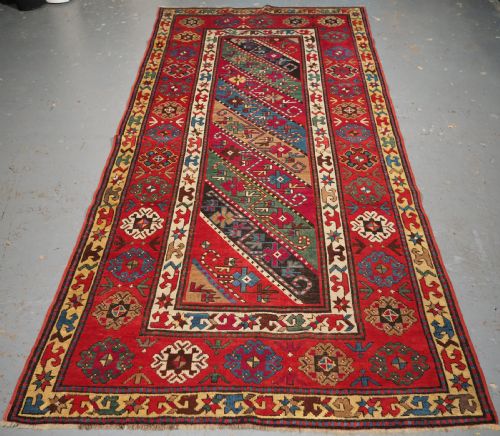

Striped Caucasian Tribal Rug
These striped caucasian tribal rug pieces bring bold linear patterns and rich natural dyes into your home.
Striped Caucasian Tribal Rug
A striped caucasian tribal rug brings together geometric patterns and distinct linear bands created by weavers across the Caucasus and surrounding regions. You are looking at floor coverings and flatweaves that often display diagonal stripes, boteh motifs, or banded fields.
The selections available here span from the mid-nineteenth century up to the early twentieth century, taking the form of runners, prayer rugs, saddle bags, and carpets. Most pieces originate from weaving centres such as Gendje, Karabagh, and Shirvan.
These textiles represent a tradition of village and nomadic production rather than urban workshop output. The designs rely on strong colour contrast and geometric repetition rather than floral curves.
How they were made
Makers constructed these textiles using hand-spun wool and occasional silk elements, foundation materials that provide durability and distinct tactile depth. Natural dyes supply the palette, yielding saturated tones that age with considerable character.
Weavers employed pile knotting and flatweave techniques, including kilim construction and jajim weaving methods. Panels from larger items such as mafrash storage pieces were sometimes repurposed into smaller textiles.
Listings feature pieces spanning from 1850 to 1910, utilising wool, silk, wood, and natural dyes.
What varies in quality
Quality rests in the precision of the weave and the clarity of the striped or geometric layout. Pieces with tightly packed knots and crisp colour transitions demonstrate superior structural integrity.
The brilliance and stability of the natural dyes influence the visual success of the piece. Well-preserved wool pile and intact original edges separate standard examples from finer survivals.
The Striped Caucasian Tribal Rug Glossary
- Boteh
- A traditional teardrop or almond-shaped motif with a curved upper end, frequently seen arranged in diagonal stripes across Caucasian weaving.
- Jajim
- A flatwoven textile constructed from narrow strips stitched together, often utilised for bedding covers or decorative domestic furnishings.
- Mafrash
- A storage bag or chest panel produced by nomadic and village weavers, typically featuring flatweave or piled techniques.
- Kilim
- A tapestry-woven flatweave textile made without a pile, resulting in a smooth surface with geometric patterns visible on both sides.
- Runner
- A long, narrow carpet format traditionally suited for corridors, hallways, or narrow spaces within a dwelling.
Striped Caucasian Tribal Rug: Frequently Asked Questions
How do I clean a tribal rug?
Professional specialist cleaning is essential for antique wool and natural dye textiles to prevent dye migration and fibre degradation. Regular gentle surface vacuuming without a rotating brush helps remove embedded dust.
Avoid harsh chemical detergents and excessive moisture, which can damage the foundation wool and alter historical colour compounds permanently.
How do I date an antique rug?
Dating relies on assessing material wear, the composition of natural dyestuffs, structural knotting density, and stylistic markers specific to nineteenth-century production. Comparisons with documented examples from similar weaving regions help establish a plausible decade.
Structural evidence such as wool preparation and selvedge construction further informs the approximate period of manufacture.
Can I use runners on stairs?
Runners can be placed in high-traffic areas if supported by a quality underlay to absorb impact and prevent slipping. Antique textiles require careful placement to minimise friction and uneven wear on historical pile.
Assessing the structural soundness of the foundation wool is necessary before subjecting any fragile antique runner to daily foot traffic.