
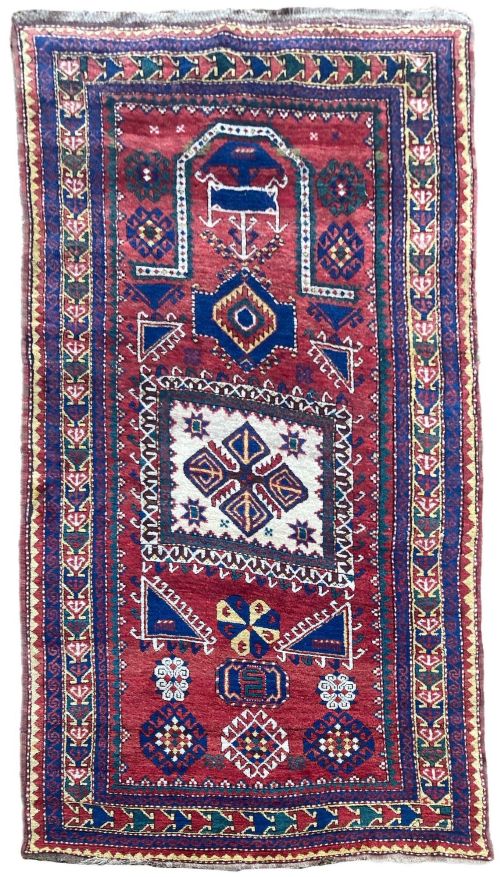
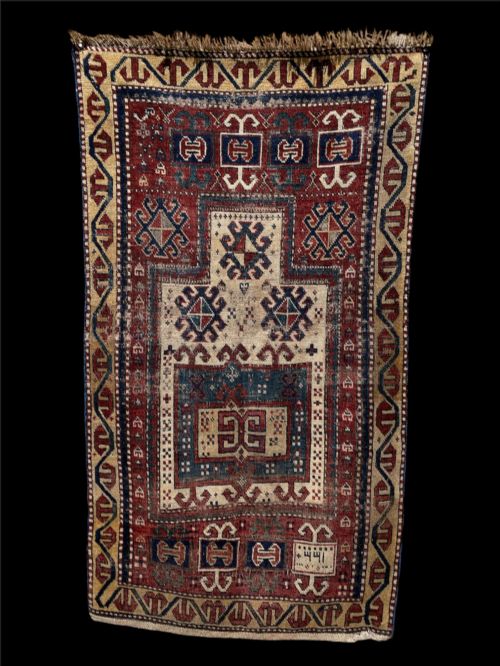


Blue Wool Prayer Mat
These pieces offer a blue wool prayer mat for domestic interiors, bringing traditional woven forms with distinct regional designs into modern spaces.
Blue Wool Prayer Mat
A blue wool prayer mat represents a specialised textile tradition originating from Caucasian, Persian, and Anatolian weaving communities during the eighteenth, nineteenth, and early twentieth centuries. These works include specific regional groups such as Kazak, Baluch, Ladik, and Timuri pieces designed primarily for devotional use.
The format typically centres on a distinct architectural niche or arch motif known as the mihrab, which distinguishes these rugs from standard floor coverings. Variations on this page range from simple tribal field patterns to elaborate floral and column designs created across the Caucasus, Turkey, and Persia.
Buyers encounter pieces spanning multiple decades, from eighteenth-century Turkish examples to nineteen-twenties Baluch and Caucasian productions. Wool forms the primary pile material, occasionally complemented by cotton foundations in specific regional types.
Materials and construction
Weavers constructed these textiles predominantly using hand-spun wool for the pile, secured upon foundational warps and wefts of wool or cotton. This natural fibre combination provided the durability required for floor placement and daily devotional practices.
Dyers utilised traditional natural sources to achieve the characteristic blue grounds and secondary palette colours seen across Caucasian and Anatolian examples. Hand-knotting techniques varied by region, resulting in distinct structural densities between nomadic Baluch pieces and urban Persian workshops.
Listings feature prayer rugs spanning the eighteenth century through the nineteen-thirties, utilising wool and cotton across Caucasian, Persian, and Anatolian styles.
Judging quality in woven textiles
Quality rests upon the crispness of the drawing within the mihrab and secondary motifs, alongside the saturation and depth of the wool pile. Tighter knot counts and balanced proportions distinguish finer urban and village workshops from simpler tribal productions.
The integrity of the original borders and the stability of the foundation dictate the preservation standard of older examples. Dyes that retain their vibrancy and wool with natural lanolin retention indicate superior material selection during production.
Tuduc
The Blue Wool Prayer Mat Glossary
- Mihrab
- The arched niche design at one end of a prayer rug, which symbolizes the direction of prayer. This architectural feature defines the primary orientation of the textile.
- Kazak
- A designated style of rug woven by various tribal groups in the southern Caucasus. These pieces feature bold geometric patterns and strong primary colours.
- Baluch
- A classification for textiles produced by nomadic and semi-nomadic tribes inhabiting the borderlands of Persia and Afghanistan. They frequently display deep indigo grounds and repeat geometric motifs.
- Boteh
- A stylised almond or paisley motif representing a floral shoot or cypress tree. This symbol appears frequently in Caucasian and Persian border designs.
- Ladik
- An Anatolian village and town rug type known for distinctive prayer arch designs and stepped panels. Eighteenth and nineteenth-century examples often incorporate upper panels filled with tulip motifs.
Blue Wool Prayer Mat: Frequently Asked Questions
What is a blue wool prayer mat used for?
These textiles served as personal floor coverings for ritual daily prayers in Islamic communities, providing a clean and defined space for prostration. The characteristic niche design oriented the user correctly during devotions.
Today, collectors and interior designers utilise these smaller rugs as decorative wall hangings, table covers, or accent pieces in hallways and studies.
How do I identify a Caucasian prayer rug?
Caucasian pieces typically feature bold geometric medallion layouts, hooked polygons, and saturated primary colours executed in sturdy wool. Regional groups like the Fachralo Kazak or Dagestan showcase sharp, angular drawing styles.
They also tend to have symmetrical knotting and stiffer wool foundations compared to the softer, more supple textures found in Persian workshop rugs.
What distinguishes Baluch prayer rugs from other types?
Baluch rugs from East Persia and Afghanistan generally feature darker palettes dominated by deep indigo blues, dark browns, and muted reds. Common design elements include the Dokhtar-e-Qazi pattern or repeat octagons.
Their construction often incorporates goat hair or dark wool in the outer cords and synthetic or natural camel hair tones in the foundational weave.
How can I tell an eighteenth-century rug from a twentieth-century one?
Earlier pieces from the eighteenth and early nineteenth centuries often display more organic dye variations, finely attenuated drawing, and considerable wear consistent with age. Structural analysis reveals hand-spun wools with irregular thickness.
Later pieces from the early twentieth century frequently exhibit more standardised knot densities, crisper synthetic or improved natural dye consistency, and less structural degradation.
Where should I place an antique prayer rug in my home?
Because of their smaller dimensions, these rugs suit low-traffic areas such as bedside placement, small entryways, or narrow hallways where foot traffic remains minimal. Hanging them on a wall protects the wool pile from mechanical wear.
Keeping them away from direct sunlight preserves the fugitive natural blue and red dyes found in nineteenth-century Anatolian and Caucasian examples.