
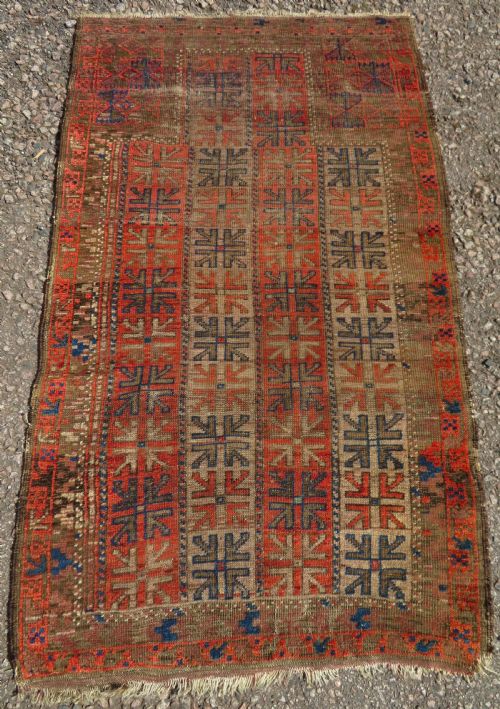
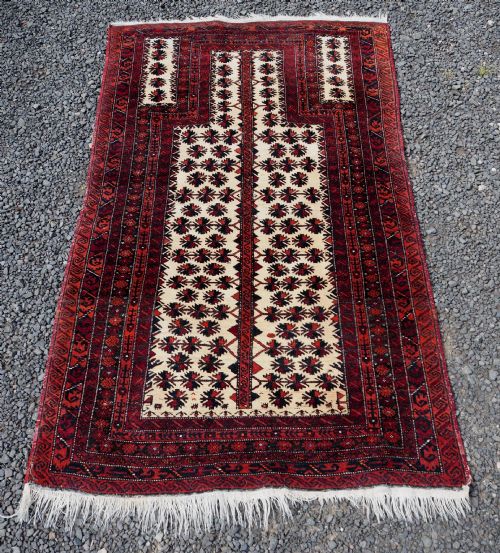
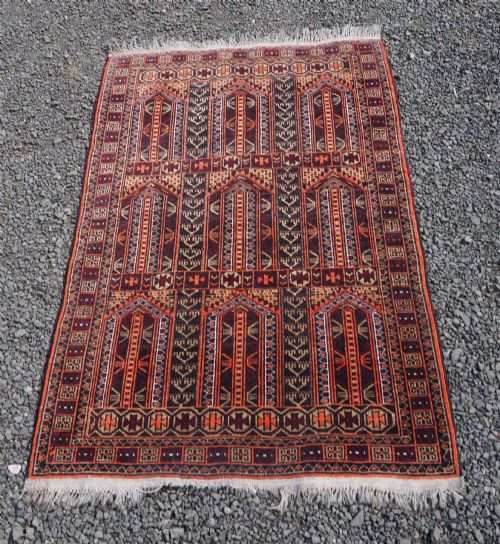
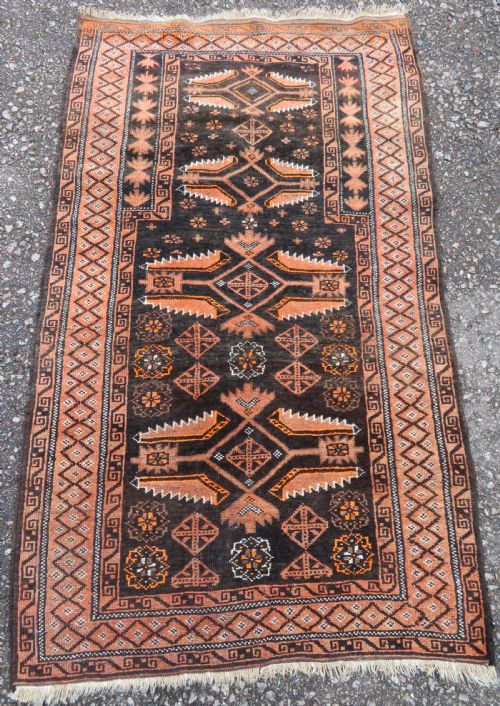
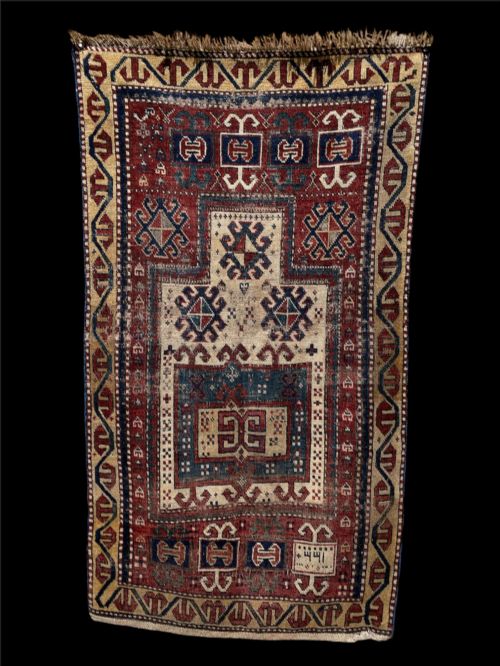
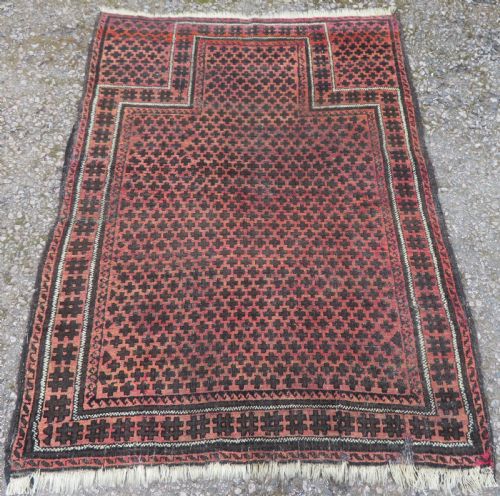


Vintage Oriental Prayer Carpet
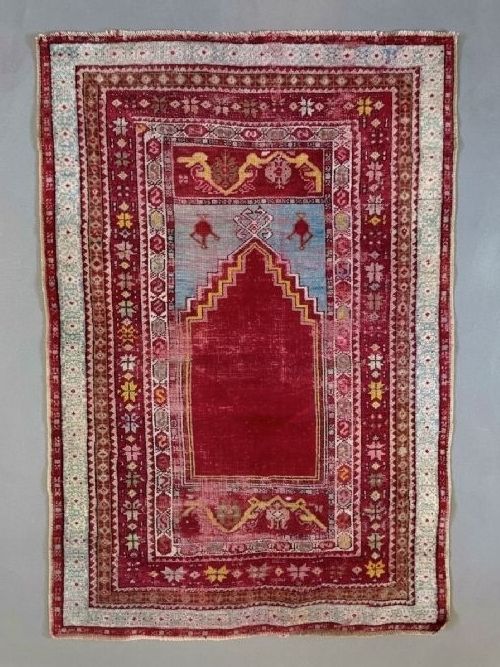
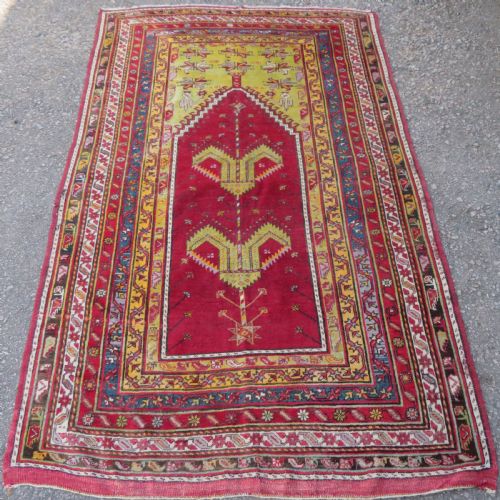
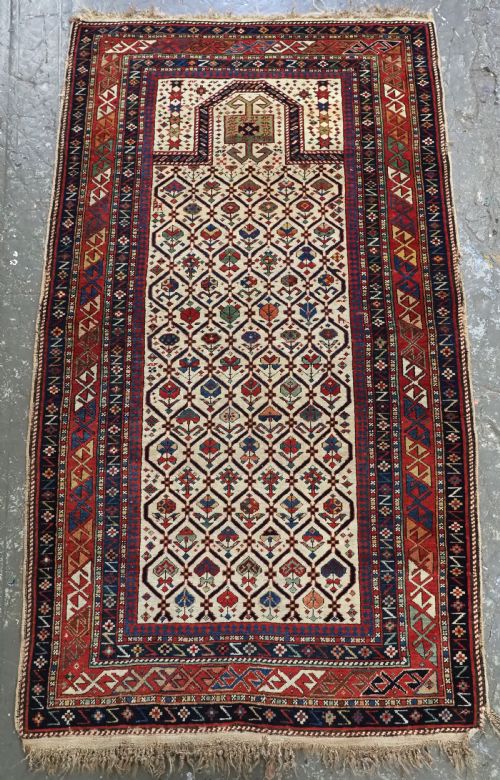
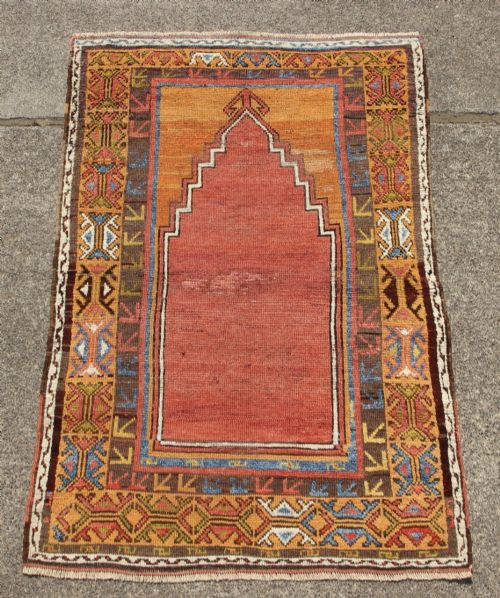
A vintage oriental prayer carpet brings centuries of textile tradition into a room through distinct niche designs created for daily devotion.
Vintage Oriental Prayer Carpet
A vintage oriental prayer carpet is defined by its characteristic architectural niche, or mihrab, which historically directed the worshipper towards Mecca. When you search for this phrase, you encounter floor coverings woven across Anatolia, the Caucasus, Persia, and Afghanistan.
The most common examples on this page span the nineteenth and early twentieth centuries, emerging from tribal workshops and village communities. These pieces range from compact area rugs designed for personal portability to larger formats originating from regional weaving centres.
Makers utilised traditional formats, often incorporating floral lattice work, mosque motifs, or rams horn designs into the central field. Each region developed distinct structural signatures, allowing collectors to trace pieces back to specific weaving traditions.
Materials and construction
Weavers relied principally on wool, cotton, and occasionally silk, often incorporating hand-spun wool and camel wool for foundation and pile yarns. Goat hair frequently appears in the sturdy selvedges and structural elements of tribal weaving.
Natural dyes imparted the rich colour palettes found across these textiles, reacting organically over decades of exposure and use. Artisans knotted these materials meticulously onto cotton or wool warp and weft foundations, occasionally extending the ends into kilim weaves.
Some Afghan Baluch prayer rugs incorporate quirky rams horn motifs inside the mihrab to ward off misfortune.
Judging quality and execution
Quality in these textiles rests upon the density of the knotting, the crispness of the architectural mihrab geometry, and the integrity of the pile. Finer examples display precise control over complex floral lattice or medallion motifs without distortion in the central field.
The choice of materials also dictates execution, with hand-spun wools and genuine natural dyes creating depth that synthetic substitutes cannot replicate. Preserved structural elements, such as original kilim ends and intact selvedges, elevate the standing of an individual piece.
The Vintage Oriental Prayer Carpet Glossary
- Mihrab
- The arched architectural niche depicted on the field of a prayer rug, symbolising the direction of prayer. It typically dictates the orientation of the entire design.
- Warp
- The vertical threads stretched tightly on the loom before weaving begins, forming the foundational skeleton of the carpet. The exposed ends often terminate in fringe or kilim extensions.
- Weft
- The horizontal threads passed alternately over and under the warp threads to lock the knots in place. Together with the warp, it forms the stable grid of the textile.
- Natural Dyes
- Colourants derived from plant, insect, and mineral sources prior to the widespread adoption of synthetic aniline dyes in the late nineteenth century. They yield harmonious, muted tones that age gracefully.
- Selvedge
- The finished bound edges running along the parallel sides of a rug, protecting the structure from fraying. Tribal weavers often wrap these edges securely using goat hair or dyed wool.
Vintage Oriental Prayer Carpet: Frequently Asked Questions
How do I identify a prayer rug?
Look for the distinctive arched niche, known as a mihrab, positioned at one end of the field to direct the user during daily devotions.
This architectural motif distinguishes these pieces from standard regional floor coverings and carpets.
Where were these carpets made?
Originating from diverse regions, these textiles come from Anatolia, the Caucasus, Persia, and Afghanistan, reflecting distinct tribal and village traditions.
Specific towns such as Kirsehir, Konya, Ghiordes, and Kashan developed their own recognizable visual vocabularies.
What materials make up the pile?
Most examples utilise wool, hand-spun wool, or camel wool for the pile, providing durability and a soft texture underfoot.
Finer pieces occasionally incorporate silk, while foundations commonly rely on sturdy cotton or wool threads.
How should I care for an old rug?
Place the textile in a low-traffic area out of direct sunlight to protect the natural dyes and delicate fibres from premature fading and wear.
Vacuum gently using a suction-only attachment without a rotating brush bar to preserve the historic pile.