


Turkish Mihrab Rug
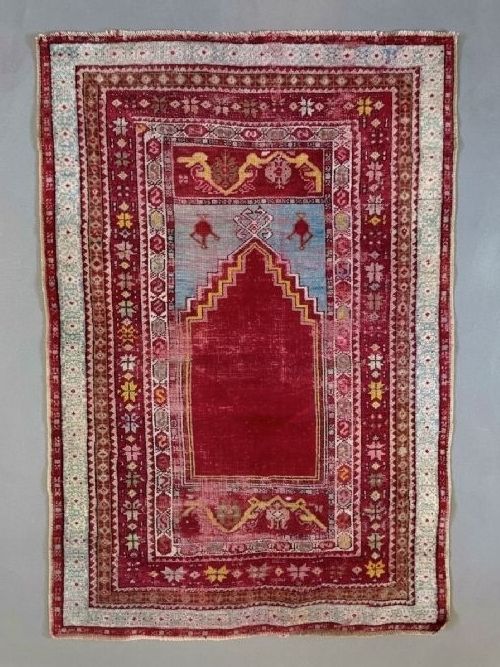
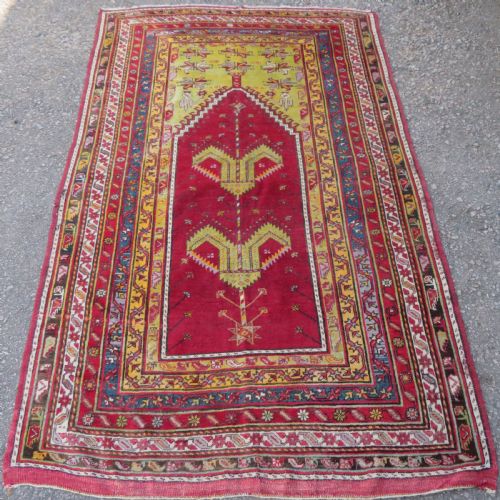
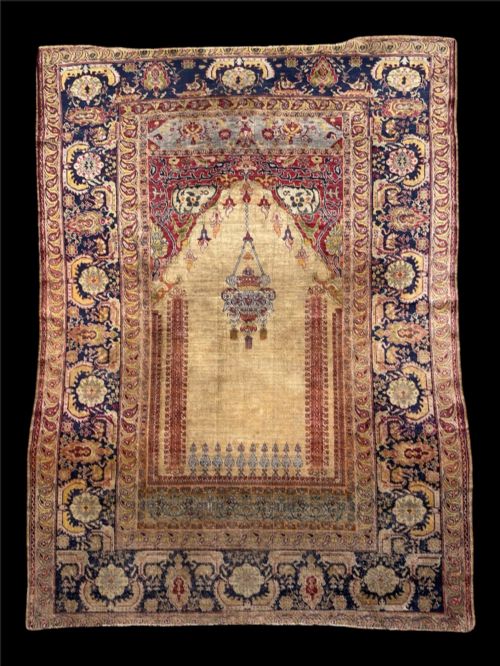
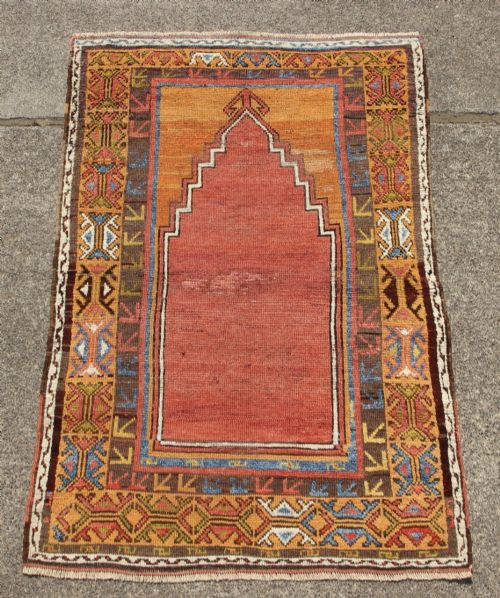
A turkish mihrab rug centres on the distinctive arch design of the prayer niche, offering a tangible link to centuries of weaving tradition.
Turkish Mihrab Rug
When searching for a turkish mihrab rug, buyers encounter floor coverings defined by their architectural prayer niche design, known as the mihrab. These textiles originate predominantly from Anatolian weaving centres and regional villages during the eighteenth and nineteenth centuries.
The selection ranges from wool village examples featuring geometric borders to finely knotted silk pieces from workshops in towns like Kayseri and Ghiordes. Buyers frequently discover regional variations including Ladik, Konya, Kirsehir and Milas types, each displaying distinct local colour palettes and border motifs.
Most examples function primarily as prayer rugs, designed with a directional field that points the worshipper toward Mecca. Their formats vary from compact domestic sizes to larger area carpets intended for substantial interiors.
How they were made
Weavers constructed these textiles using hand-spun wool, cotton foundations and occasionally silk, securing the pile with symmetrical or asymmetrical knots. The structural integrity relies on tightly beaten wool or cotton warp and weft threads.
Colour derives from natural dyes and vegetable substances, producing varied patinas that age gracefully across the nineteenth century. These traditional dyeing methods allow the wool to absorb pigments deeply, yielding rich tones within the central prayer niche.
Listings feature pieces spanning the eighteenth to the twentieth centuries, utilising wool, cotton, and silk materials.
What varies in quality
Quality rests upon knot density, the precision of the drawing within the arch, and the clarity of the natural dyes employed across the field. Superior pieces display crisp architectural lines and harmonious colour saturation that remains vibrant across the entire surface.
The handling of wool quality and the fineness of the spin dictate the tactile appeal and durability of the pile. Regional village pieces with expressive, individual drawing often command attention alongside finely worked town examples.
Tuduc
The Turkish Mihrab Rug Glossary
- Mihrab
- The architectural arch motif on a prayer rug representing the direction of prayer. It forms the focal point of the design.
- Ghiordes
- A historic weaving town in western Anatolia renowned for classic prayer rug designs and knotted pile construction. Pieces attributed to this tradition often feature stepped arches.
- Kirsehir
- A central Anatolian town and region famous for prayer rugs utilising distinctive medallions and hooked motifs. The palette frequently includes soft blues and warm terracottas.
- Ladik
- An Anatolian design tradition originating from north central regions, often characterised by high arched mihrabs and multiple border guards. Tulip motifs frequently appear in the panels.
- Kilim
- A flat-woven textile produced without a pile, constructed by tightly interweaving warp and weft threads. Examples from regions such as Obruk utilise this technique for lightweight floor coverings.
- Transylvanian
- A term applied to certain western Anatolian carpets preserved in European churches and collections. These pieces often feature distinctive column designs within the field.
Turkish Mihrab Rug: Frequently Asked Questions
What is a mihrab design?
The mihrab is the stylized arch at one end of the rug that mimics the prayer niche found in a mosque. It serves to orient the user during daily prayers.
On these rugs, the pointed arch guides the eye toward the central field and often incorporates lamps, columns or floral motifs.
How do I identify regional types?
Regional attribution relies on specific combinations of border patterns, colour choices, and the shape of the arch. Towns like Ladik, Ghiordes and Kirsehir each developed distinct design vocabularies.
Examining the weave structure and secondary motifs helps differentiate between central Anatolian village work and western town production.
Are these rugs suitable for daily use?
Most nineteenth-century examples possess durable wool piles that withstand gentle foot traffic when paired with a quality underlay. Placing them in low-traffic areas preserves the natural dyes and historical fibres.
Regular rotation and professional cleaning ensure these textiles remain stable decorative elements in modern interiors.
What are natural dyes?
Natural dyes are colorants extracted from plants, roots, insects and minerals used before the introduction of synthetic aniline dyes. They interact with wool fibres to create nuanced shades that develop rich patinas over time.
Variations within the dye batches often result in abrash, a subtle tonal shifting across the field that collectors value.