


Pastel Oriental Rug
These pastel oriental rug examples bring together muted tones and historic weave traditions from Anatolia and Persia.
Pastel Oriental Rug
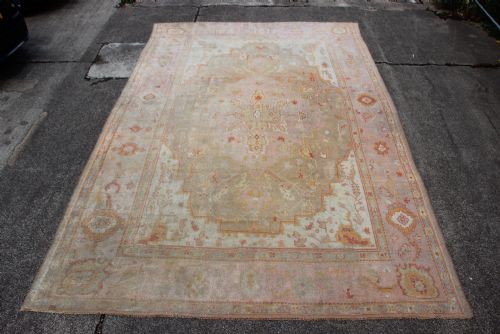
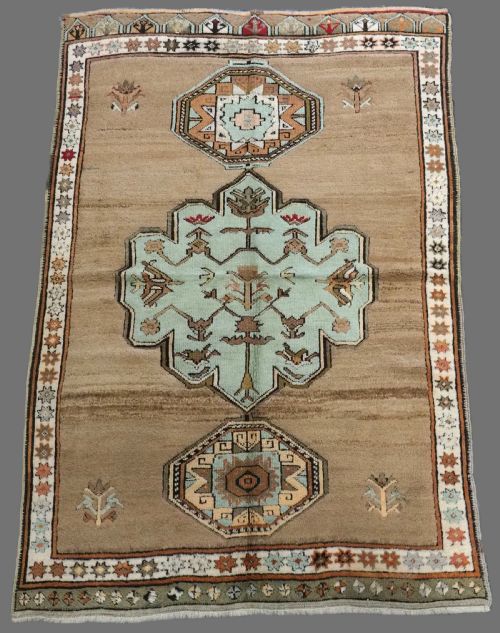
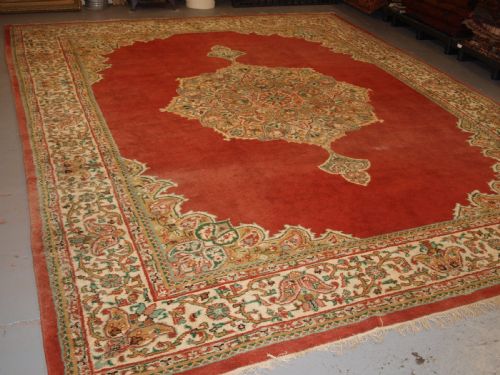
When you search for a pastel oriental rug, you encounter hand-knotted and flat-woven floor coverings originating from Turkey and Persia, dating from the late nineteenth and early twentieth centuries. These pieces display softer secondary palettes rather than the bold, saturated primaries found in standard commercial production.
The selections on this page span large room-size carpets and smaller area formats, including Oushak, Tabriz, Kayseri, and Sivas weaves. They are chosen specifically for their faded, gentle colourways, which integrate easily into contemporary interiors.
How they were made
The structural foundation relies on spun cotton or wool warps and wefts, upon which knotters tied dense piles of wool, camel wool, or silk. Natural vegetable dyes, mellowed by age and gentle light exposure, created the characteristic pale pinks, pistachio greens, and aquamarine tones.
Flat-woven kilims utilise slit-weave techniques to form geometric repeats without a pile. Pile carpets employ asymmetrical or symmetrical knots secured by overcast edges, reflecting regional nomadic and workshop traditions.
Materials employed across the inventory include standard wool, camel wool, cotton, and pure silk.
What varies in quality
Quality rests upon the fineness of the knot density and the precision of the wool preparation, which dictates how the pile handles foot traffic over decades. Silk examples, such as those from Kayseri, achieve high detail through extremely fine knotting on cotton foundations.
The visual harmony of the faded palette also separates standard examples from exceptional ones. Master dyers achieved nuanced tonal shifts that retain depth even as the primary colours soften into pastels.
Benlian
The Pastel Oriental Rug Glossary
- Oushak
- A town in western Anatolia renowned for large-scale carpets featuring loosely arranged floral motifs and soft wools. These pieces often exhibit generous proportions and muted terracotta or pastel fields.
- Kilim
- A flat-woven carpet or rug produced without a pile by interlocking horizontal and vertical threads. This technique creates a lightweight textile with identical patterns visible on both sides.
- Tabriz
- A major weaving centre in north-western Persia known for sophisticated court designs and exceptional technical precision. Tabriz carpets frequently incorporate classic medallion layouts executed in refined palettes.
- Warp
- The vertical threads stretched tightly on a loom before weaving begins, forming the structural skeleton of the rug. Fringe ends typically consist of the exposed warp threads.
- Prayer rug
- A small format textile featuring a distinct architectural niche or mihrab design at one end. Historically used for personal daily devotion, these rugs point toward Mecca during use.
Pastel Oriental Rug: Frequently Asked Questions
How do I clean an antique rug?
Professional hand-washing by specialists in historic textiles remains essential for preserving natural wool and silk fibres.
Harsh chemical detergents and modern washing machines damage the delicate foundation and strip the aged patina.
Can I place these rugs in bright rooms?
Natural sunlight softens dyes further over time, which historically contributed to the pastel character seen today.
Rotating the textile periodically ensures even exposure to ambient light and prevents uneven fading across the field.
What underlay should I use?
A breathable, natural rubber mesh underlay prevents slipping and protects the fragile cotton foundation from abrasive floorboards.
Avoid synthetic backing materials that trap moisture and restrict airflow through the historic weave.
How do I identify an Oushak weave?
Oushak carpets display looser knots, softer wool, and large-scale geometric or floral motifs rendered in understated tones.
They often incorporate lustrous wool derived from local Anatolian sheep breeds, giving the pile a distinctive handle.