


Geometric Turkish Prayer Rug
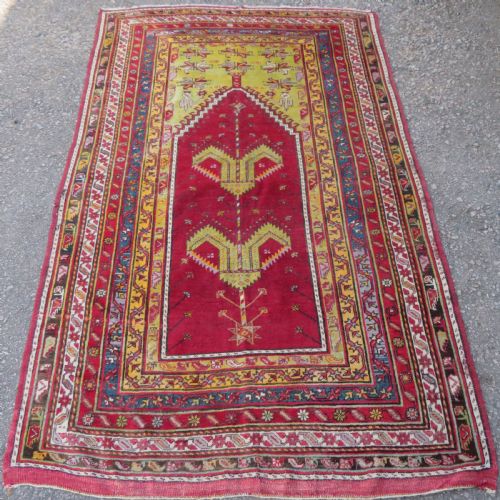
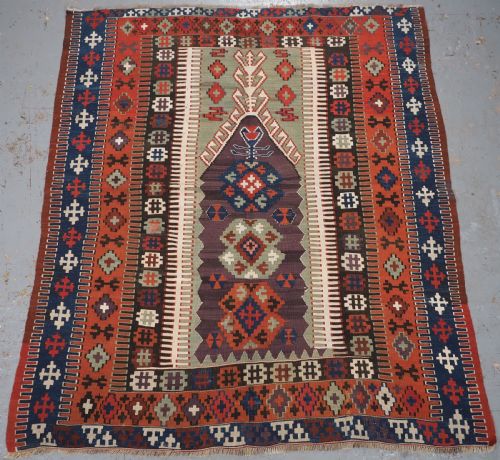
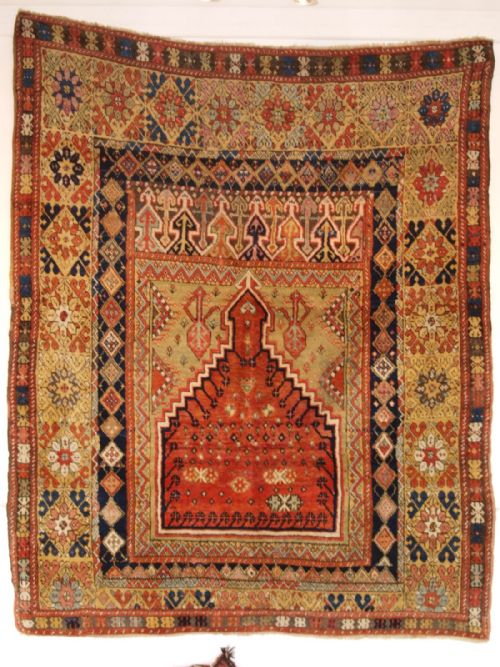
A geometric turkish prayer rug brings centuries of village weaving tradition and striking architectural design into a modern room.
Geometric Turkish Prayer Rug
A geometric turkish prayer rug brings centuries of village weaving tradition and striking architectural design into a modern room. Buyers searching for a geometric turkish prayer rug encounter authentic village textiles originating from various Anatolian regions, spanning the nineteenth and early twentieth centuries.
The pieces on this page primarily showcase traditional regional identities such as Milas, Bergama, Konya, Kirsehir, Mujur, and Yuruk. These rugs were woven in homes and small communities across West, Central, North West, and East Anatolia, often following established local prayer formats.
Most examples date between the mid-nineteenth century and the early twentieth century, incorporating tribal motifs and architectural mihrab designs. Buyers will find both full-size rugs and smaller village formats suited for wall display or floor placement.
What varies in quality
Quality in these textiles rests upon the saturation and depth of the natural dyes, alongside the crispness of the geometric design work. Strong colour preservation and balanced proportions elevate certain village rugs above standard examples.
The fineness of the hand-spun wool and the tightness of the knotting also distinguish superior pieces from simpler village production. Regional clarity in motifs, such as distinct star borders or well-defined mihrab arches, marks the upper tier of the range.
Several village weavers tucked cheerful star borders into their prayer designs, ensuring every user stepped onto a firm constellation.
Kirsehir·Konya·Bergama·Milas·Mujur
The Geometric Turkish Prayer Rug Glossary
- Mihrab
- The arched niche design at one end of a prayer rug, which symbolizes the direction of prayer. This architectural motif guides the layout of the field.
- Anatolian
- Pertaining to the peninsula of Asia Minor, representing the primary geographical source for these traditional rugs. It encompasses diverse regional weaving styles.
- Pile
- The cut surface of the knotted wool yarn that forms the soft face of the rug. Village weavers utilised hand-spun wool for this upper layer.
- Natural dyes
- Colourants derived from plant and mineral sources rather than synthetic chemical processes. These materials produce the nuanced palette found in older village carpets.
- Kilim
- A flat-woven textile produced without a raised pile, created by tightly interweaving warp and weft threads. Examples include pieces from the Obruk region.
Geometric Turkish Prayer Rug: Frequently Asked Questions
Where were these rugs made?
These textiles originate from historical village centres and tribal regions across Anatolia, including West, Central, North West, and East areas. Specific towns and districts like Milas, Bergama, and Konya developed distinct local weaving traditions.
Nomadic and semi-nomadic groups such as the Yuruk also contributed specific regional styles to this tradition.
What materials are used?
Authentic pieces rely entirely on wool and hand-spun wool for both the foundation and the pile. Artisans used natural dyes to colour the yarns, resulting in varied ground shades including ivory and green.
These organic materials contribute to the soft handling and gradual patination of the textiles over time.
How should I care for a vintage rug?
Protect the textile by placing it in a low-traffic area out of direct sunlight to prevent natural dye fading. Regular gentle vacuuming without a rotating brush helps remove dust from the wool pile.
Professional cleaning tailored for antique wool rugs ensures the structural integrity remains undisturbed.
How do I date an antique rug?
Dating relies on examining the materials, natural dye palette, structural wear, and stylistic consistency with known regional examples from the nineteenth and early twentieth centuries. Hand-spun wool and specific village motifs often point to particular decades.
Comparing structural details against documented pieces helps narrow the production period within the eighteen-hundreds or early nineteen-hundreds.