


Vintage Oriental Enamelware
Vintage oriental enamelware brings rich colour and meticulous metalwork into a room, offering distinct decorative vessels from past Asian traditions.
Vintage Oriental Enamelware
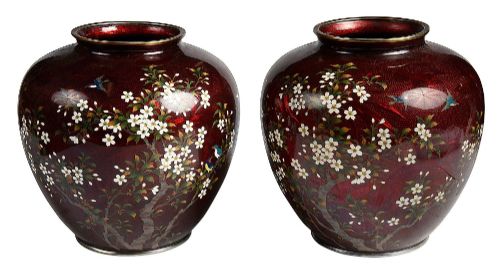
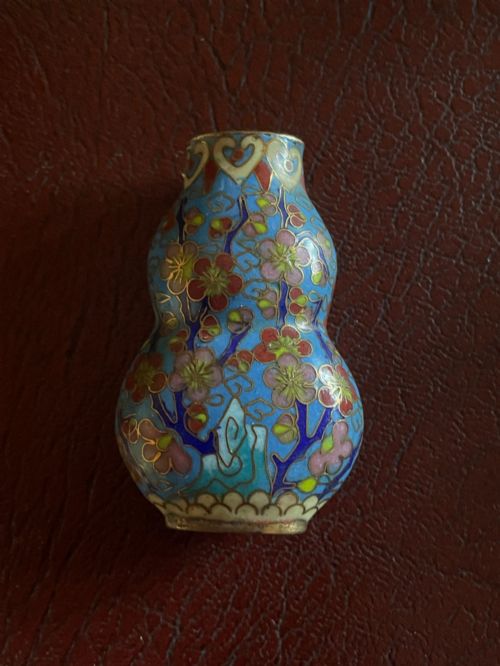
When you search for vintage oriental enamelware, you examine a selection of vases, bowls, trays, lamps, and chargers produced across the nineteenth and twentieth centuries. These decorative objects originate from Chinese and Japanese workshops, showcasing diverse traditional motifs such as birds and dragons.
The pieces you meet on this page span several specific periods, including the Meiji and Qing eras alongside Edwardian interpretations. Forms range from miniature vessels and tea pots to large octagonal trays and pairs of lidded jars.
Each item reflects the distinct decorative art traditions of its origin, balancing utilitarian forms with elaborate surface decoration. Collectors encounter both Chinese export designs and Japanese masterworks within this category.
Materials and construction methods
Craftsmen built these pieces using a base of copper, brass, bronze, or gilt metal, shaping them into vessels and plates before applying decoration. Artisans then utilised techniques like cloisonné and champlevé enamel to create intricate surface patterns.
Cloisonné work involved soldering thin metal wires onto the metal body to form cellular compartments, which were subsequently filled with coloured enamel paste and fired. Silver foil was sometimes incorporated beneath the translucent enamel to enhance light reflection.
The completed objects underwent multiple firings and polishings to achieve a smooth, lustrous finish across the metal wires and coloured glass pastes. Certain items feature silk elements or specialised metal mountings to complete the composition.
The selection includes functional forms such as tea pots and table lamps alongside decorative vases, bowls, trays, and chargers.
Distinctions in craftsmanship and execution
The highest quality examples demonstrate exceptional precision in the wirework, where lines remain uniform and securely anchored to the metal base without gaps or distortion. Superior enamel filling exhibits even colour distribution, freedom from excessive pitting, and a polished surface harmony.
Compositional complexity and the scale of the object also dictate standing within the range, particularly on pieces featuring detailed pictorial subjects like birds or dragons. Stronger weight, clean interior finishing, and crisp structural symmetry separate masterwork productions from simpler commercial outputs.
The Vintage Oriental Enamelware Glossary
- Cloisonné
- A decorative technique where thin metal wires are soldered to a metal substrate to create cells that hold enamel paste. These wires remain visible on the finished surface as part of the design.
- Champlevé
- An enamel method where troughs or depressions are carved directly into the thick metal surface to receive the enamel. The remaining metal walls form the outlines of the pattern.
- Charger
- A large ornamental decorative plate intended for display rather than dining use. These items often feature complex central motifs.
- Meiji Period
- A Japanese historical era lasting from eighteen sixty-eight to nineteen twelve marked by significant artistic production and export. Works from this time often show advanced technical precision.
- Qing Dynasty
- The final imperial dynasty of China, spanning the seventeenth to early twentieth centuries. Pieces from this era utilise traditional imperial colour palettes and motifs.
Vintage Oriental Enamelware: Frequently Asked Questions
How do I display oriental enamelware?
Position larger chargers and vases where adequate light can illuminate the metallic wires and coloured enamel surfaces. Avoid placing them in direct, harsh sunlight to protect the integrity of the materials.
Mix different forms, such as miniature vessels and lidded jars, on shelves or tables to create visual depth in a room. Ensure they sit on stable surfaces away from high-traffic household areas.
How do I tell Chinese from Japanese pieces?
Examine the specific colour palettes and subject matter, as Chinese workshops frequently utilised deep blues and traditional imperial symbols. Japanese pieces, particularly from the Meiji era, often displayed naturalistic subjects like birds and flowers with extreme wirework precision.
Look at the base and interior construction for manufacturing clues associated with each distinct regional tradition. Comparing handling styles helps clarify the likely origin.
What periods are common for these items?
Most pieces originate from the nineteenth and early twentieth centuries, spanning the late Qing dynasty and the Japanese Meiji and Showa periods. Edwardian and 1920s examples also appear frequently within the category.
Dates are typically determined by stylistic markers, material composition, and manufacturing techniques characteristic of those specific decades. Understanding historical eras helps contextualise individual items.