
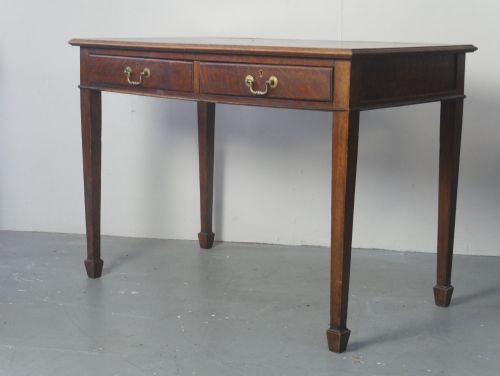
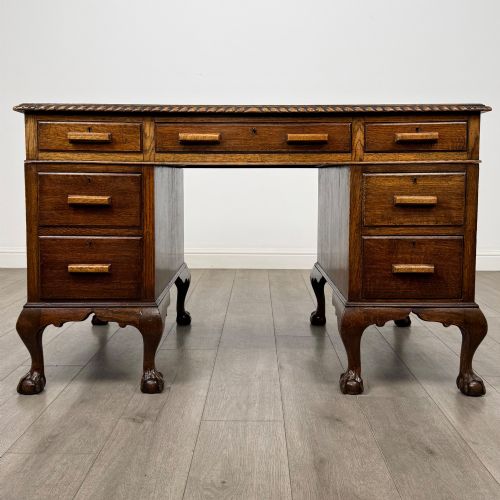
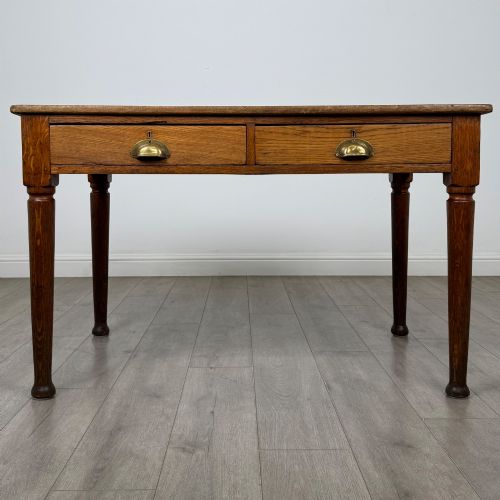
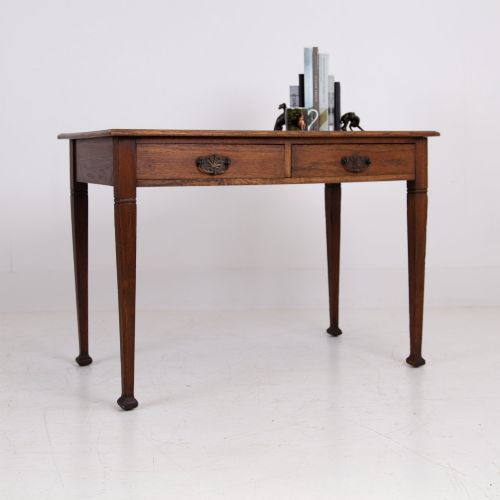
Vintage Oak Study Table
A vintage oak study table provides a solid, dependable workspace grounded in the rich grain and durability of traditional timber.
Vintage Oak Study Table
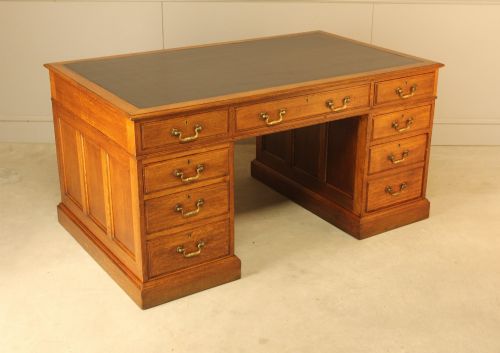
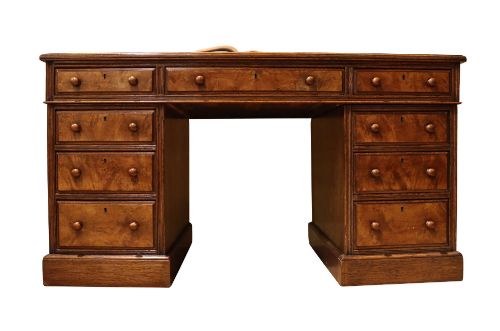
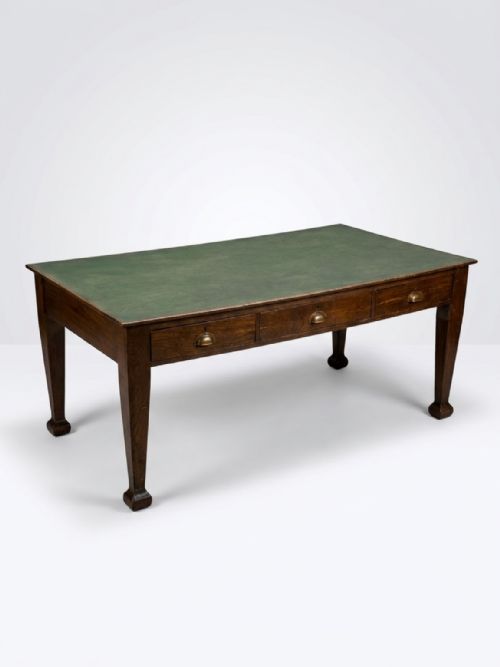
A vintage oak study table encompasses functional workspaces such as writing tables, library tables, and pedestal desks designed for practical utility. These pieces originate from various periods including the Victorian and Edwardian eras, extending into the 1930s.
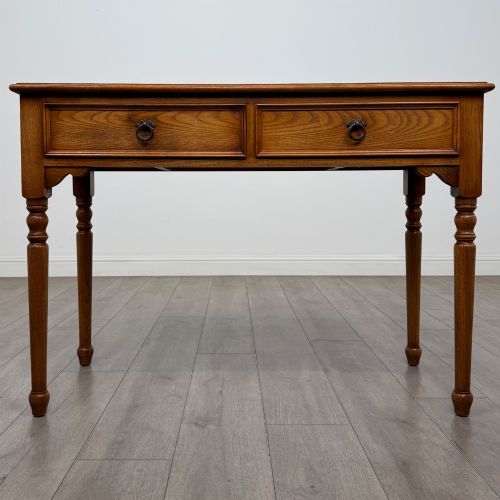
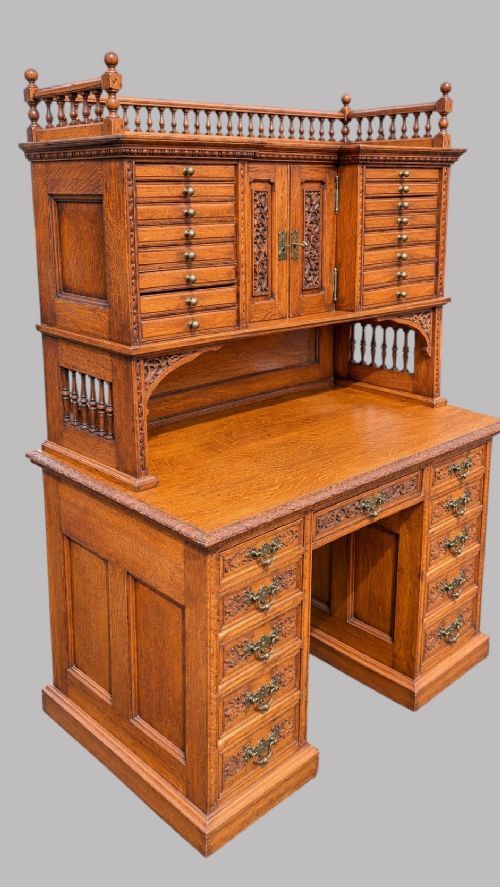
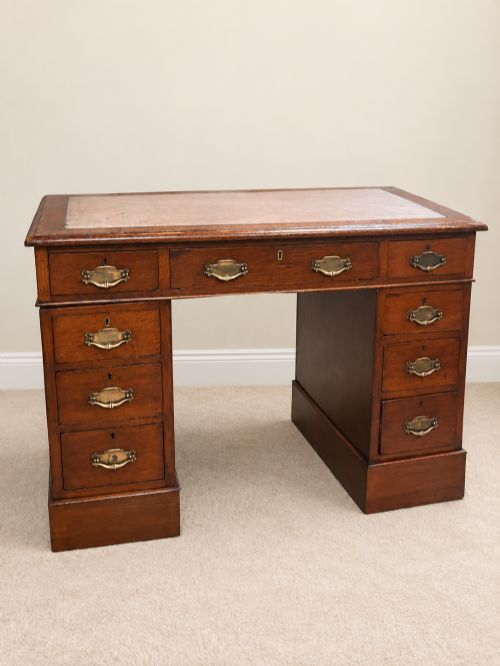
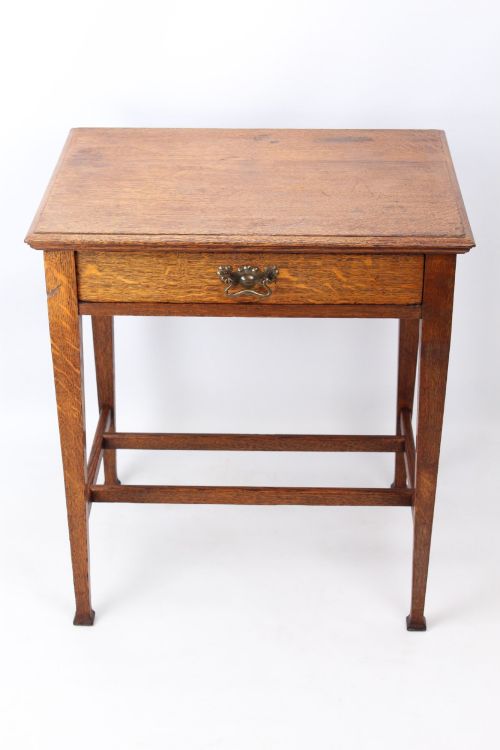
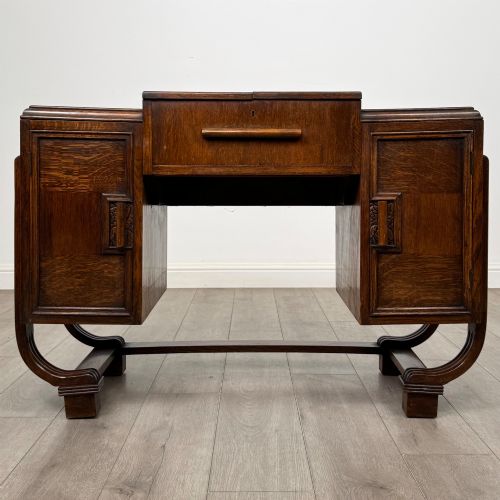
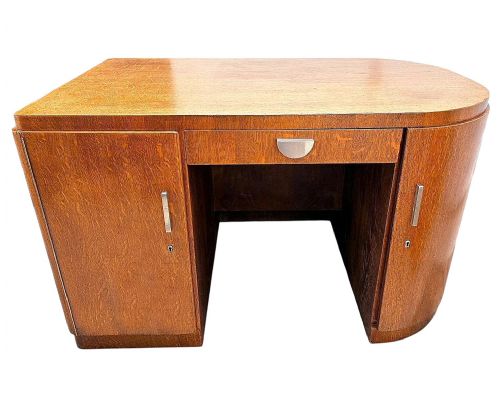
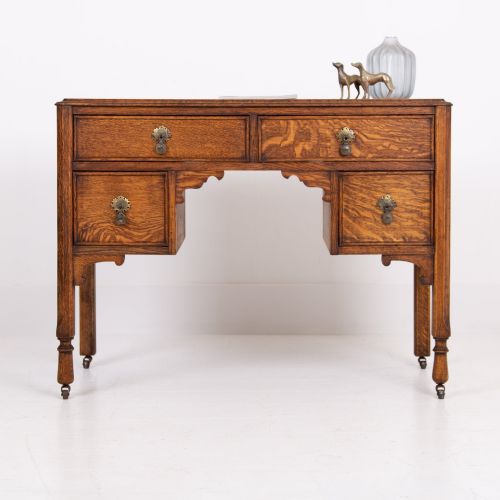
The most common formats met on this page include compact writing tables with drawers, kneehole desks, and larger partners desks. Many examples reflect specific design movements like Arts and Crafts, Gothic Revival, and Art Deco.
Constructed primarily for domestic studies, libraries, or offices, these tables range from simple two-drawer writing desks to substantial multi-drawer pedestals. Their forms balance sturdy utility with period character.
Materials and Construction
Construction relies heavily on solid oak timber, frequently complemented by secondary woods such as pine. Artisans utilised durable joinery techniques to build robust frames capable of withstanding daily clerical or scholarly use.
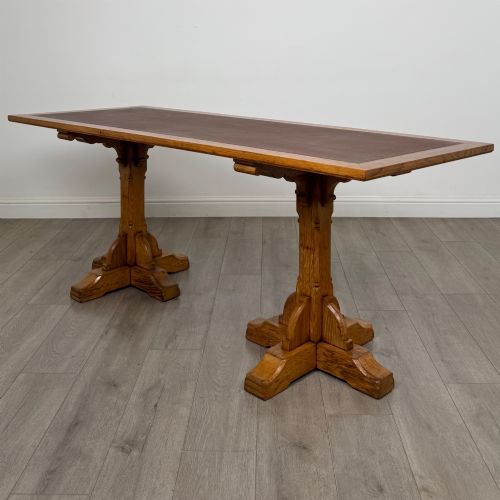
Working surfaces are frequently inset with leather writing inserts, providing a traditional textured plane for writing. Hardware components typically incorporate brass drawer pulls and handles, while internal drawers utilise timber framing.
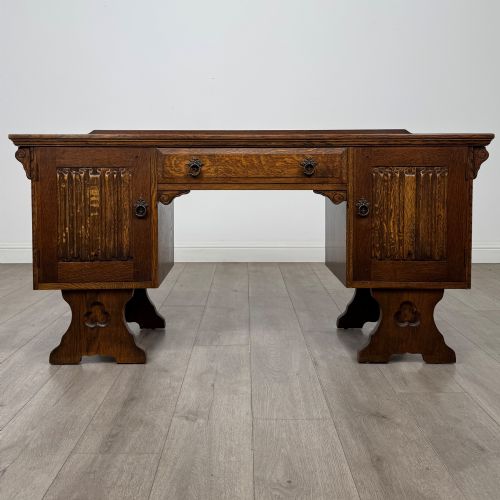
Decorative detailing ranges from plain surfaces showcasing the natural grain to carved linenfold panels, carved mouldings, and occasional burr walnut veneers. Metal and iron elements appear in structural braces and specialised mechanisms.
Design styles represented across the inventory include Arts and Crafts, Art Deco, Gothic Revival, and Edwardian interpretations.
Assessing Standard and Build
Quality separates through the selection of timber and the precision of the construction, distinguishing standard utility furniture from finer commissions. Pieces featuring well-figured solid oak, Burr Walnut accents, and thick leather writing surfaces demonstrate higher initial craftsmanship.
The sophistication of the joinery and hardware integration indicates the grade of the piece. Well-made examples exhibit smooth drawer operation, dovetail joints, and substantial brass fittings rather than light stamped metal.
Design ambition also marks the standard, moving from plain functional estate desks to intricately carved Arts and Crafts or Gothic Revival models. The integrity of the original structure and the preservation of the surface finish determine the lasting integrity of the table.
Heal's·Étienne Kohlmann
The Vintage Oak Study Table Glossary
- Pedestal desk
- A heavy office desk featuring two independent pedestals of drawers supporting a central top. It often includes a kneehole space in the centre.
- Partners desk
- A large double-sided desk designed for two people to work opposite one another, featuring drawers and cupboards on both faces.
- Library table
- A large freestanding table used primarily for reading and holding books rather than intensive storage, often featuring a finished back.
- Linenfold
- A carved wooden panel moulding designed to imitate folded vertical parchment or linen cloth, commonly seen on period panels.
- Burr walnut
- A highly figured timber veneer derived from the burl growth of a walnut tree, prized for its swirling grain patterns.
Vintage Oak Study Table: Frequently Asked Questions
What is a vintage oak study table used for?
These tables serve primarily as functional workspaces for writing, reading, and administrative tasks. Their sturdy construction makes them suitable for daily domestic or office use.
Historically placed in studies, libraries, and offices, they provide ample surface area and practical drawer storage for papers and stationery.
How do I identify a Victorian oak desk?
Victorian examples typically display robust solid oak construction with darker finishes, heavy mouldings, and traditional drawer arrangements. They often feature inset leather tops and brass hardware.
Constructed during the nineteenth century, these pieces emphasise durability and formal design, sometimes incorporating Gothic Revival or carved decorative elements.
How do I care for a leather top on a study table?
Leather surfaces require gentle cleaning with a slightly damp cloth followed by a soft dry cloth. Avoid harsh chemical cleaners that can strip the dyed finish.
Applying a specialised leather cream periodically helps maintain suppleness and prevents the material from drying out or cracking over time.