

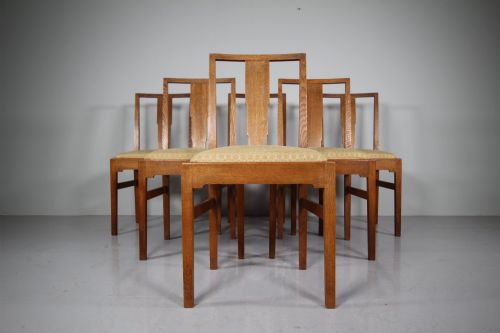
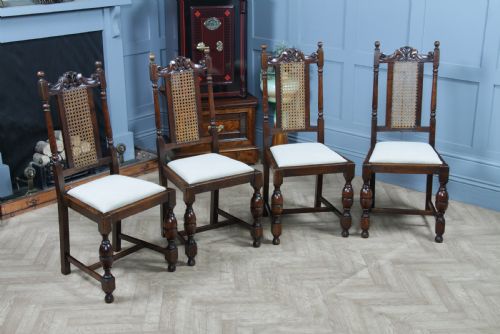
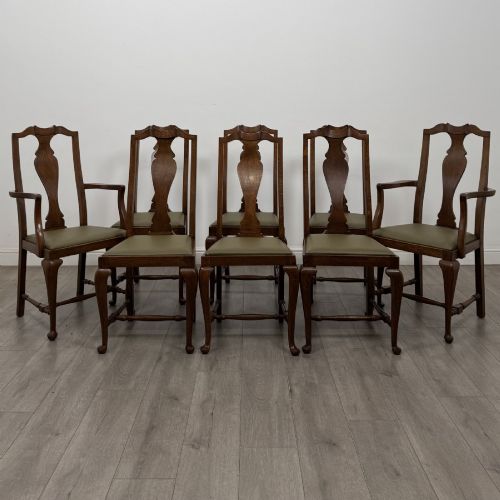
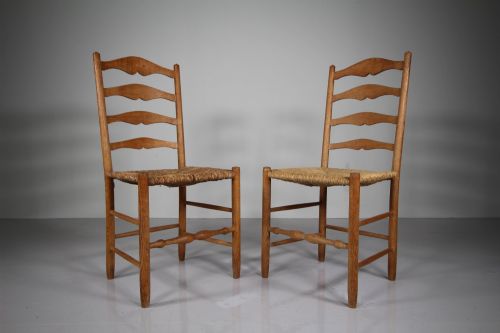
Vintage Oak Side Chairs
Vintage oak side chairs bring honest timber and sturdy joints to the table, spanning rustic kitchen forms and grand revival dining sets.
Vintage Oak Side Chairs
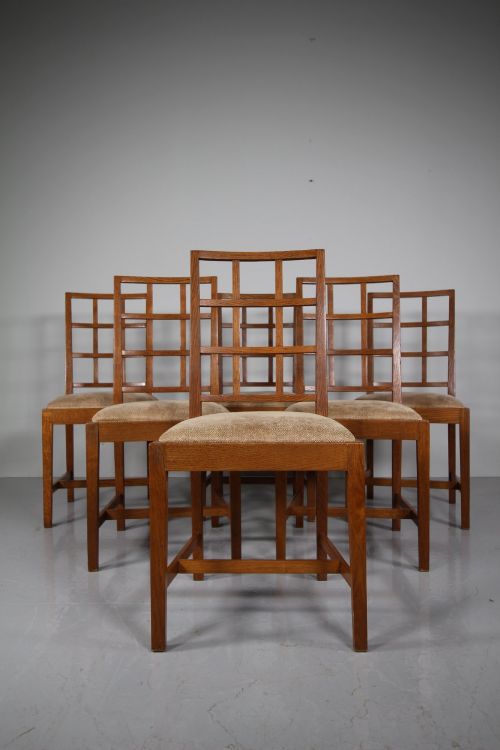
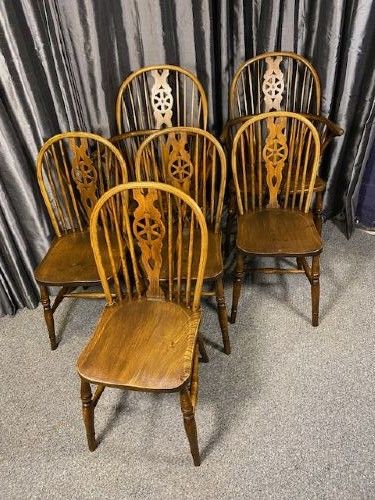
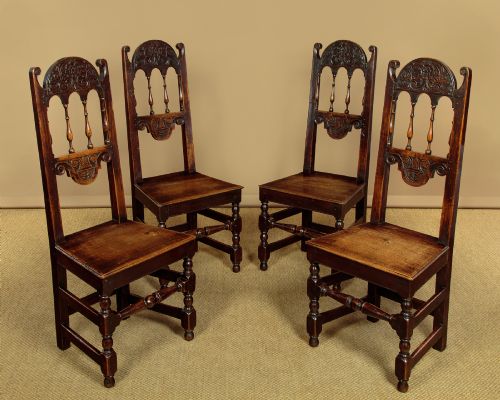
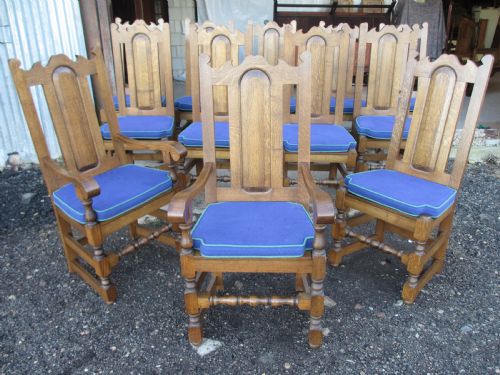
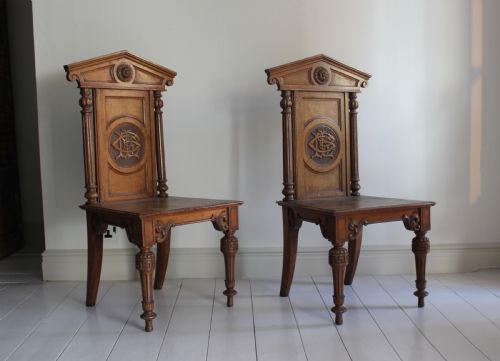
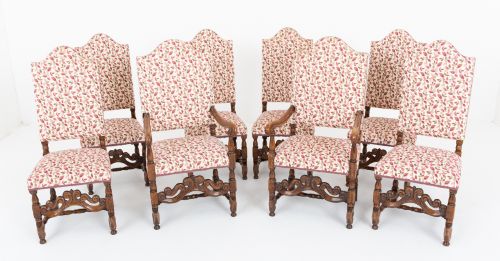
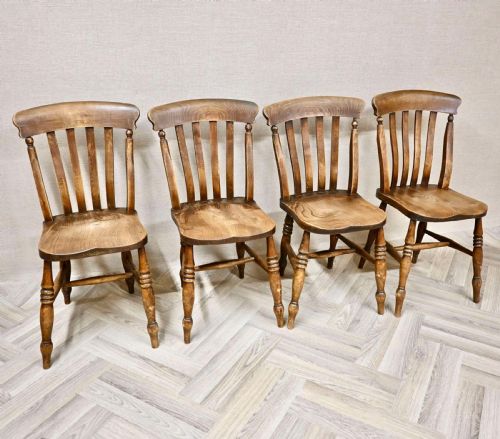
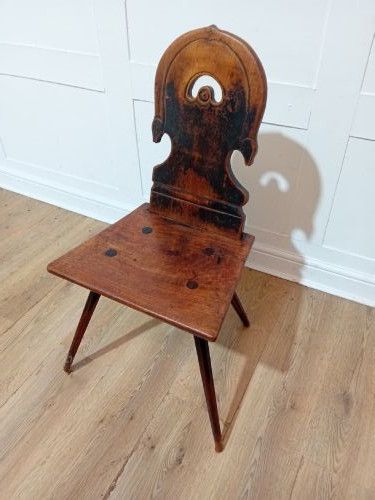
Vintage oak side chairs encompass dining seats, tall hall chairs, and country kitchen Windsor models found across the nineteenth and early twentieth centuries. Buyers seeking vintage oak side chairs encounter styles ranging from plain ladder backs to heavily carved Jacobean revival frames.
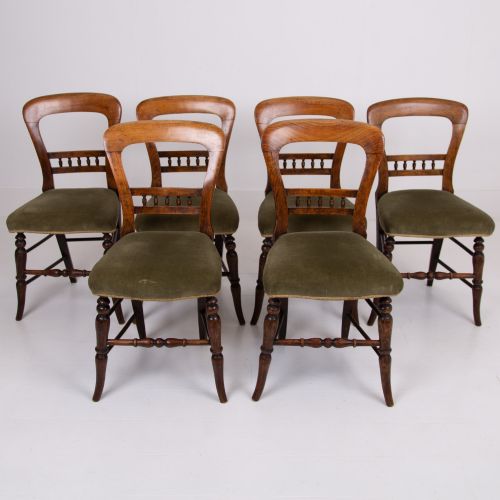
The selection leans heavily toward Edwardian and Victorian examples, alongside substantial numbers from the nineteen-twenties and nineteen-thirties. Makers drew on earlier English traditions, producing substantial sets for dining rooms as well as single pieces for halls and bedrooms.
Materials and construction
Solid oak forms the primary structural material, often paired with secondary timbers like elm, beech, and ash for spindles and seats. Joinery relies on traditional pegged mortise and tenon joints, giving these chairs their enduring rigidity.
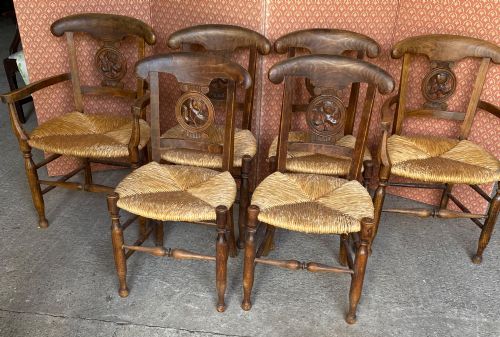
Surface treatments vary from polished finishes to waxed grains, while seats incorporate woven rush, plain timber, or upholstery fastened with brass tacks over fabric, leather, or velvet.
Vintage Oak Side Chairs Retail Price Guide 2026
Typical asking prices for vintage oak side chairs among the pieces listed under this phrase on Sellingantiques today, from the lower quarter to the upper quarter. They describe what is for sale here now, not the wider market.
Listings feature oak alongside elm, beech, and rush across periods spanning the seventeenth century through the nineteen-thirties.
Craftsmanship and proportion
Quality rests on the depth of the timber selection and the crispness of turned components like barley twists, bobbin turnings, and raked legs. Superior sets maintain uniform grain patterns and tight joints across every individual chair.
Carved details such as strapwork, trefoils, and crest rails distinguish finer revival pieces from simpler utility seating, while well-proportioned rake and back height separate comfortable seating from stiff, purely decorative items.
The Vintage Oak Side Chairs Glossary
- Windsor
- A traditional wooden chair built with a solid grooved seat into which legs and back spindles are wedged directly. These country pieces often use mixed timbers like elm and beech.
- Ladder back
- A chair featuring horizontal wooden slats across the back uprights. This vernacular form dates back centuries and remains common in rustic and country dining sets.
- Barley twist
- A spiral turning carved into chair legs or vertical stretchers. The technique became popular during seventeenth-century revivals in the Victorian and Edwardian eras.
- Rush seat
- A seating surface woven from dried marsh grasses or twisted sedge. It provides a flexible, textured pad traditional in country and Arts and Crafts chairs.
- Harlequin set
- A group of chairs that match in style and period but vary slightly in subtle details or minor dimensions. These collections were often assembled over time rather than purchased as a single batch.
Vintage Oak Side Chairs: Frequently Asked Questions
How do I spot a true revival chair?
Revival chairs display machine-cut precision combined with period-appropriate timber selection, typically oak framing from the Victorian or Edwardian eras mimicking seventeenth-century styles.
Examine the undersides and joint pegs to check for honest wear patterns that distinguish a deliberate historical copy from a modern reproduction.
Can I mix these chairs with a modern table?
Oak side chairs possess a neutral timber tone and robust silhouette that sit comfortably alongside contemporary glass, steel, or modern wood dining tables.
Choose simple ladder back or plain panel styles to bridge the gap between antique timber and modern interior schemes.
Are rush seats durable for daily use?
Natural rush seating withstands normal daily dining use if kept dry and away from excessive humidity that can rot the dried grass fibres.
Avoid kneeling on rush seats or placing them in damp environments to maintain the tensile strength of the weave.
What defines an Arts and Crafts oak chair?
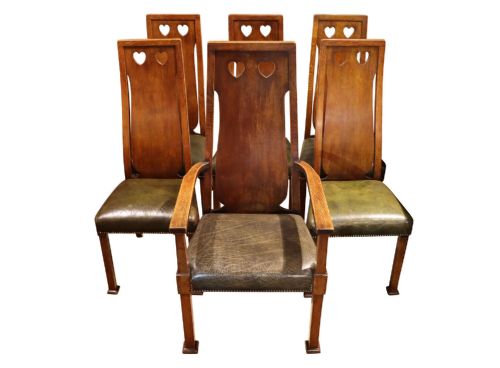
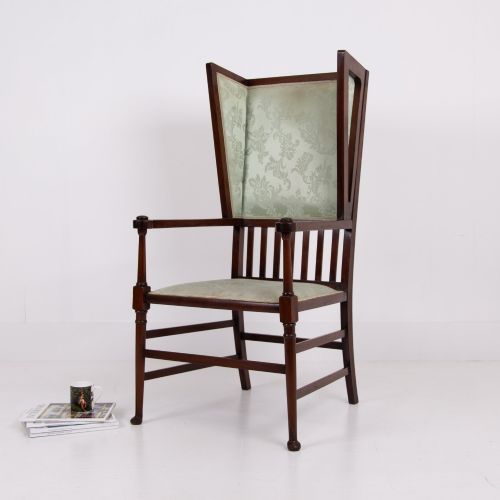
Arts and Crafts chairs emphasise visible construction, exposed pegged joints, and unadorned golden oak grain rather than applied historical ornament.
They often feature square profiles, vertical slats, and leather pads held by large decorative brass studs.