


Vintage Oak Mule Chest
A vintage oak mule chest combines deep storage capacity with lower drawers, bridging the practical gap between a coffer and a proper chest of drawers.

Vintage Oak Mule Chest
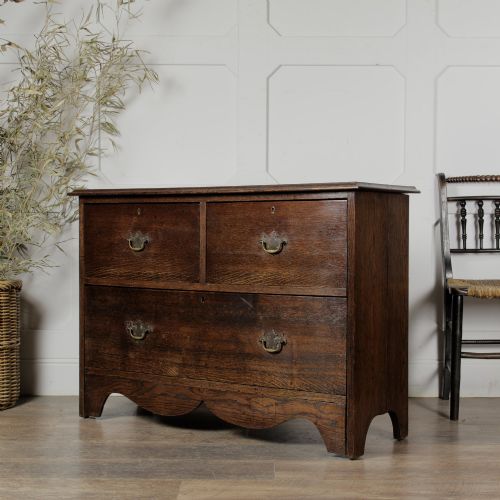
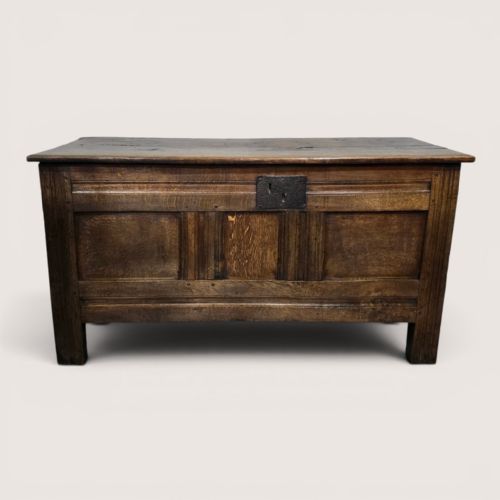
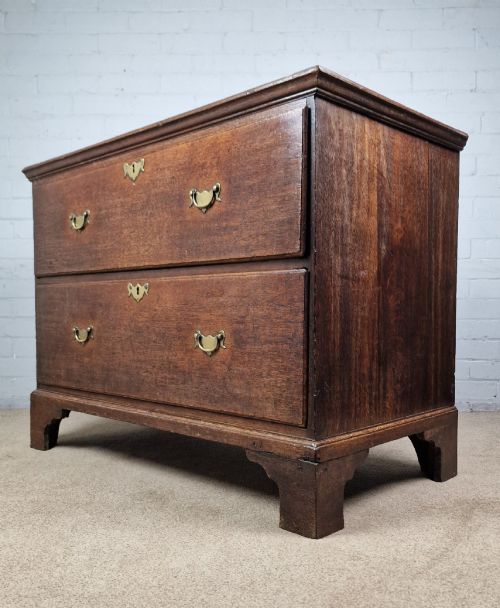
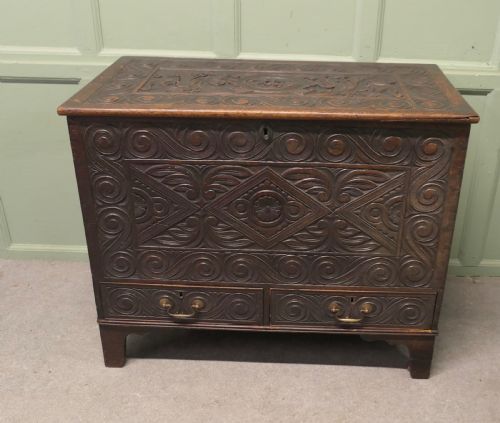
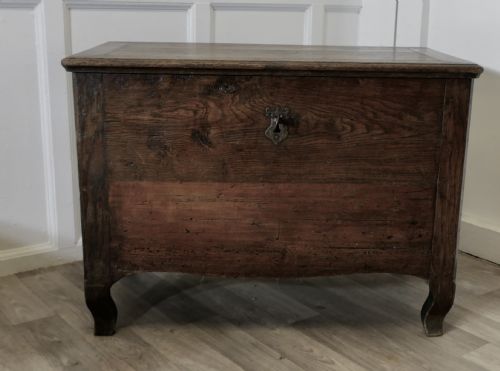
A vintage oak mule chest serves as a dual-purpose storage item, featuring a lidded compartment above one or more base drawers. These pieces emerge primarily from Georgian, 17th-century, and 19th-century periods, reflecting traditional English country house and cottage craftsmanship.
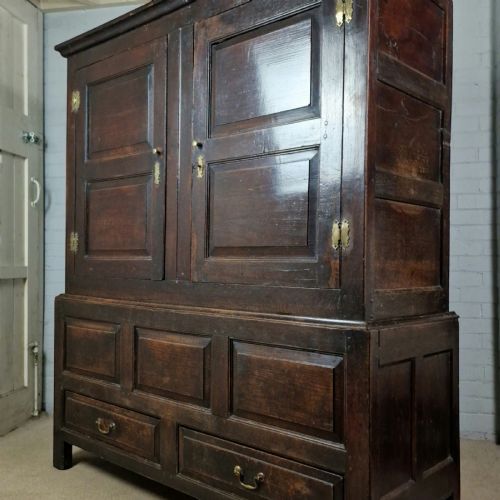
Buyers encounter various related formats on this page, including standard coffers, panelled storage chests, and hanging cupboards. The authentic mule chest remains distinct through its addition of functional drawers positioned beneath the main trunk interior.
Assessing quality and proportion
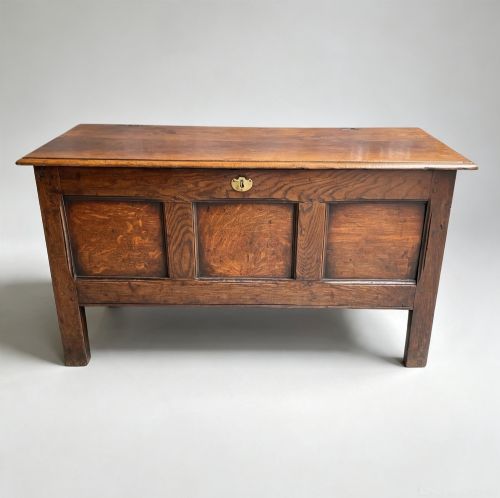
Superior examples display crisp panel joinery, thick solid oak timber boards, and original brass or iron hardware that has aged naturally with the wood. The balance between the upper coffer section and the base drawers dictates the visual harmony of the piece.
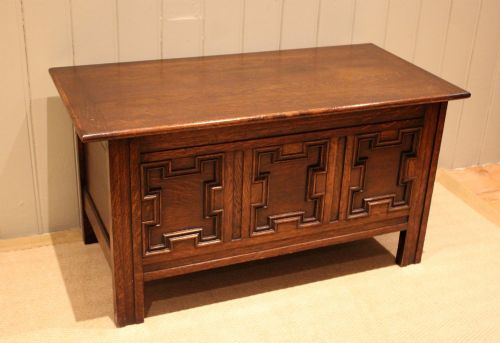
The depth and execution of carved decoration, whether geometric Jacobean panels or figural motifs, separate standard utility items from higher-status country house commissions. Original patination and untouched surface finishes elevate the desirability of individual chests.
Vintage Oak Mule Chest Retail Price Guide 2026
Typical asking prices for vintage oak mule chest among the pieces listed under this phrase on Sellingantiques today, from the lower quarter to the upper quarter. They describe what is for sale here now, not the wider market.
Certain country chests feature spirited green man carvings peering out from the woodwork, adding an unexpected flash of folklore to practical storage.
The Vintage Oak Mule Chest Glossary
- Mule chest
- A storage chest featuring a hinged lid enclosing a deep compartment above one or more drawers at the base. This form developed during the late 17th century as a transitional piece before tall chests of drawers became common.
- Coffer
- A heavy wooden box with a lid, used historically for storing valuables, textiles, or documents. Coffers form the foundational ancestor to the mule chest.
- Jacobean
- A decorative style spanning the early to mid 17th century, characterised by geometric panelling, strapwork, and deep mouldings. Pieces in this tradition often display stark rectilinear forms.
- Patina
- The surface sheen and colour developed by aged oak through handling, waxing, and exposure to light over generations. A desirable patina shows genuine age without modern chemical interference.
- Escutcheon
- A protective plate surrounding a keyhole, frequently cast in brass or wrought iron. On older chests, these fixtures provide secure housing for the lock mechanism.
Vintage Oak Mule Chest: Frequently Asked Questions
How do I use a mule chest today?
A vintage oak mule chest works well at the foot of a bed for storing spare blankets and winter linens, or as a coffee table substitute in a living room.
The deep interior accommodates bulky items while the base drawers hold smaller accessories, keeping daily clutter hidden away.
How can I tell a 17th-century chest from a Georgian one?
Seventeenth-century examples generally feature heavier geometric panel construction, pegged joints, and darker timber with a matte finish.
Georgian pieces introduce more refined mouldings, lighter honey tones, and better-integrated base drawers built with greater mechanical precision.
Why is it called a mule chest?
The term likely derives from the mule being a hybrid animal, as the chest represents a hybrid cross between a traditional coffer and a drawer chest.
Cabinet makers combined these two distinct storage types to create a more versatile furniture form for domestic use.
Does solid oak furniture require special care?
Solid oak benefits from occasional applications of beeswax to nourish the dry timber and maintain a soft, protective surface sheen.
Keep these heavy chests away from direct heat sources and dramatic humidity shifts to prevent the thick panels from splitting.