






Vintage Oak Headboard
These vintage oak headboard examples bring solid timber and period craftsmanship directly to the bedroom.
Vintage Oak Headboard
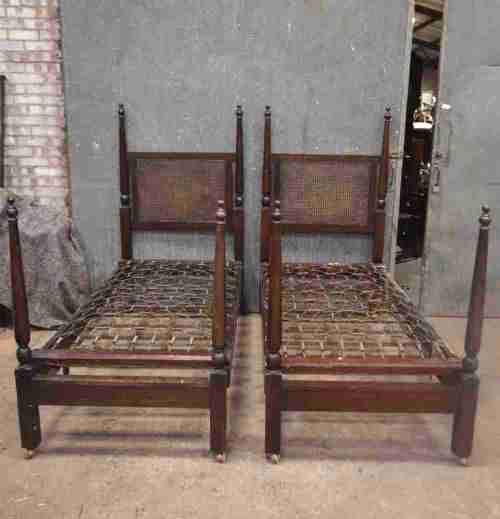
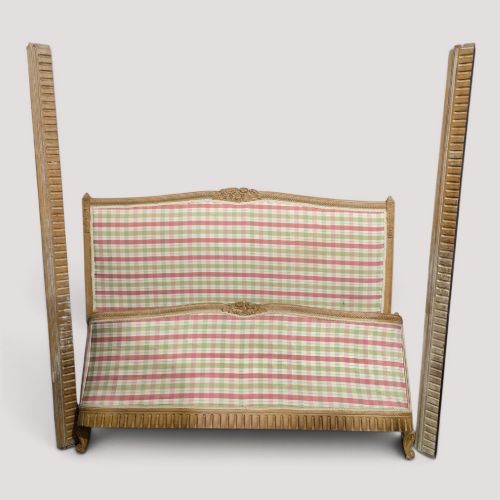
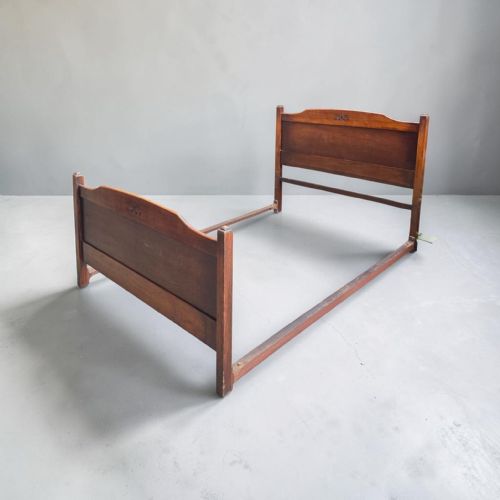
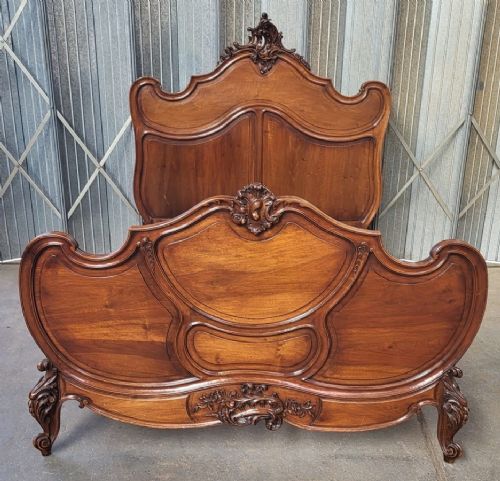
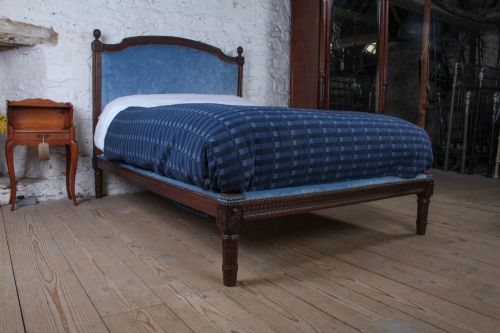
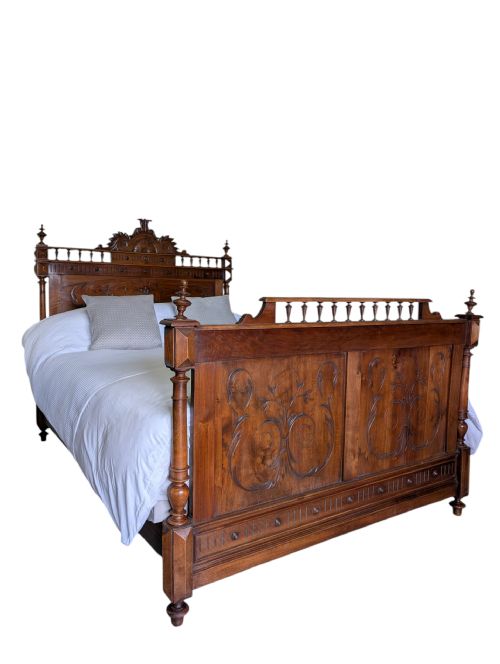
The pieces on this page originate from diverse design traditions, running from plain Arts and Crafts constructions to ornate French Chateau, Louis XV, and Louis XVI styles. You will encounter carved wooden panels, textured cane inserts, and textile or linen upholstery integrated into the structural timber framework.
How they were made
Construction relies heavily on solid oak, walnut, and general carved wood, often shaped into curved profiles or substantial headboards and footboards. Workshops utilised traditional joinery methods to assemble sturdy bed frames designed to support heavy mattresses and daily domestic use.
Surface treatments vary significantly across the period, including limed wood, bleached oak finishes, and rustic wax applications that highlight the natural grain of the timber. Upholstered panels incorporate textiles and newly applied fabric coverings to soften the hard wooden structures.
Listings feature periods spanning from the late nineteenth century through the Edwardian era up to the 1940s.
What varies in quality
The distinction between standard and superior pieces rests on the depth and crispness of the hand carving and the selection of the timber. Superior examples display carefully chosen oak grain, balanced proportions, and robust structural joinery that withstands decades of assembly and disassembly.
Maker attribution also dictates standing, with documented pieces associated with workshops like Heal and Son commanding greater attention. The integration of specialty elements, such as attached bedside tables or fine bergere cane work, elevates the refinement of individual designs.
Heal and Son
The Vintage Oak Headboard Glossary
- Bergere
- A traditional French upholstered chair or bed component featuring woven cane panels. This technique adds lighter texture alongside solid wooden frames.
- Limed wood
- A finishing method where a white or pale pigment is rubbed into the open pores of oak. This treatment creates a lighter, softened appearance on the timber surface.
- Arts and Crafts
- A design movement prioritising simple forms, local materials, and visible hand craftsmanship. Pieces from this tradition avoid excessive ornamentation in favour of honest construction.
- Louis XVI Style
- A neoclassical aesthetic characterised by straight vertical lines, symmetry, and restrained classical ornamentation. It provides a formal architectural quality to bedroom furniture.
- Bedstead
- A framework of a bed holding the mattress and springs, distinct from the mattress itself. These structures often incorporate decorative headboards and footboards.
Vintage Oak Headboard: Frequently Asked Questions
How do I choose the right size?
Bed sizes range from single and small double up to king size dimensions within these historical listings. Measure your available bedroom floor space carefully before selecting a larger frame.
Consider whether you require a pair of single beds or a single larger bedstead to suit your room layout and mattress requirements.
Are these beds easy to assemble?
Most antique bed frames utilise traditional bolt or slot-in side rail connections that require basic spanners for assembly. Having two people handle the heavy wooden components ensures safety during setup.
Modern mattress sizes can often be accommodated within these older frames, though checking internal dimensions is recommended.
How do I care for limed oak?
Dust wooden surfaces regularly with a soft, dry cloth to prevent dirt accumulation in the grain. Avoid harsh chemical cleaners that can strip specialist finishes like limed or bleached treatments.
Keep wooden furniture away from direct heat sources and strong sunlight to prevent timber movement or fading over time.
What distinguishes Arts and Crafts beds?
Arts and Crafts bed frames emphasise sturdy oak construction, clean lines, and visible honesty in how the timber is joined. They shun heavy surface ornamentation in favour of structural simplicity.
Such pieces often reflect the design ethos associated with prominent workshops like Heal and Son from the early twentieth century.