
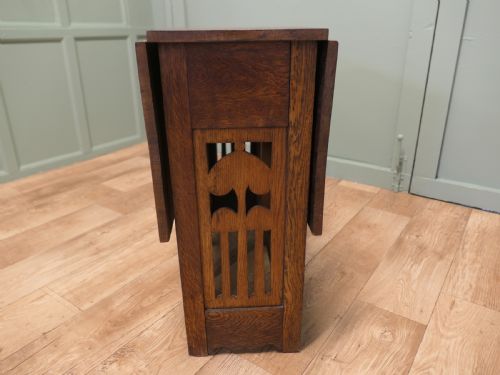
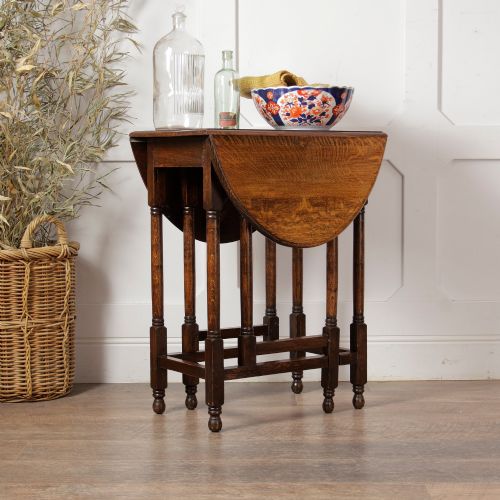
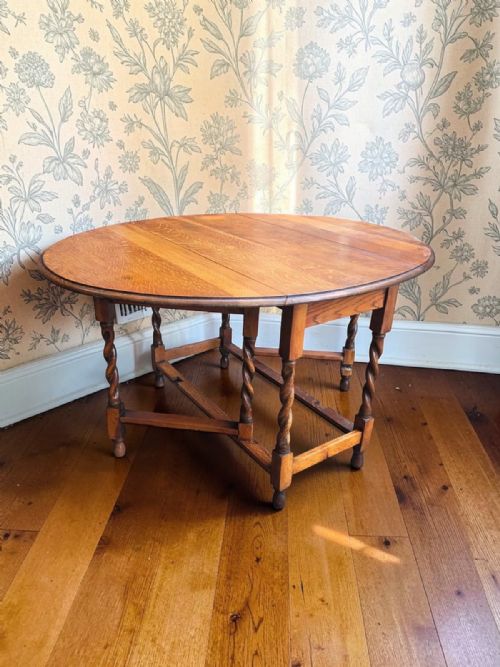
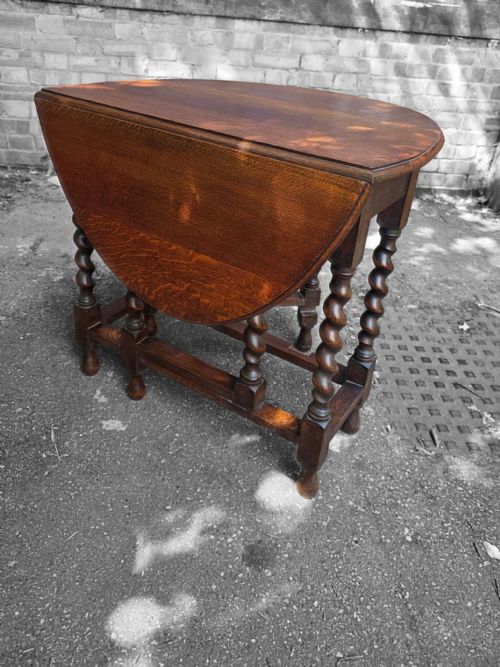
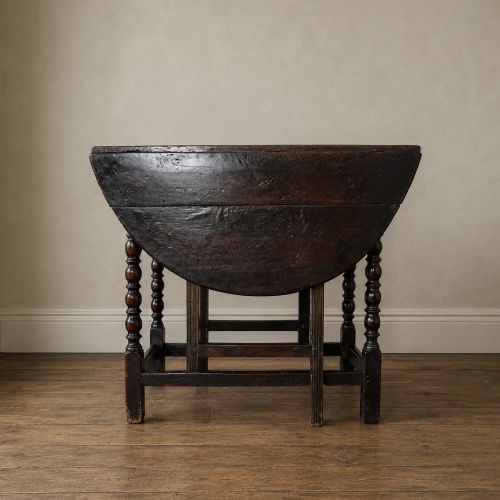
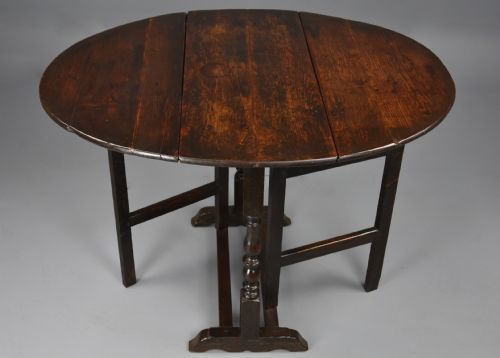
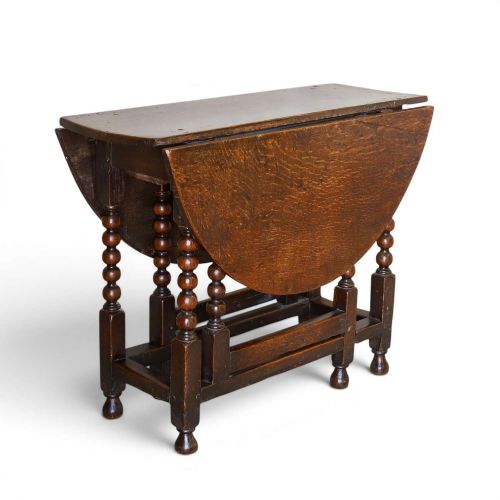
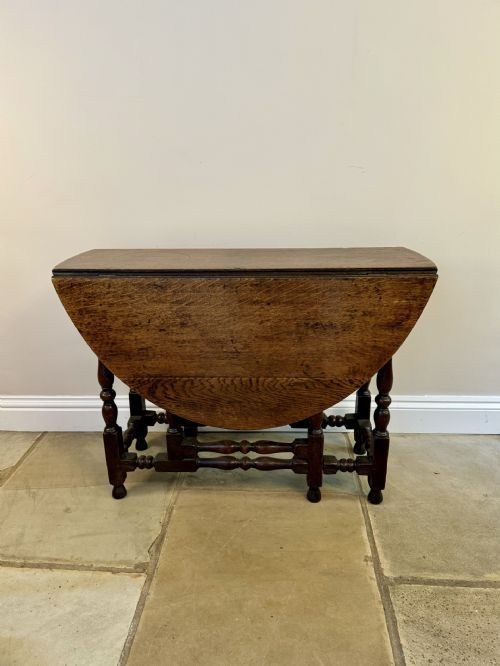
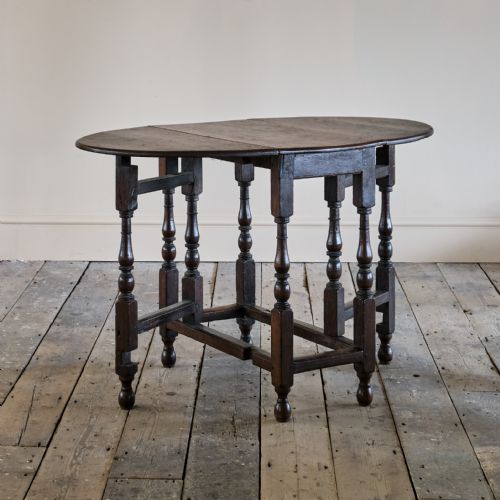

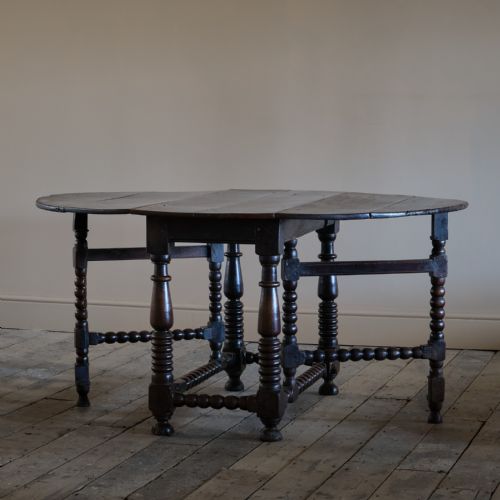

Vintage Oak Gateleg Table
A vintage oak gateleg table provides folding timber leaves for flexible dining and surface space, combining sturdy utility with classic folding charm.
Vintage Oak Gateleg Table
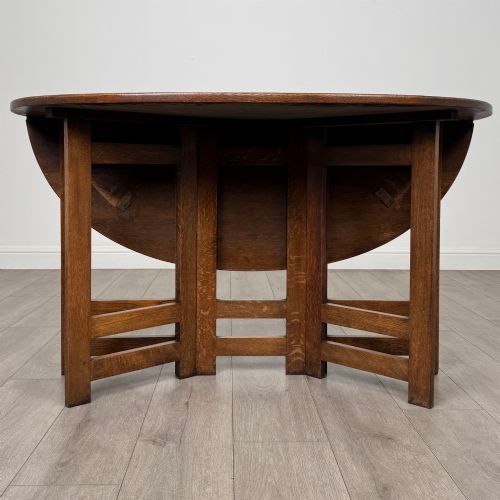
A vintage oak gateleg table is a folding table designed with drop leaves supported by pivoting legs that swing out like a gate. Buyers searching for a vintage oak gateleg table will encounter pieces spanning from the late seventeenth century through the Edwardian era and the early twentieth century.
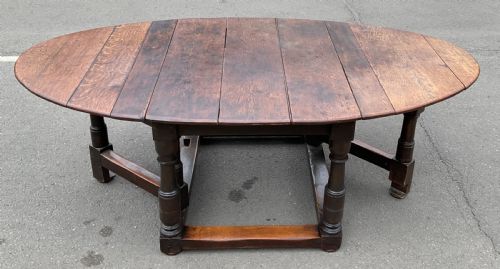
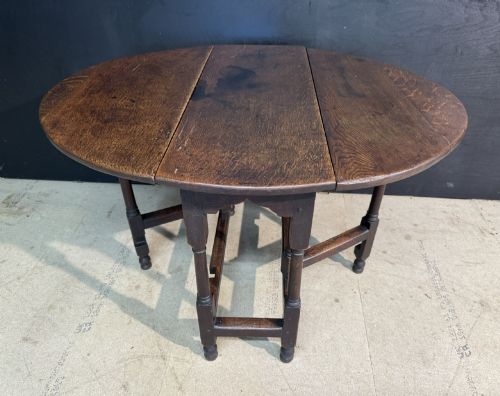
The selection ranges from small side tables and occasional coffee tables to large dining tables and oval wake tables. Most examples met on this page date from the early twentieth century, incorporating barley twist legs or plain turned supports.
Earlier seventeenth and eighteenth-century examples appear alongside Victorian and Edwardian revivals, showing consistent use of solid timber and drop-leaf mechanisms across multiple centuries.
What varies in quality
Quality rests in the density of the timber and the crispness of the turnery on the legs. Early seventeenth-century surfaces display depth of patina through long use, whereas twentieth-century revival pieces rely on deliberate finishing.
The rigidity of the frame when the leaves are extended separates a robust dining table from a lighter occasional piece. Well-fitted hinges and smooth gate action indicate careful initial construction and subsequent preservation.
Vintage Oak Gateleg Table Retail Price Guide 2026
Typical asking prices for vintage oak gateleg table among the pieces listed under this phrase on Sellingantiques today, from the lower quarter to the upper quarter. They describe what is for sale here now, not the wider market.
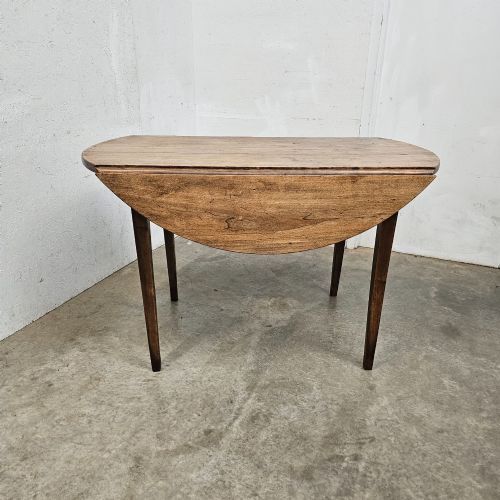
Listings span from the seventeenth century through the 1930s, featuring oak, ash, and fruitwood in dining, side, and coffee table forms.
The Vintage Oak Gateleg Table Glossary
- Gateleg table
- A table with hinged leaves supported by one or more legs that swing outward on a gate-like hinge. This design allows the surface area to expand or contract depending on space requirements.
- Drop leaf
- A hinged section of table top that folds down when not in use. It requires physical support from a bracket, leg, or gate to remain horizontal.
- Barley twist
- A spiral turning resembling a twisted rope, carved into wooden table legs and furniture supports. This decorative technique became popular in seventeenth-century furniture and saw a strong revival during the Edwardian period.
- Bobbin turned
- A style of leg or stretcher shaped with spherical or spool-like beads turned on a lathe. It provides a textured silhouette common on seventeenth-century pieces.
- Patina
- The surface sheen and coloration developed on timber over decades or centuries of handling, polishing, and exposure to light. It serves as an indicator of age and continuous use.
Vintage Oak Gateleg Table: Frequently Asked Questions
How do I use a gateleg table daily?
You can keep the leaves dropped against the sides to use the table as a narrow console or side table in a hallway. Swing the supporting legs outward and raise the leaves whenever you need extra surface area for dining or working.
Positioning the table away from direct heat sources helps prevent the solid oak top from warping over time. Regular gentle dusting preserves the finish without requiring heavy polishing.
How can I tell a seventeenth-century table from a twentieth-century revival?
Seventeenth-century tables exhibit hand-shaped joinery, pegged joints, and timber surfaces with deep, authentic patina accumulated over centuries. Tool marks left by hand saws and adzes often remain visible on the underside.
Twentieth-century revival pieces, including Edwardian and 1920s interpretations, show more uniform machine-sawn timber and standardised hardware fixings. Their turnery tends to look regular and lacks the distinct hand-carved variations of early work.
Are these tables sturdy enough for regular dining?
Solid oak construction provides substantial weight and structural integrity, making many of these tables suitable for daily meals. The central frame carries the primary load while the swinging gate legs bear the weight of the extended leaves.
Larger dining tables and wake tables offer significant stability due to their six-leg or eight-leg configurations. Checking that the gate pivots smoothly ensures the leaves remain securely supported during use.
What is an oval wake table?
An oval wake table is a large drop-leaf dining table designed to accommodate many people for gatherings and communal meals. The oval top shape softens the footprint of a large wooden surface in a dining room.
These pieces often feature multiple legs and double gate mechanisms to support the substantial folding leaves safely. They represent a specialised form within the broader category of antique oak tables.