



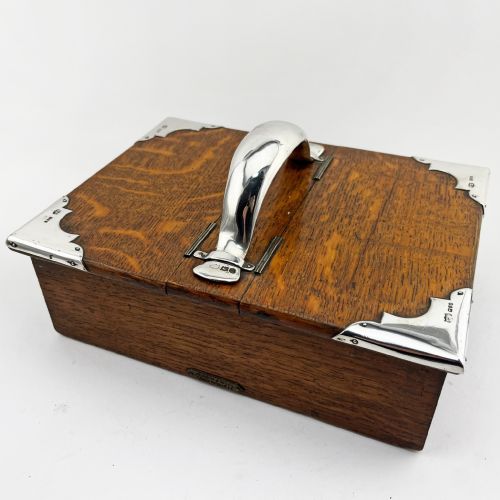


Vintage Oak Desk Box
A vintage oak desk box keeps correspondence and small writing implements contained with traditional British craftsmanship.
Vintage Oak Desk Box
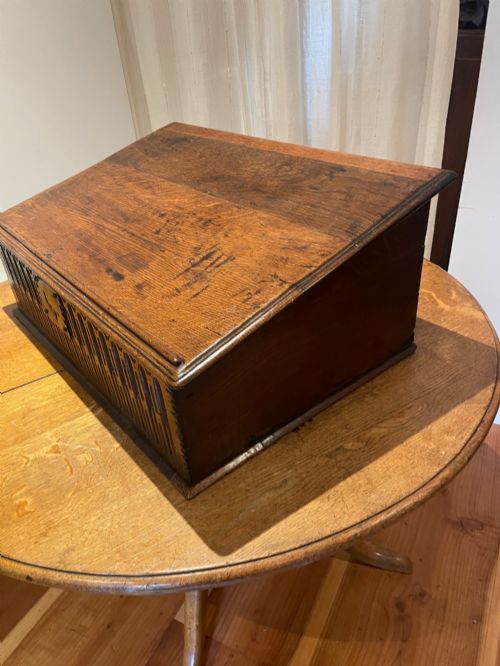
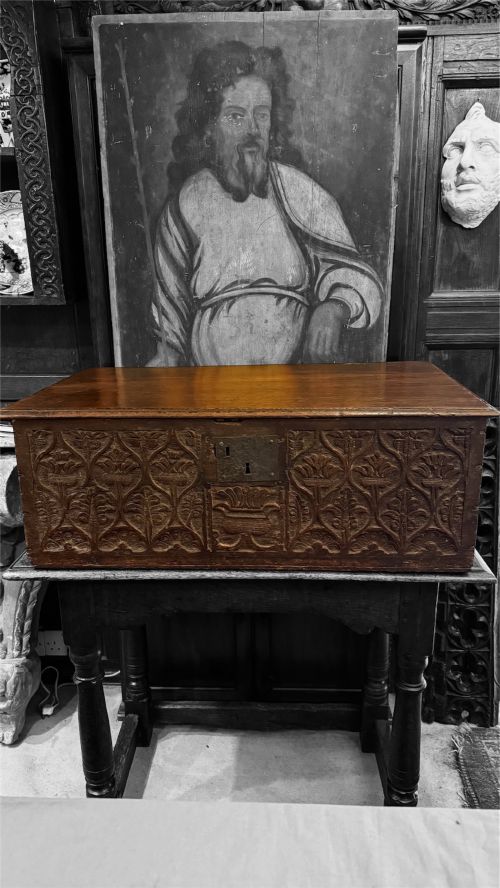
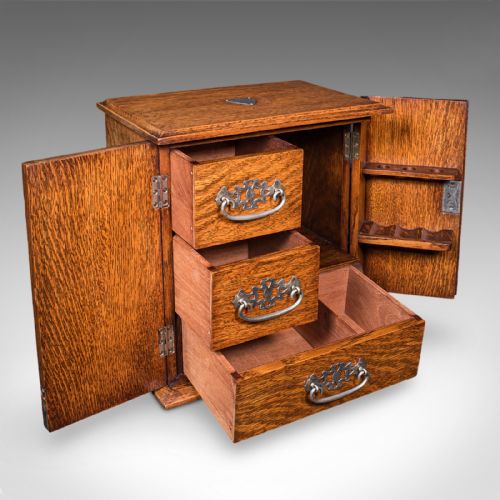
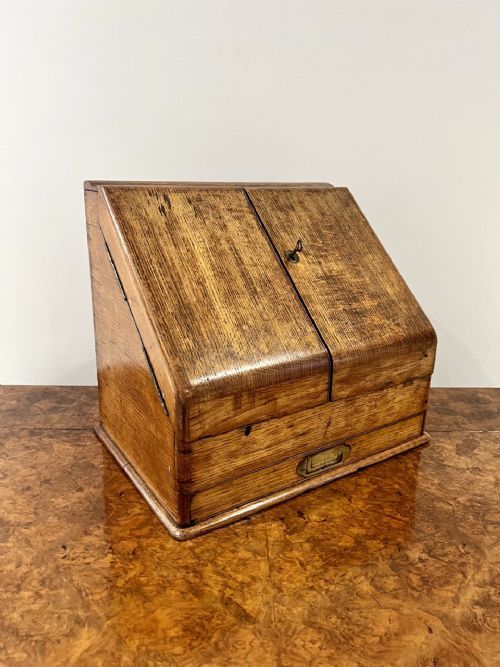
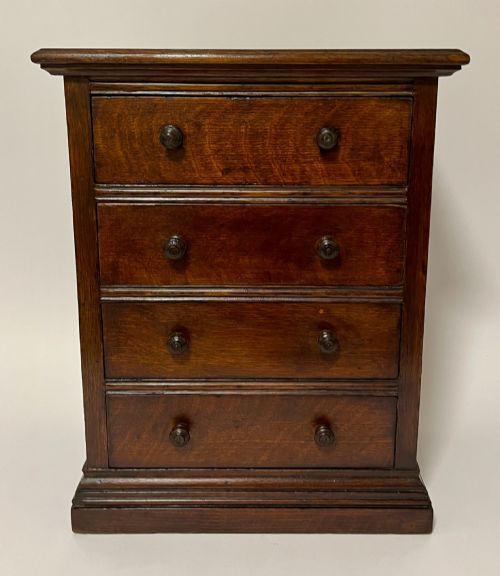
A vintage oak desk box encompasses tabletop stationery cabinets, document chests, Bible boxes, and fall-front tidies designed for desktop use. These pieces originate from various periods including the 17th century, Georgian era, Victorian period, and Edwardian decades, reflecting centuries of practical workspace organisation.
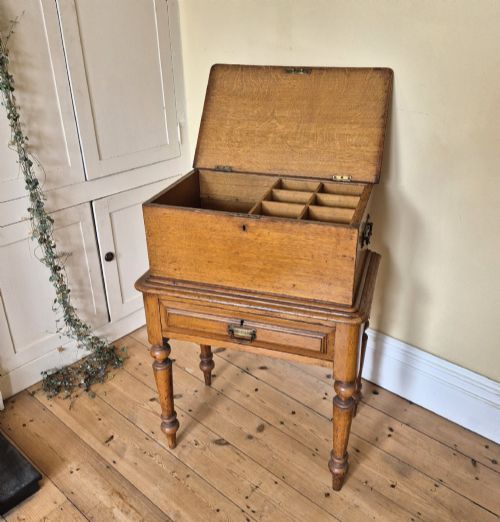
The version most commonly met on this page is the Victorian or Edwardian oak stationery cabinet or letter box, often fitted with internal partitions, drawers, and brass hardware. Alongside these, earlier 17th-century document and Bible boxes appear, demonstrating simpler rectangular forms constructed for secure storage.
Regional styles and specialised uses shape these objects, ranging from English country house letter boxes to campaign writing slopes and smoking cabinets. Buyers encounter pieces styled in 17th Century English, Arts and Crafts, and Tudor Revival traditions.
Quality Markers
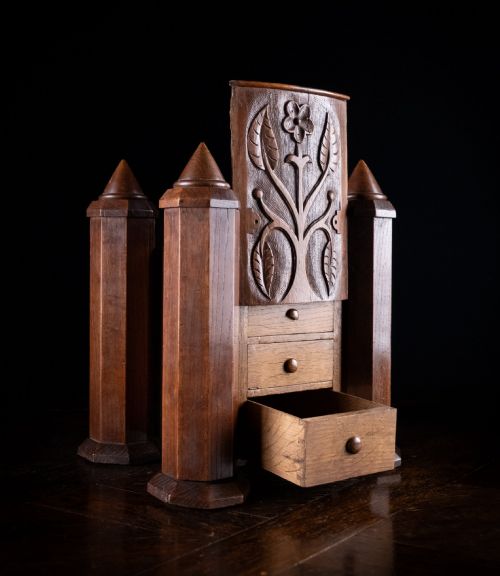
Quality separates through the integrity of the timber selection, the crispness of any carved decoration, and the precision of the joinery. Pieces displaying thoughtful grain matching, robust brass hardware, and original fitted interiors stand apart from standard utilitarian boxes.
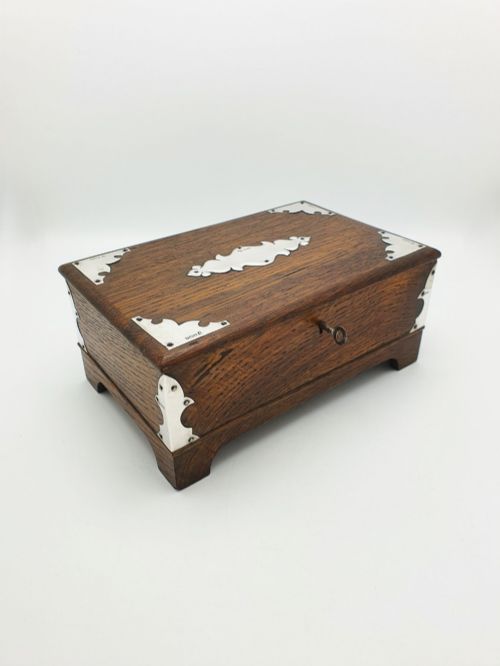
The presence of functioning original locks, secret drawers, and hallmarked sterling silver mounts elevates a piece. Better examples maintain structural balance across drop-front mechanisms and door hinges without relying on later replacements.
Vintage Oak Desk Box Retail Price Guide 2026
Typical asking prices for vintage oak desk box among the pieces listed under this phrase on Sellingantiques today, from the lower quarter to the upper quarter. They describe what is for sale here now, not the wider market.
Listings feature oak alongside sterling silver, brass, glass, and iron, spanning periods from the 17th century through the Edwardian era.
Mappin and Webb
The Vintage Oak Desk Box Glossary
- Bible Box
- A sturdy wooden chest originally built to store a family Bible or important household documents. These pieces date predominantly to the 17th and 18th centuries and often feature sloping lids.
- Stationery Cabinet
- A desktop cabinet featuring internal partitions and letter slots, commonly with a fall-front or doors. These became popular during the Victorian and Edwardian periods for organised desk management.
- Campaign Box
- Portable furniture constructed for military officers on the move, typically fitted with brass corners and recessed carrying handles. They are designed for durability during travel.
- Humidor
- A specialised box designed to store cigars, frequently lined with specific wood and fitted with metal mounts. Versions on this page sometimes take whimsical forms like railway coal wagons.
- Fall-Front
- A hinged door or panel that drops downward to provide access to interior compartments and writing surfaces. This mechanism allows quick access to desk tidies and stationery boxes.
Vintage Oak Desk Box: Frequently Asked Questions
What is an oak Bible box?
An oak Bible box is a rigid wooden chest historically used to store religious texts and valuable documents securely. These early pieces feature hinged lids and often display hand-carved panels.
They sit flat on tables or desks, serving as precursors to later stationery boxes and writing slopes.
How do I date an oak desk box?
Dating relies on examining the construction methods, hardware styles, and timber preparation. Earlier pieces from the 17th century show pegged joinery and chip carving, whereas Victorian and Edwardian items utilise machine-cut dovetails and fitted brass hinges.
Stylistic cues such as Arts and Crafts influences or campaign brasses also help pinpoint the era.
Were these boxes used for letters?
Many of these boxes function specifically as stationery cabinets, letter boxes, or postboxes designed to hold incoming and outgoing correspondence. Internal dividers keep envelopes and writing paper separated.
Examples from the Edwardian period frequently include dedicated slots for stamps and pens.
How do I clean an antique oak box?
Maintenance involves dusting with a dry, soft cloth and occasionally applying a traditional beeswax polish to nourish the oak grain. Avoid harsh chemical cleaners or excessive moisture, which can damage the timber and metal mounts.
Preserving the natural patina maintains the historical character of the piece.