
Vintage Oak Buffet
A vintage oak buffet anchors a dining room with solid timber, generous storage and centuries of craft behind it.
Vintage Oak Buffet
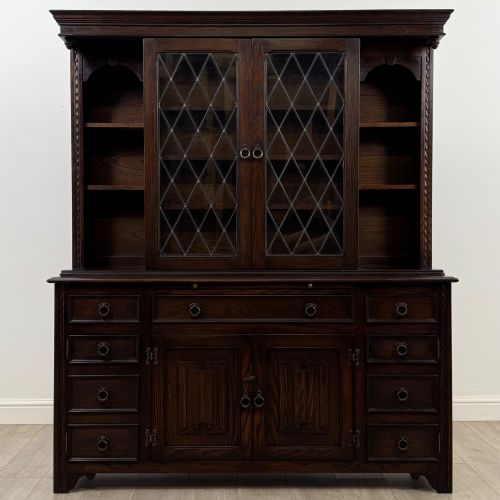
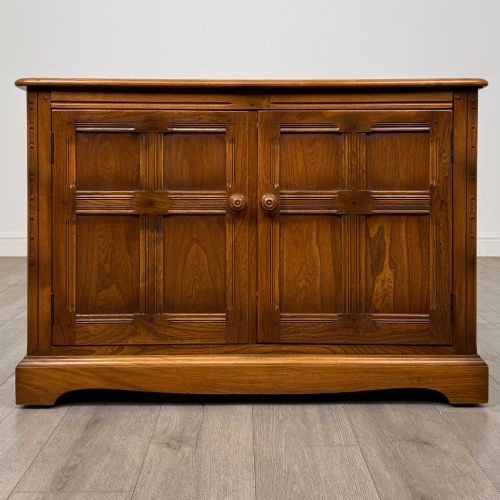
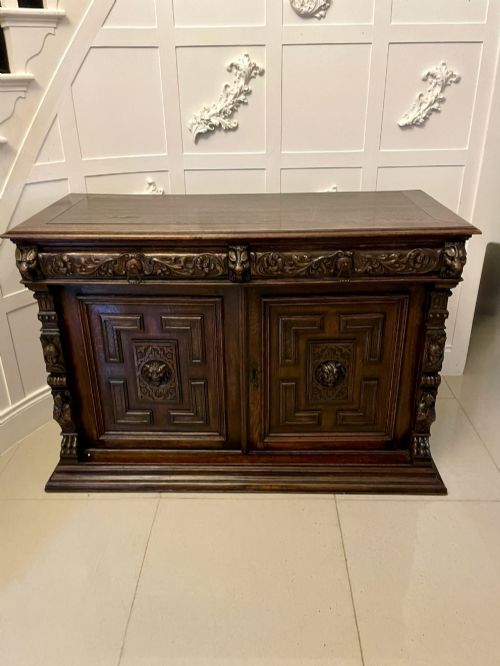
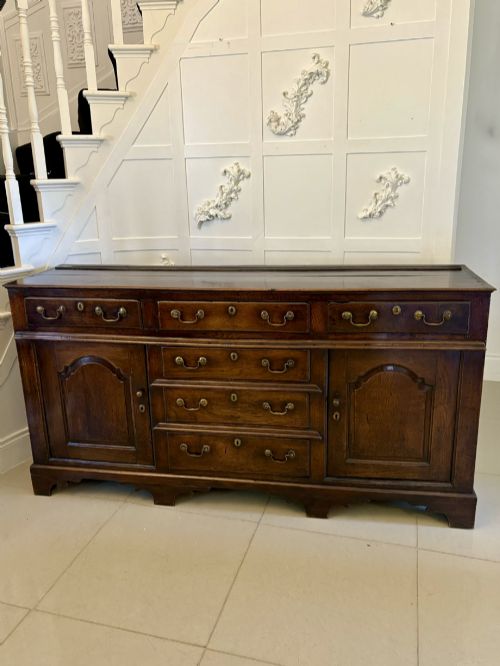
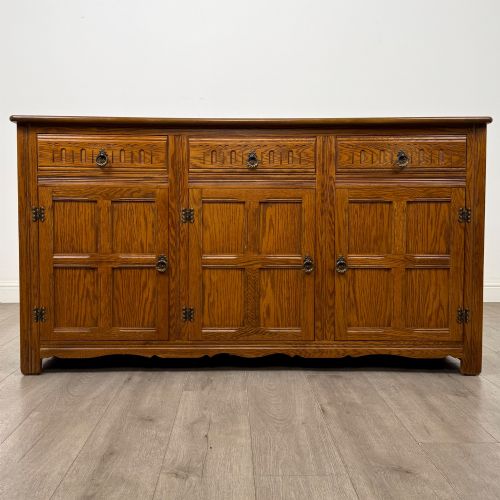
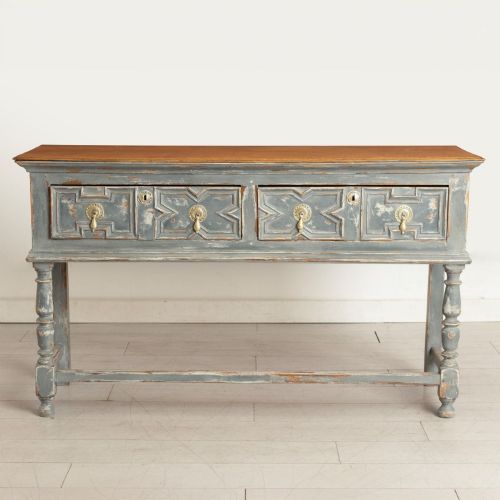
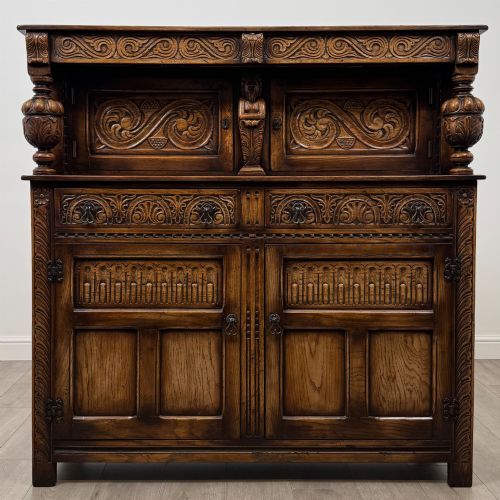
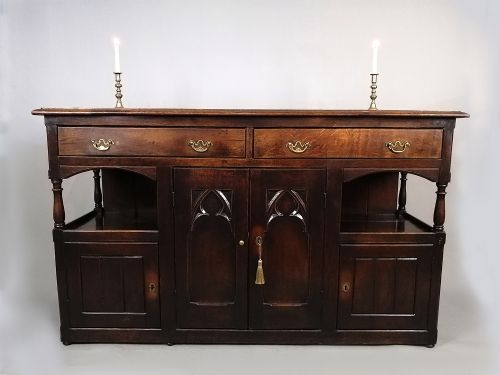
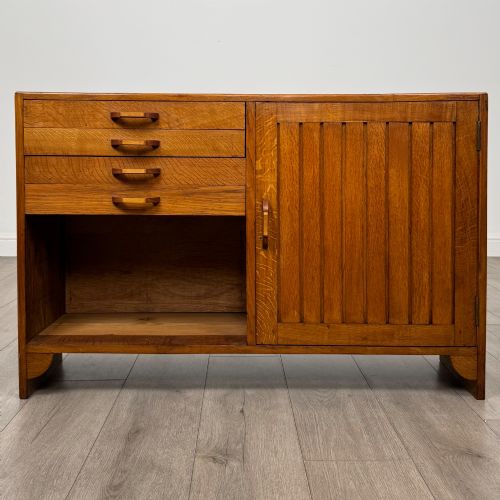
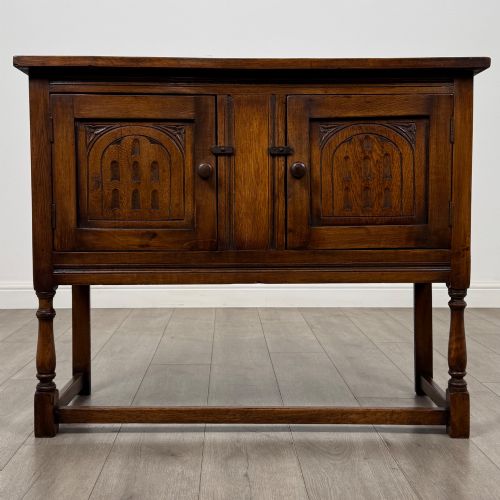
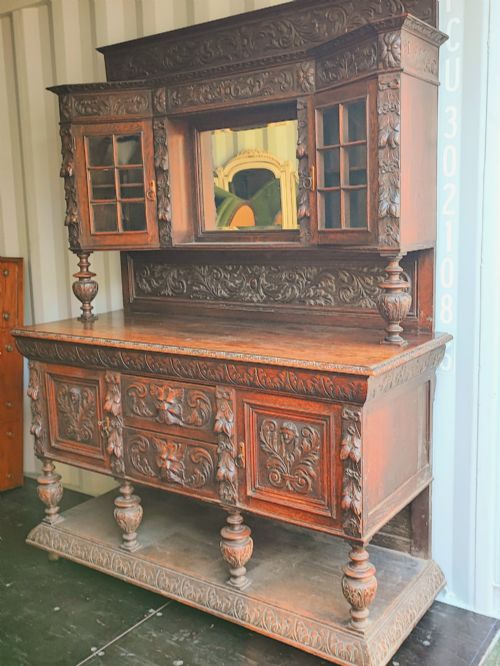
When you search for a vintage oak buffet, you encounter a robust family of dining and serving furniture spanning the eighteenth, nineteenth and twentieth centuries. The selection ranges from straightforward Edwardian golden oak sideboards and carved court cupboards to Georgian dresser bases and Arts and Crafts cabinets.
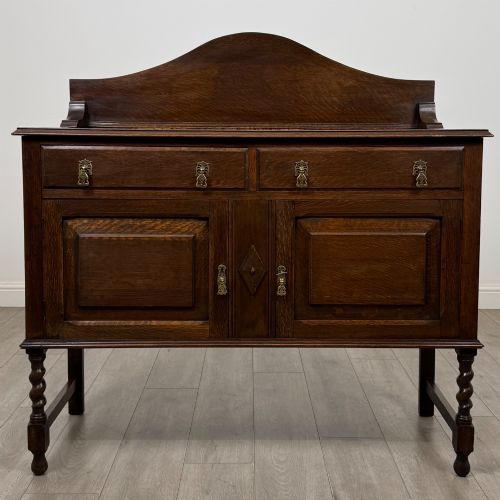
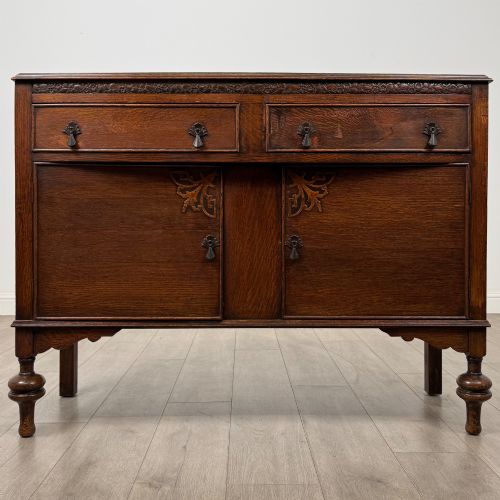
You are most likely to meet twentieth-century Edwardian and 1930s examples on this page, often featuring carved detailing, barley-twist supports or golden oak finishes. Alongside these sit earlier vernacular dresser bases, French provincial housemaid cupboards and occasional serving tea trolleys.
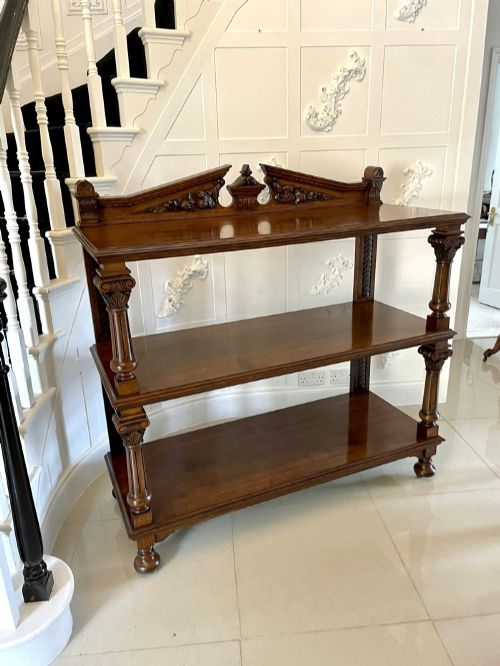
These items served primarily to store linen, cutlery and dining china while offering a flat surface to display silver or serve food. Their forms cross over with sideboards, dressers and cupboards, reflecting how domestic dining spaces evolved across different periods.
How they were made
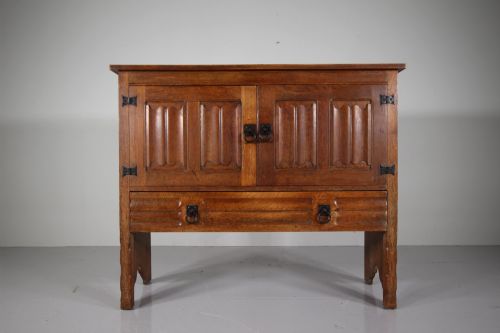
Makers relied primarily on solid oak, complemented by occasional panels of burr walnut, fruitwood or tiger oak, and assembled them using traditional joinery and carcase construction. Surfaces often display rich carving, linen-fold panels or simpler geometric mouldings depending on the prevailing style.
Hardware played a functional and decorative role, with brass handles and hinges paired against iron fittings and mirrored backplates on display cabinets. Timber treatments ranged from a warm golden polish and bleached finishes to dark Jacobean-style stains.
Serving tea trolleys disguised as miniature butlers make an unexpected appearance among the heavy dining room sideboards.
What varies in quality
The distinction between ordinary and exceptional pieces rests upon timber selection and the depth of hand-carving. Dense, figured oak and crisp, unblemished relief work elevate a sideboard far above mass-produced factory output.
Construction integrity defines longevity, visible in tight joints, substantial backboards and matching drawer linings. Well-executed revival styles respect historical proportions, whereas inferior versions rely on superficial applied ornamentation.
Gomme·Charles Dudouyt
The Vintage Oak Buffet Glossary
- Dresser base
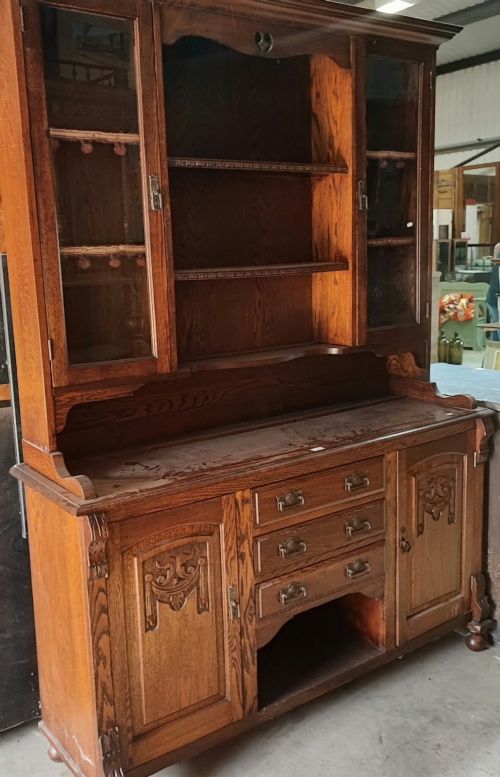
- A low cabinet featuring drawers above cupboards, historically used in the kitchen or dining room for food preparation and storage. It provides a wide surface top without the upper shelving rack.
- Court cupboard
- An enclosed antique cabinet with a recessed upper section supported by pillars, originating in the sixteenth and seventeenth centuries. Edwardian workshops revived this form to store silver and glassware.
- Barley-twist
- A turned wooden support resembling a twisted rope, carved into legs or structural columns. This decorative detail appears frequently on late Victorian and 1930s revival furniture.
- Potboard
- An open slatted lower shelf built into the base of a dresser or buffet. It was originally designed to hold pots and heavy earthenware domestic utensils.
- Arts and Crafts
- A design movement prioritising honest construction and natural materials over machine-made ornamentation. Pieces from this tradition emphasise plain oak surfaces and hand-beaten metal hardware.
Vintage Oak Buffet: Frequently Asked Questions
What is the difference between a buffet and a sideboard?
Buffets and sideboards share overlapping purposes for dining room storage and serving, though buffets traditionally emphasise a lower profile suited to serving food.
Over time, makers used the terms interchangeably, particularly across Edwardian and mid-twentieth-century designs.
How do I date an oak buffet?
Dating relies on combining stylistic clues, construction methods and timber characteristics. Edwardian pieces often show golden oak finishes and applied carvings, while eighteenth-century examples display hand-cut joinery and aged patination.
Hardware types and secondary woods like fruitwood or walnut offer further chronological indicators.
Where should I place a buffet in my home?
A buffet fits naturally in a dining room against a main wall to store tableware, linens and serving dishes. They also work effectively in hallways or large living spaces where surface display and closed storage are needed.
Ensure you measure both floor space and clearance for opening cupboard doors and drawers.
How do I care for vintage oak furniture?
Maintain oak surfaces by dusting regularly with a dry, soft cloth and applying a quality beeswax periodically to nourish the timber. Avoid placing pieces in direct sunlight or near heat sources to prevent the wood from drying and splitting.
Use coasters and placemats to protect the polished top from moisture and heat damage.