


Oak French Enfilade
An oak French enfilade provides substantial, long storage with deep regional character, making it the anchor piece for a serious dining room.
Oak French Enfilade
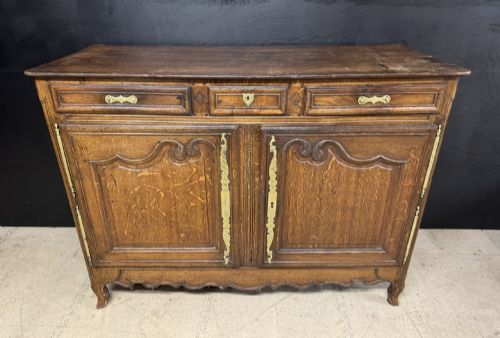
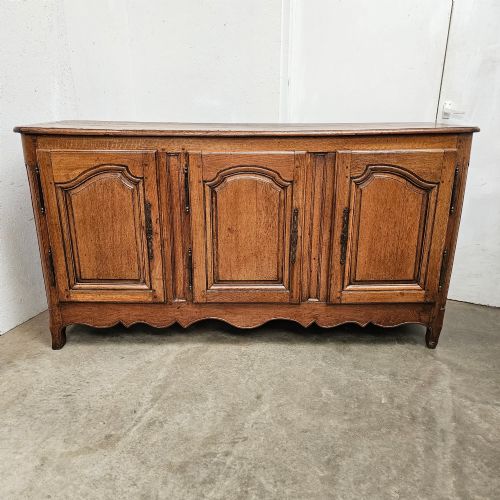
When you search for an oak French enfilade, you are looking at long, low storage pieces traditionally designed for French provincial dining rooms. These low cabinets offer generous capacity through multiple doors stretching across the front, making them far longer than standard sideboards.
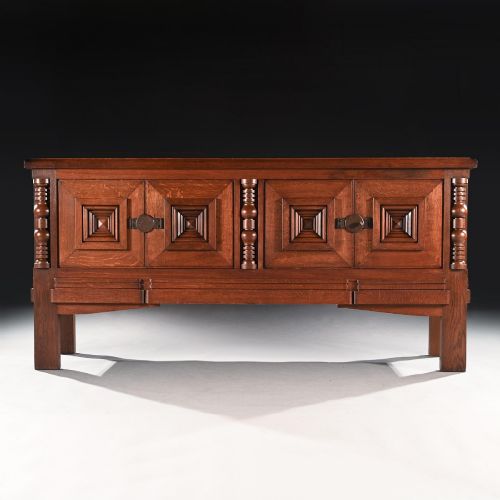
The versions you are most likely to meet on this page hail from the eighteenth and nineteenth centuries, alongside regional variations from the nineteen-thirties and nineteen-forties. They range from rustic farmhouse interpretations to refined Louis XV style designs with carved panels.
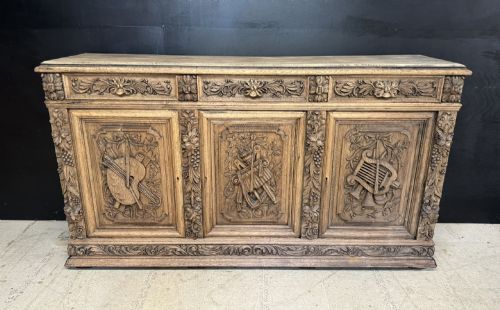
Many examples arrive in solid oak, though walnut, chestnut, pine, and timber also appear alongside painted or bleached finishes. Some pieces feature contrasting marble tops or parquetry surfaces, while others show heavy French Renaissance Revival carving.
Construction and Materials
Cabinet makers built these robust long cupboards predominantly in solid oak, occasionally combining them with pine or walnut for internal framing and secondary woods. Traditional joinery such as pegged mortise and tenon construction holds the heavy carcasses together.
Metalwork played a functional and decorative role, utilising brass and wrought iron for hinges, escutcheons, and long handles spanning multiple doors. Surface treatments varied from natural wax to painted or bleached finishes, alongside intricate hand carving applied directly to the timber.
Some nineteenth-century French cabinet makers cleverly hid extra door hinges behind deep carved oak vine leaves just to confuse clumsy housemaids.
Assessing Quality and Execution
The caliber of an enfilade rests upon the depth and crispness of the hand carving and the proportion of the timber panels. Pieces with dense, well-figured solid oak and integrated structural framing stand apart from simpler utility builds.
Hardware integration and timber preparation dictate the overall finish. Fine examples display carefully fitted doors with original brass or wrought iron hardware that complements the regional style without over-restoration.
Charles Dudouyt
The Oak French Enfilade Glossary
- Enfilade
- A long sideboard or buffet featuring a series of doors in a straight line, designed for dining room storage. This long format distinguishes it from taller buffets and shorter sideboards.
- Parquetry
- A geometric mosaic of wood pieces used for decorative effect on furniture surfaces. This technique appears on tabletops and sideboard surfaces for visual texture.
- Louis XV Style
- A decorative style characterised by asymmetry, curved lines, and natural scroll motifs. Pieces in this style often show flowing floral carvings and cabriole legs.
- Bleached oak
- Timber treated to lighten its natural warm tone, creating a pale finish popular in mid-century and later interpretations. This treatment softens the visual weight of heavy nineteenth-century cabinets.
- Escutcheon
- A flat plate surrounding a keyhole, often cast in brass or wrought iron. It protects the surrounding wood from wear and adds decorative detail to the cabinet doors.
Oak French Enfilade: Frequently Asked Questions
What is an oak french enfilade used for?
These long cabinets served historically in French dining rooms for storing tableware, linen, and food provisions. Their extended top surfaces also provided a convenient stage for serving meals during large gatherings.
Today, they function as substantial credenzas in modern dining rooms or living spaces. Their length offers extensive interior shelving while maintaining a low profile beneath artwork or mirrors.
How do I distinguish eighteenth century pieces?
Eighteenth century examples typically show hand-hewn joinery, pegged construction, and deep patination acquired over centuries of use. The carving tends to be organic, reflecting regional provincial motifs rather than industrial precision.
By contrast, later nineteenth century and twentieth century iterations often incorporate machine-cut elements or revival styles like Louis XV and Art Deco. Examining the interior timber and backboards helps reveal the age of the construction.
Are bleached oak enfilades original?
Bleaching oak was a popular treatment applied during later restoration campaigns or mid-century interior design movements to lighten heavy dark timber. Many nineteenth-century and earlier pieces received this treatment to suit contemporary aesthetic preferences.
While some cabinets left the workshop with lighter finishes, buyers should examine the depth of the grain to understand the history of the surface treatment.
How do I style an enfilade at home?
Because of their considerable length, these cabinets anchor large walls effectively without dominating the vertical space of a room. Pairing them with a large painting or mirror above balances the horizontal proportions.
Keep surface styling restrained to let the timber grain and hardware stand out. Simple ceramic lamps or modest decorative objects complement the heavy wooden structure.