



Vintage Enfilade Buffet
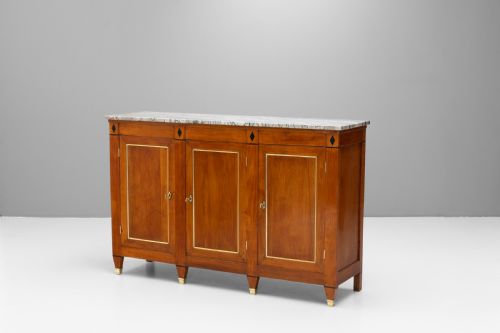
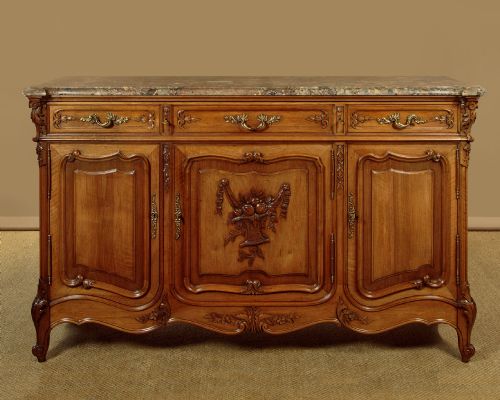
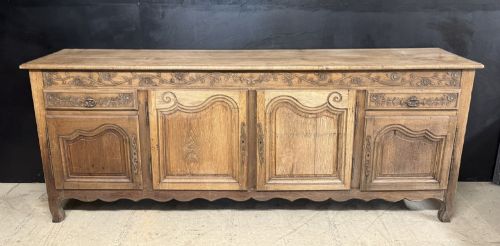
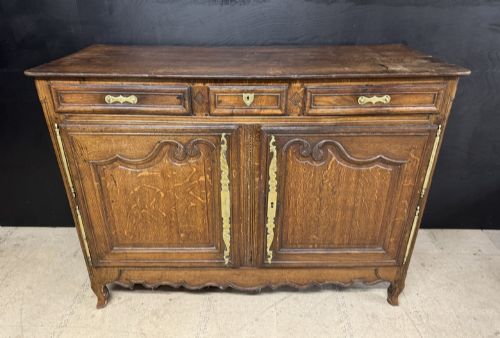
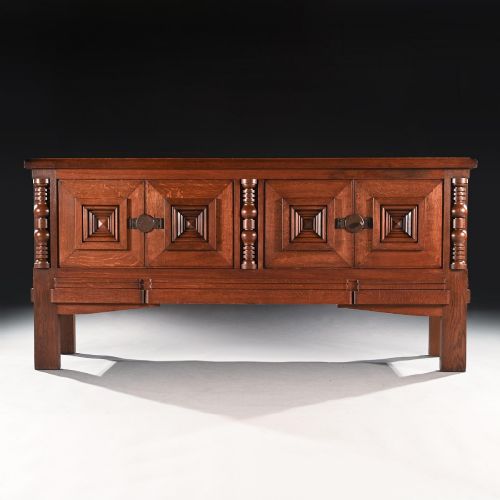
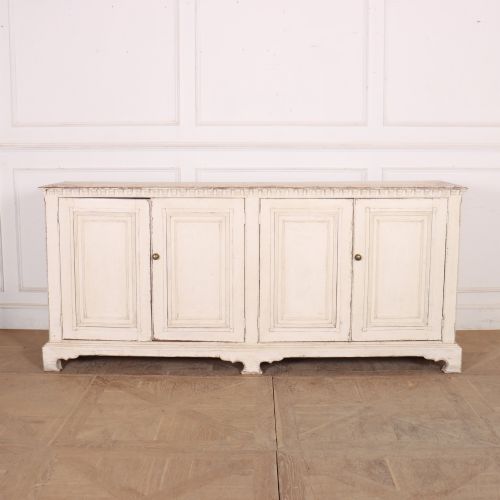
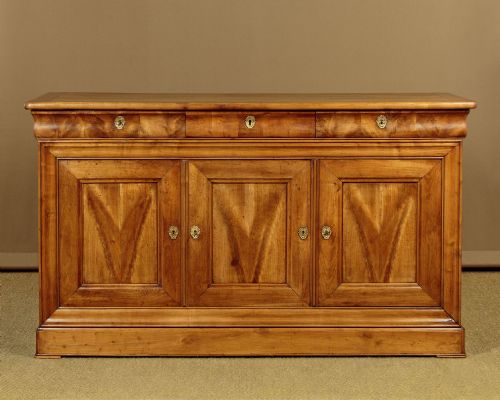
A vintage enfilade buffet brings substantial French storage and long wooden lines into a room.
Vintage Enfilade Buffet
A vintage enfilade buffet is a long, low storage piece originating from France, commonly catalogued across periods ranging from the eighteenth century to the mid twentieth century. Buyers seeking this form will encounter sturdy wooden frameworks, often designated under broader categories like sideboards, side cabinets, and buffets.
The examples gathered here span regional French Provincial styles alongside revival designs such as Henri II, Louis XV, and French Art Deco. Oak remains the predominant timber, though walnut, mahogany, cherrywood, and painted wood also appear.
Many of these long cupboards incorporate fitted marble tops or parquetry surfaces, offering a low horizontal profile designed to anchor a dining room or hallway. The proportions typically emphasise length over height, providing generous interior capacity behind multiple doors.
How they were made
Construction relies heavily on solid regional timbers like oak and cherrywood, joined to support long horizontal carcasses often finished with marble or parquetry tops. Cabinetmakers shaped doors and panels using traditional framing techniques, frequently incorporating carved details or inlaid marquetry.
Hardware such as brass handles, iron fittings, and ormolu mounts punctuate the wooden surfaces, adding functional weight and decorative contrast to the facades.
Vintage Enfilade Buffet Retail Price Guide 2026
Typical asking prices for vintage enfilade buffet among the pieces listed under this phrase on Sellingantiques today, from the lower quarter to the upper quarter. They describe what is for sale here now, not the wider market.
Listings feature oak, walnut, and mahogany timbers alongside marble tops and painted wood finishes.
What varies in quality
Quality reveals itself in the weight and selection of the timber, the precision of the parquetry or marquetry patterns, and the crispness of any hand-carved ornamentation. Superior pieces demonstrate careful timber matching across long doors and harmonious proportions between the wooden base and the fitted marble slab.
The integration of original brass or ormolu hardware and the smooth operation of multiple doors distinguish finer workshops from standard production.
Charles Dudouyt
The Vintage Enfilade Buffet Glossary
- Enfilade
- A long sideboard or buffet featuring a continuous line of doors, traditionally used in dining rooms for serving and storage. This form provides an extended horizontal surface often topped with marble or parquet.
- Parquetry
- A geometric mosaic of wood pieces used for decorative surfaces, frequently seen on table and cabinet tops. It creates a patterned grain effect through contrasting timber tones.
- Marquetry
- The art of applying pieces of veneer to a structure to form decorative designs and pictures. Artisans utilise various coloured woods to achieve detailed pictorial or abstract motifs.
- Ormolu
- Gilt bronze mounts applied to furniture for decoration, popular in French classical and revival designs. The metal adds metallic brightness against dark or polished timber.
Vintage Enfilade Buffet: Frequently Asked Questions
How do I style a vintage enfilade buffet?
Place a long enfilade against a principal wall in a dining room or hallway to ground the space with its horizontal lines. The broad top surface suits large lamps, ceramics, or mirrors.
Keep surrounding furniture simple to let the carved wood and marble details stand out without crowding the room.
What is the difference between an enfilade and a sideboard?
An enfilade is a specific type of long sideboard, traditionally French, characterised by a continuous run of three or more doors. Standard sideboards can be shorter and vary more widely in British and American cabinetmaking traditions.
Both serve similar storage functions, but an enfilade emphasises extended linear length.
Are marble top buffets difficult to maintain?
Marble tops require gentle cleaning with mild soap and water to preserve the polished surface. Avoid acidic cleaners that can etch the stone over time.
Using coasters and placemats protects the natural stone from staining during everyday use.
How do I identify a Louis XV style buffet?
Louis XV style pieces often feature curved lines, cabriole legs, and subtle carved foliage motifs drawn from eighteenth-century French design. Look for asymmetrical elements and scrollwork on the panels and aprons.
Revival pieces from later periods replicate these classic flourishes with period-appropriate hardware.