

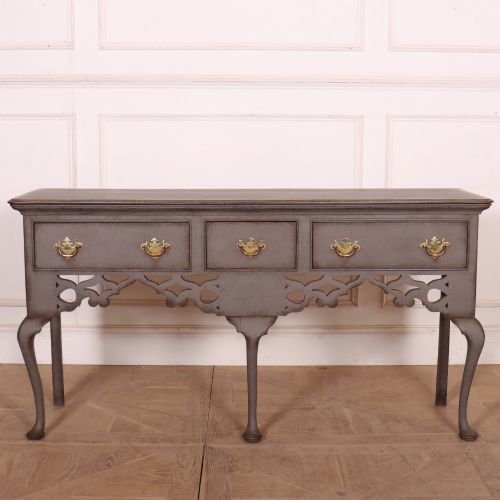
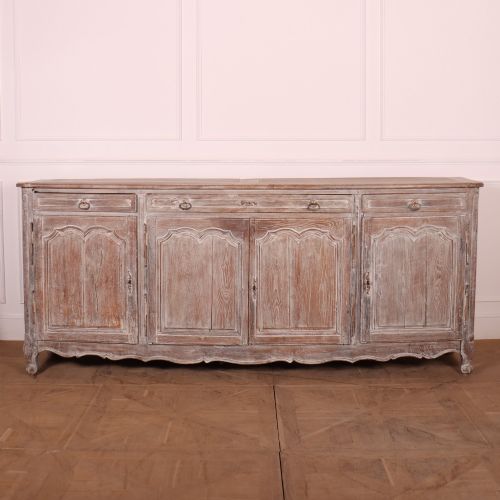
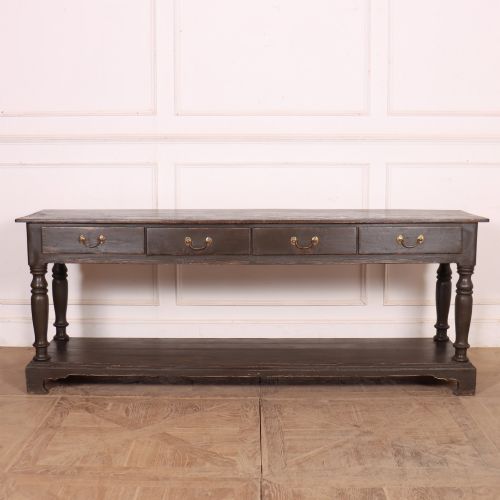
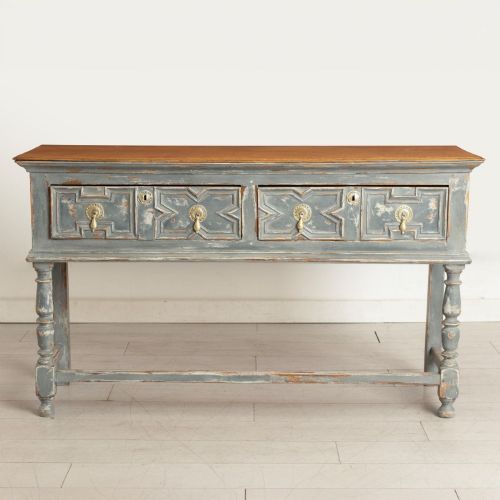
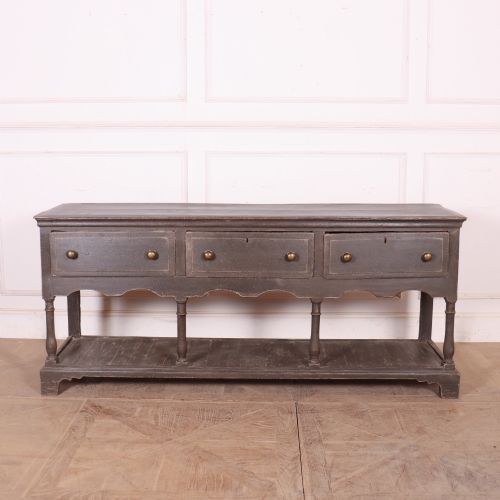


Grey Oak Sideboard
These grey oak sideboard alternatives combine heavy timber construction with painted finishes, offering practical storage for modern dining rooms.
Grey Oak Sideboard
A grey oak sideboard typically refers to large wooden storage units, dresser bases, and commodes finished in muted tones. The pieces seen here span the eighteenth and nineteenth centuries, alongside examples from around nineteen hundred and nineteen ten. Formats range from English potboard dresser bases to French enfilades and serpentine commodes.
Buyers will encounter traditional English country furniture alongside French provincial styles. Many examples feature painted timber surfaces over oak and pine construction, often complemented by marble tops or brass hardware.
Object types include drapers tables, dressers, and sideboards with buffets. These items originate from British and continental workshops, reflecting regional vernacular cabinetmaking traditions.
Materials and construction methods
Construction relies primarily on solid oak and pine carcases, joined using traditional cabinetmaking techniques suited to heavy daily use. Surfaces frequently receive layers of paint, creating the weathered grey aesthetic found on French provincial and English country pieces.
Hardware elements incorporate cast brass handles and escutcheons, while select twentieth-century examples integrate heavy marble slab tops. Secondary timbers like pine appear in drawer linings and interior framing.
Grey Oak Sideboard Retail Price Guide 2026
Typical asking prices for grey oak sideboard among the pieces listed under this phrase on Sellingantiques today, from the lower quarter to the upper quarter. They describe what is for sale here now, not the wider market.
Potboard bases were built sturdy enough to hold heavy cast-iron pots, meaning your heaviest platters will find a welcoming home.
Evaluating craftsmanship and condition
Quality separates standard utilitarian storage from finer decorative examples through the handling of timber thickness and surface finish. Finer pieces display well-proportioned mouldings, hand-cut joinery, and patinated painted surfaces that show age naturally.
The integrity of secondary timbers and the original character of the painted timber or marble top heavily influence the piece. Superior examples maintain structural stability while preserving the integrity of their historical hardware and original construction details.
The Grey Oak Sideboard Glossary
- Potboard dresser base
- A low wooden storage unit featuring an open lower shelf traditionally used for storing pots and kitchenware. These sturdy bases form a primary category of early dining room furniture.
- Enfilade
- A long sideboard or buffet featuring a succession of doors in a single line, originating in French interior architecture. These grand storage pieces provide substantial surface and interior capacity.
- Serpentine commode
- A chest of drawers or cabinet featuring a wavy, undulating front profile with a convex centre flanked by concave sides. This sophisticated silhouette requires advanced woodworking skill.
- Drapers table
- A long, narrow utilitarian table originally utilised in mercer shops for displaying cloth, often adapted for domestic serving use. They typically incorporate deep proportions and sturdy timber legs.
- Cabriole leg
- A furniture leg that curves out and then narrows down in a graceful S-shape, ending in a pad or foot. This stylistic element appears frequently on eighteenth-century English and continental tables.
Grey Oak Sideboard: Frequently Asked Questions
What is a grey oak sideboard?
A grey oak sideboard encompasses heavy timber storage furniture, including dresser bases, enfilades, and commodes finished in painted or weathered tones.
These pieces combine functional surface space with enclosed storage, drawing from eighteenth and nineteenth-century English and French vernacular traditions.
How were antique dressers used?
Antique dressers and potboard bases served primarily in kitchens and dining spaces for food preparation, storage, and the display of domestic wares.
The lower open shelves accommodated heavy pots and utensils, while the upper surfaces provided space for serving meals.
How do I identify French provincial styles?
French provincial furniture typically displays softer lines, painted timber finishes, and restrained ornamentation compared to formal court furniture.
Pieces like enfilades and serpentine commodes emphasise practical regional utility combined with elegant regional proportions.
What timber is used in these sideboards?
Construction relies heavily on sturdy hardwoods and softwoods, with oak forming the main structural frames and visible surfaces.
Pine often appears in internal framing, drawer linings, and secondary components, frequently paired with applied paint finishes and marble tops.