


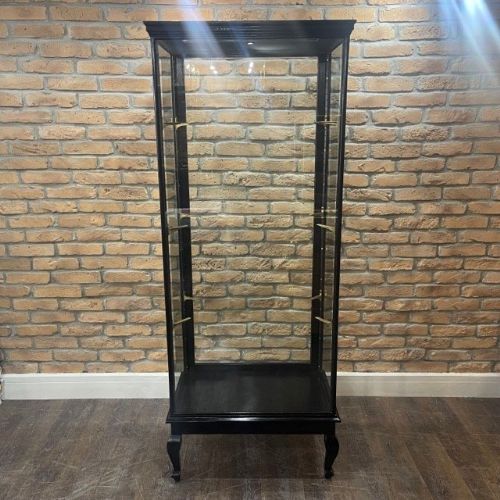


Vintage Museum Display Case
These vintage museum display case examples bring honest shop counters and towering vitrines straight from trade floors into private rooms.

Vintage Museum Display Case
A vintage museum display case spans utilitarian shop counters, tall tower cabinets, and glazed table top vitrines built for commercial and institutional use. You will most frequently encounter mahogany and oak shop display cabinets originating from the late nineteenth century through to the nineteen-twenties.
The forms range from generous freestanding timber counters to slender brass framed cases designed to showcase smaller objects without obstruction. Many pieces carry the distinct architectural signatures of commercial outfitters from the Edwardian era and nineteen-twenties.
Objects bearing this vintage museum display case description often reveal their past lives through practical proportions, deep cornices, and multi-panel glass viewing areas. They offer an authentic way to house collections while maintaining high visibility from every angle.
Materials and construction
Makers relied heavily on solid mahogany and oak frames, frequently complemented by ebonised wood or polished brass detailing to structure the large glass panes. The glazing relies on heavy timber or metal rebates designed to support substantial weight while maximising light transmission.
Interiors often feature fitted velvet or felt linings intended to protect delicate items placed on display within the cabinet. Structural integrity was paramount, leading to robust joinery that sustained decades of heavy retail or institutional handling.
Vintage Museum Display Case Retail Price Guide 2026
Typical asking prices for vintage museum display case among the pieces listed under this phrase on Sellingantiques today, from the lower quarter to the upper quarter. They describe what is for sale here now, not the wider market.
Many of these display counters still retain the microscopic dust of Edwardian high street shops trapped inside their joinery.
Assessing build and finish
Quality rests in the crispness of the timber mouldings, the weight of the brass hardware, and the proportion of glass to framing timber. Superior examples exhibit refined joinery and timber selection that elevates simple commercial utility into deliberate craftsmanship.
The distinction between ordinary and exceptional pieces often lies in the original maker's detailing, such as gold leaf accents or specialised counter-balancing mechanisms on sliding doors. Surviving hardware and intact original linings further separate standard utility pieces from high-end retail showcases.
F. Sage & Co·E. Pollard & Co. Ltd.·Siegel·Quincy Showcase Works Illinois
The Vintage Museum Display Case Glossary
- Vitrine
- A glass-fronted cabinet designed for displaying fine objects or collections. They often feature glazed sides to allow maximum light penetration.
- Ebonised
- Wood treated to mimic the dense, dark appearance of ebony. This finish was popular for achieving formal contrast in late Victorian and early twentieth-century furniture.
- Rebate
- A recess or groove cut into the edge of a piece of timber to hold glass panels securely in place. It forms the structural backbone of glazed cabinet construction.
- Cornice
- The decorative moulding crowning the top of a cabinet. It provides a finished architectural transition between the wall and the case structure.
Vintage Museum Display Case: Frequently Asked Questions
How do I clean the glass?
Use a gentle, non-ammonia glass cleaner applied to a microfiber cloth rather than spraying directly onto the antique timber frame.
Moisture can damage older wood finishes and seep into the original putty or glazing rebates over time.
Can I adjust the internal shelves?
Most period commercial cases feature fixed timber supports or simple resting battens rather than modern adjustable track systems.
Altering the interior layout requires careful carpentry to maintain the structural rigidity of the glazed frame.
How do I secure loose brass fittings?
Examine the original screws to see if they match the period before attempting any tightening with appropriately sized hand tools.
Avoid over-tightening into older timber where the screw threads may have worn down through decades of use.
Where should I place a heavy tower cabinet?
Position large timber and glass cases away from direct sunlight and fluctuating heat sources to prevent timber warping.
Ensure the floor beneath the display case is level to prevent stress fractures in the large glass panes.