


Vintage Meal Gong
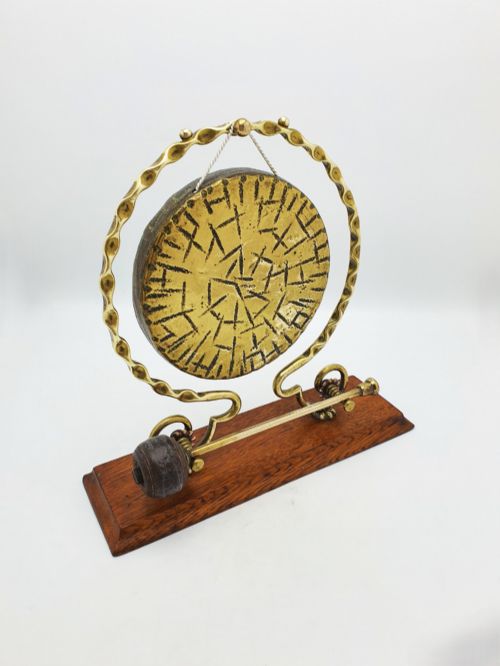
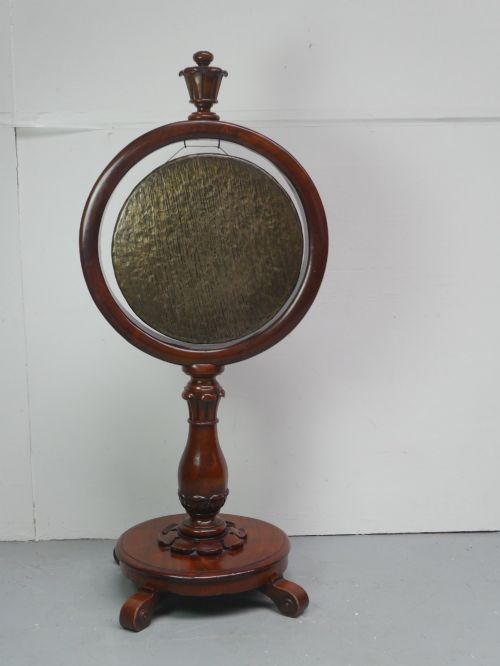
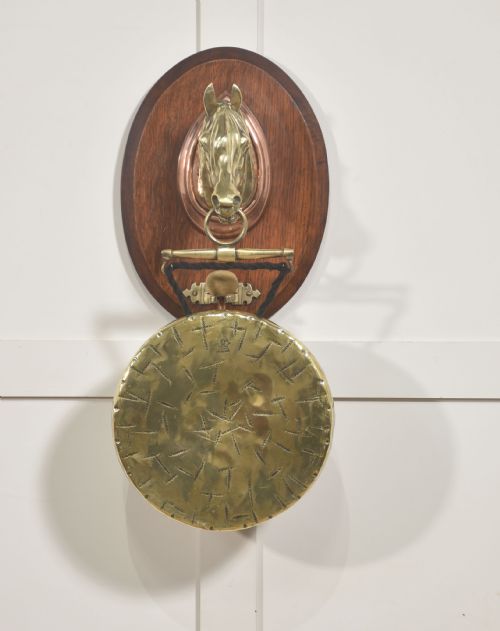
These vintage meal gong pieces are striking summoning items built from oak, brass, and iron that call households to the table.
Vintage Meal Gong
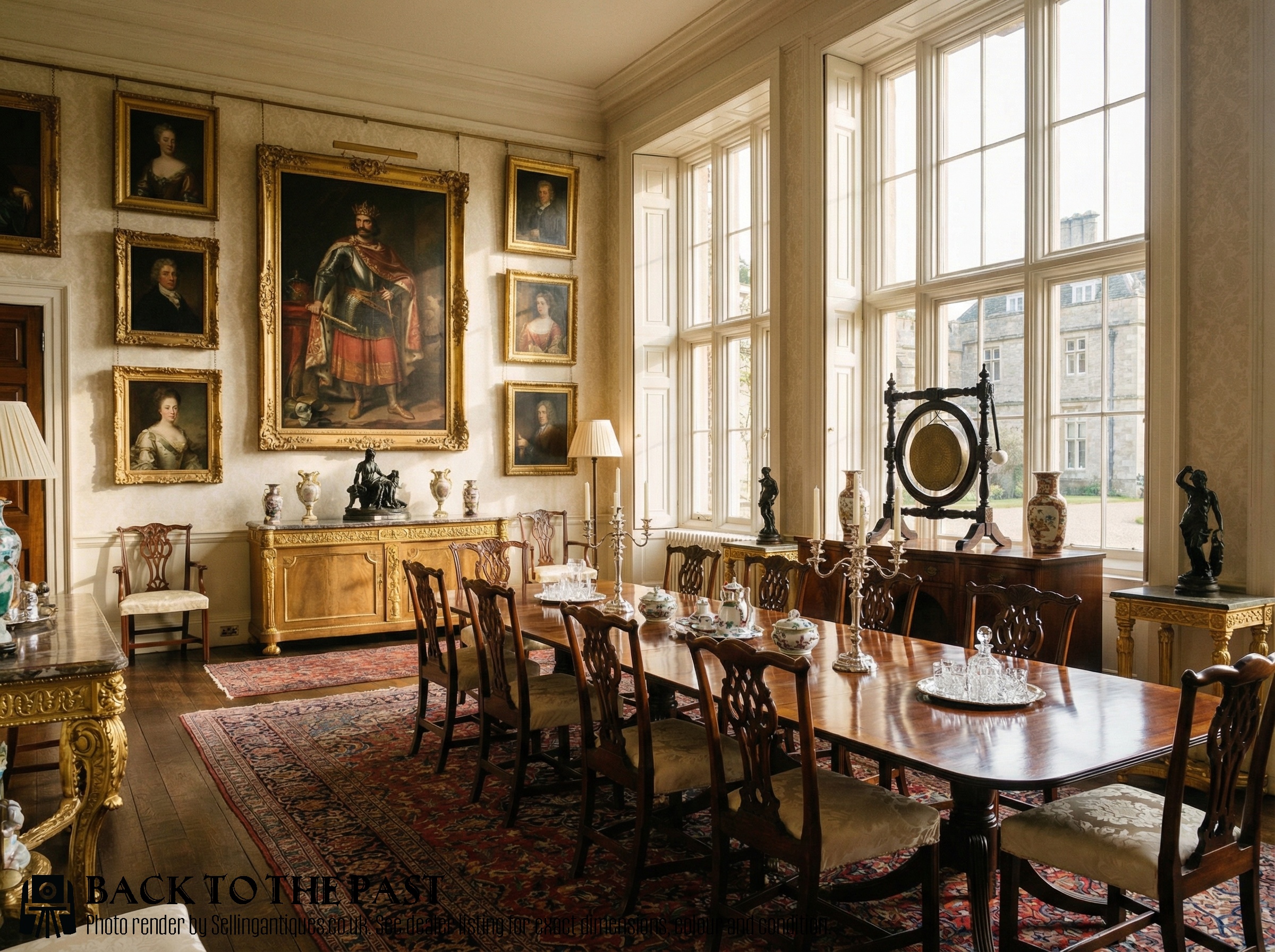
When you search for a vintage meal gong, you encounter domestic summons instruments designed to assemble households for dinner. The pieces span the nineteenth century, the Edwardian era, and the nineteen-twenties, appearing across table and wall-hanging formats.
Most examples on this page utilise a resonant metal plate suspended within a wooden frame, struck with a handheld mallet or striker. Oak and brass dominate the inventory, though mahogany, wrought iron, and silver plate also appear.
Forms range from simple domestic table gongs to elaborate models featuring horse head mounts, cow horns, or Gothic Revival architecture. You meet everything from Scottish country house pieces to Italian palazzo wall chimes.
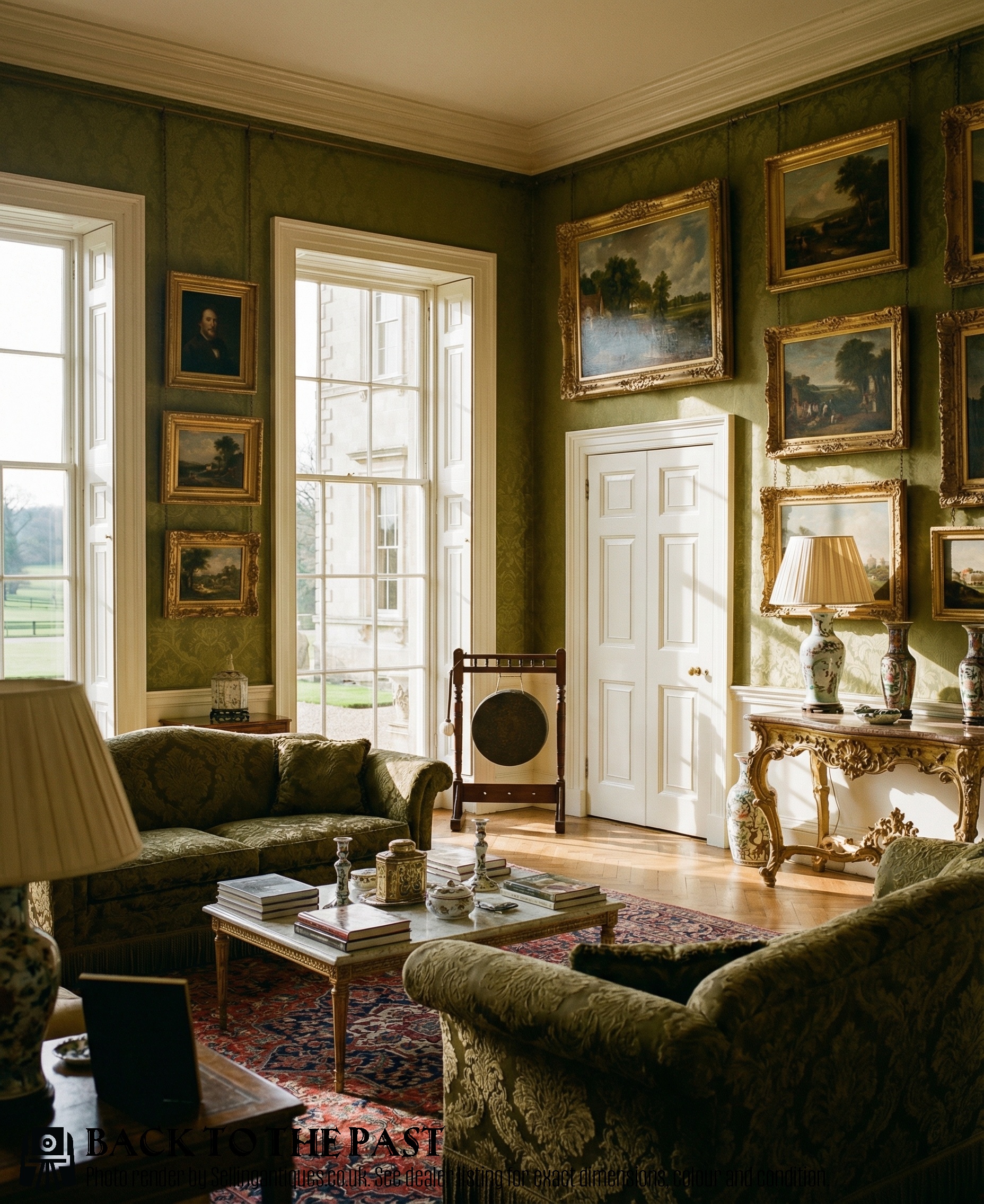
How they were made
Maker workshops built the support structures using seasoned timber such as oak, mahogany, walnut, and mango wood, often shaped in Arts and Crafts or Gothic Revival styles. Artisans mounted the hanging fixtures using cord, wrought iron, or brass brackets to suspend the metal plates.
The sounding plates themselves consist of cast iron, brass, copper, or silver plate, sometimes shaped into cow horns or fitted with novelty animal mounts. Each assembly balances the heavy resonance of the metal with a sturdy timber base or wall mount.
Vintage Meal Gong Retail Price Guide 2026
Typical asking prices for vintage meal gong among the pieces listed under this phrase on Sellingantiques today, from the lower quarter to the upper quarter. They describe what is for sale here now, not the wider market.
Listings span the nineteenth century through the nineteen-twenties, incorporating oak, brass, wrought iron, and horn.
What varies in quality
Quality rests in the harmony between the resonance of the metal gong and the structural integrity of the mounting frame. Finer pieces demonstrate careful joinery in the timber work, clean casting in the brass or iron, and intact original hanging cords.
Plain utilitarian examples sit at one end of the scale, while decorative items featuring carved wooden mounts, silver plate, or figural brass work represent the more ambitious output of period workshops.
The Vintage Meal Gong Glossary
- Dinner Gong
- A resonant metal plate suspended in a frame and struck with a mallet to announce meals. They were staples of large nineteenth and early twentieth century homes.
- Gothic Revival
- An architectural and decorative style reviving medieval forms, frequently seen in pointed arches and heavy carved oak frames on gongs. It reflects nineteenth century romanticism.
- Arts and Crafts
- A design movement valuing handcraft, honest materials, and simple construction over mass production. Walnut and oak gongs often reflect these principles.
- Aesthetic Movement
- A late nineteenth century design current emphasising visual beauty above narrative or moral function. Silver plated table gongs often showcase these sleek surfaces.
- Table Gong
- A compact version of the summoning instrument designed to sit directly on furniture rather than hang from a wall. These units utilise smaller wooden bases.
Vintage Meal Gong: Frequently Asked Questions
How do you clean a brass meal gong?
Dust the timber frame gently with a dry cloth and remove surface dirt from the metal using a soft brush.
Avoid harsh chemical polishes that strip away the aged patina built up over decades of domestic use.
Where were these gongs placed in a house?
Wall-hanging models typically hung in hallways or near dining room entrances where the sound carried effectively.
Table models rested on sideboards or serving tables within easy reach of the host or staff.
What is the striker made from?
Strikers generally consist of a wooden or metal handle tipped with a padded head, leather, or solid metal to produce the chime.
Many surviving pieces retain their original handheld strikers alongside the main hanging frame.
How do I date an oak dinner gong?
Examine the construction methods, fixing screws, and framing styles such as Gothic Revival or Arts and Crafts.
Nineteenth-century examples often feature hand-finished timber joinery, while twentieth-century versions lean towards simpler machine-cut profiles.