







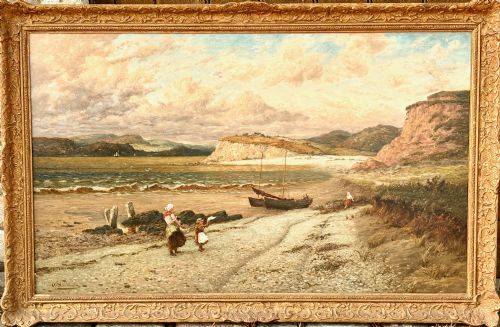
Vintage Maritime Oil Artwork
Vintage maritime oil artwork captures the enduring power of the sea through historic paint on canvas and wood.
Vintage Maritime Oil Artwork
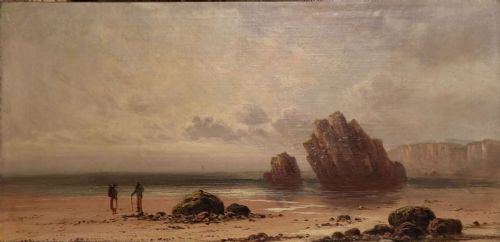
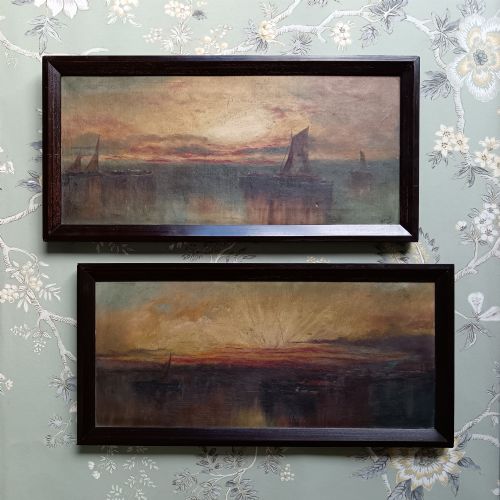
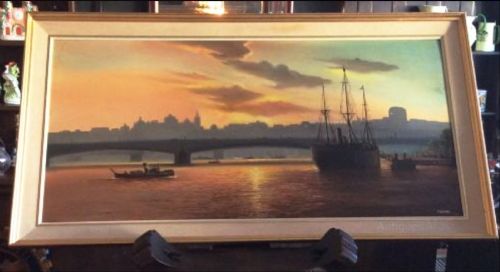
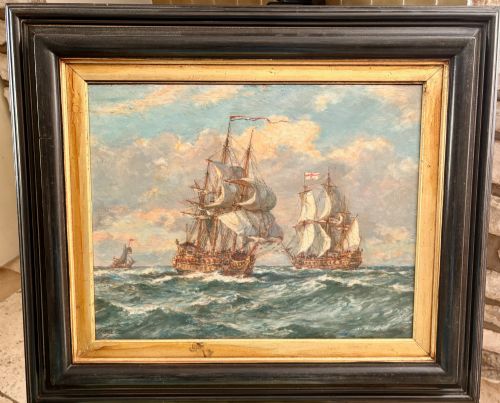
Vintage maritime oil artwork encompasses historic paintings depicting ships, coastal landscapes, and harbour scenes created during the nineteenth and twentieth centuries. These pieces record naval history, commercial shipping, and coastal life through oil paint applied to canvas and board.
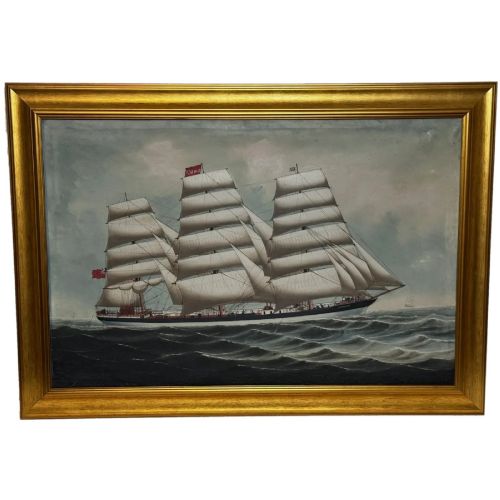
Buyers meeting this material will find works ranging from early Victorian shipping scenes to mid-century harbour views. The subjects span tranquil river estuaries, dramatic storm encounters, and precise portraits of named vessels.
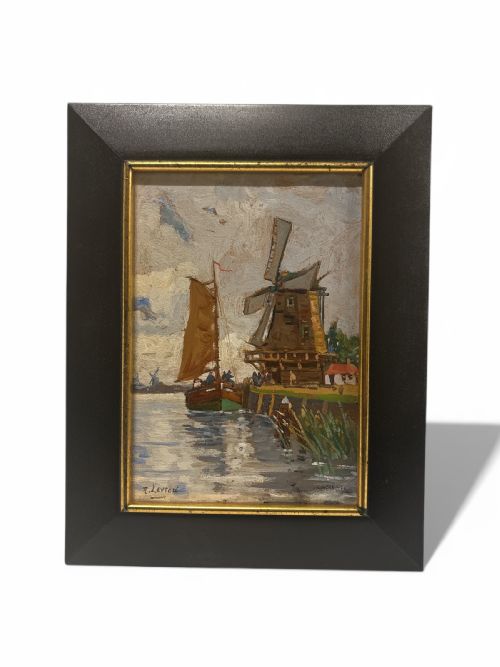
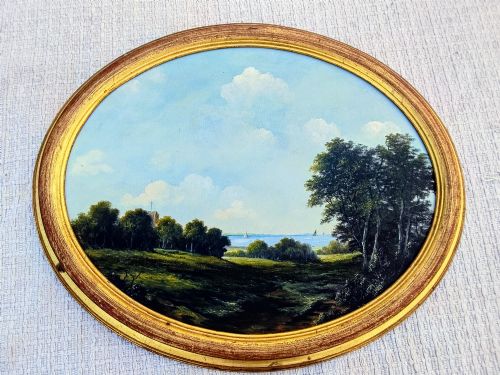
The category includes works by named British and continental European painters alongside pieces produced by anonymous regional hands. Common formats include rectangular canvases in period gilt wood frames alongside oval sea views and works on board.
How they were made
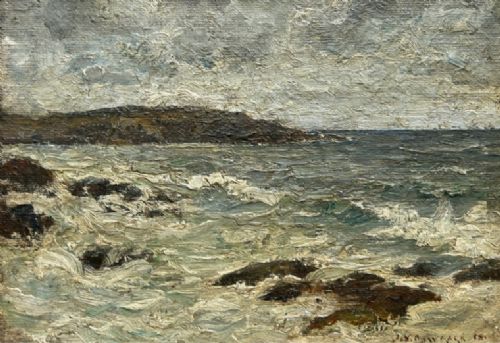
These works rely primarily on oil paint applied to stretched canvas or wooden boards, utilising the slow-drying medium to blend atmospheric light over water and sky. Artists built the compositions using layered brushwork, ranging from smooth glazes to heavy impasto textures that rendered the churning movement of waves.
Listings feature works spanning the nineteenth century through the 1960s, executed in oil on canvas and wood board.
What varies in quality
Quality in these paintings rests on the artist's command of maritime architecture, rigging accuracy, and fluid dynamics when rendering water. Stronger examples demonstrate a confident handling of light and shadow that successfully conveys atmosphere and spatial depth across the composition.
The handling of the painted surface itself differentiates works, as accomplished brushwork captures the weight of heavy seas and the specific movement of sails against the wind. Furthermore, the preservation of the original canvas support and the integrity of the period gilt wood frame contribute to the standing of an individual piece.
Kenneth Cozens·Eugène-Louis Gillot·William McAlpine·Reginald Arthur Borstel·Bernard Gribble·James Kay·Peter Brannan·Paul Bret·Bernard Benedict Hemy·Willem Bos·Nicholas Condy·William Henry Williamson·Abraham Hulk I·John Holland·Walter Goodin·William Edward Webb
The Vintage Maritime Oil Artwork Glossary
- Impasto
- Paint applied thickly to a canvas or board so that it stands out in relief. This technique allows brush marks or palette knife strokes to remain visible.
- Gilt wood
- Wood that has been covered with a thin layer of gold leaf or gold paint. Frames constructed in this manner were widely used to house historic paintings.
- Seascape
- A work of art that depicts the sea, ocean, or coastal scenes. These compositions often focus on the interaction between water, sky, and light.
- Barque
- A sailing vessel with three or more masts. This specific rigging configuration frequently appears in nineteenth-century marine paintings.
- Provenance
- The chronological history of the ownership of a work of art. Documented records help establish the authenticity and background of historic paintings.
Vintage Maritime Oil Artwork: Frequently Asked Questions
How do I care for antique oil paintings?
Keep these works away from direct sunlight and rapid humidity fluctuations to protect the canvas and wood support. Dust the surface gently with a soft, dry brush without applying liquid cleaners.
Consult a professional conservator if the paint layer requires cleaning or structural stabilization. Proper environmental control preserves the original pigment stability over decades.
What subjects appear in marine art?
Common subjects include sailing ships, steamers, naval engagements, and bustling commercial harbours. Coastal landscapes featuring fishing boats and lighthouse structures also feature prominently.
Artists frequently documented specific historical events, such as wartime deployments or named vessels navigating coastal waters.
How can I date a maritime painting?
Examine the vessel types, rigging styles, and clothing depicted within the scene for historical markers. Ship designs evolved rapidly between the nineteenth and mid-twentieth centuries.
Construction details on the reverse, stretcher frames, and framing styles provide additional chronological clues regarding the creation date.
Are these paintings signed by artists?
Many works bear visible artist signatures, monograms, or studio inscriptions on the front or reverse. Some historic pieces remain unattributed or carry indistinct signatures while still reflecting professional execution.
Attributions are often established through stylistic comparison with documented works by known marine painters.