


Framed Canal Landscape Art
These framed canal landscape art pieces capture urban waterways and rural locks through nineteenth-century oils and watercolours.
Framed Canal Landscape Art
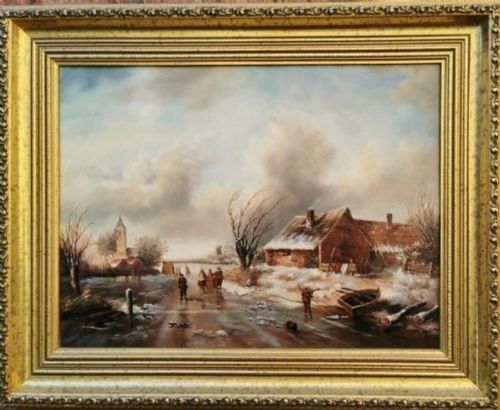
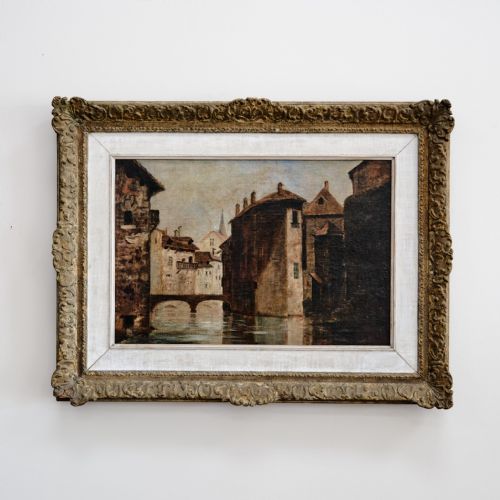
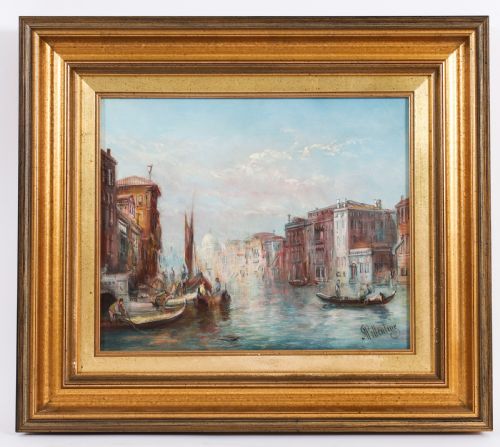
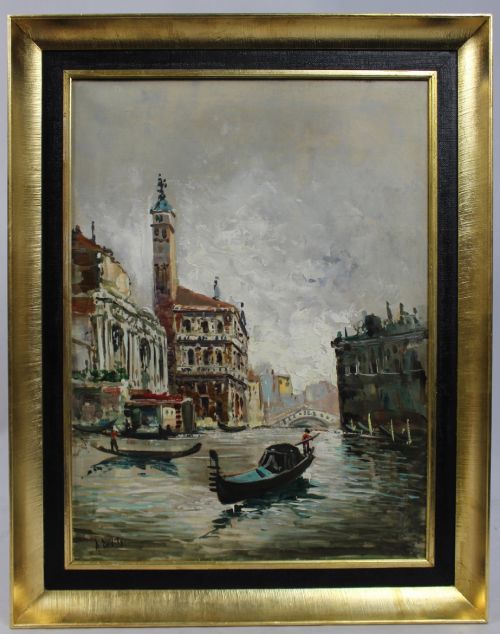
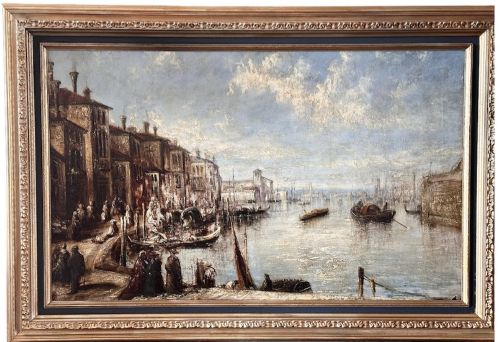
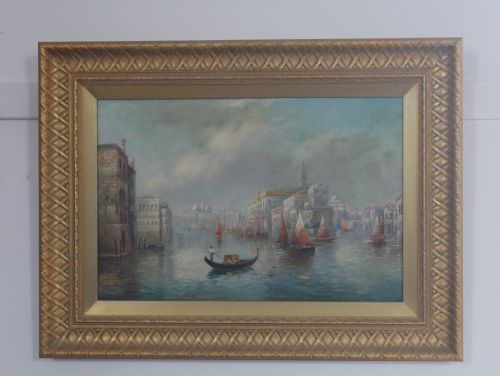
Framed canal landscape art encompasses nineteenth-century and early twentieth-century oil paintings and watercolours depicting Venetian canals, Dutch waterways, and British rivers. Buyers find European cityscapes alongside rural locks and winter scenes, often framed in period wood or giltwood.
The version most commonly met on this page is the nineteenth-century oil on canvas or paper watercolour showing Venetian scenes such as the Grand Canal. These works frequently bear attribution to continental and British painters working within impressionist and traditional schools.
Materials and methods
Artists painted these works primarily in oil paint or watercolour applied to canvas, paper, or board. Canvases are stretched over wooden frames and mounted within traditional wood and giltwood surrounds.
Techniques range from detailed Dutch and Venetian architectural renderings to looser impressionist brushwork. Support materials often show age through craquelure on oil surfaces and toning on older paper watercolours.
Several canvases manage to make freezing Dutch canals look positively inviting through clever warm golden brushstrokes.
Distinguishing quality
Quality rests in the precision of architectural perspective and the handling of light upon water. Superior works display confident brushwork that captures atmospheric depth rather than mechanical reproduction of buildings.
The integration of the original or period frame adds considerable merit to a painting. Stronger examples maintain the original relationship between the canvas surface and its enclosing giltwood or wood moulding.
Alfred Pollentine·Francis Moltino·Edwin Lord Weeks·Thomas Baker·Antonietta Brandeis·Antoine Bouvard Senior·Hercules Brabazon Brabazon
The Framed Canal Landscape Art Glossary
- Oil on Canvas
- Pigment mixed with drying oil applied to stretched fabric. This medium allows for rich colour blending and textured surface applications.
- Watercolour
- Pigment suspended in water-based solution applied to paper. It produces translucent washes and delicate tonal gradations.
- Giltwood
- Wood carved and coated with a thin layer of gold leaf. This material provides the ornate reflective framing common on nineteenth-century fine art.
- Impressionism
- A style of painting emphasising light and unblended brushstrokes. Artists aimed to capture the visual impression of a specific moment.
- Dutch School
- A grouping of artists working in the Netherlands following traditional realist or winter landscape motifs. These compositions focus on atmospheric skies and frozen waterways.
Framed Canal Landscape Art: Frequently Asked Questions
What subjects appear in framed canal landscape art?
These works depict European waterways, featuring Venetian canals, Dutch windmills, and British river locks. Urban scenes showcase historic palaces and bridges alongside quieter rural towpaths.
Artists recorded specific locations across England, France, Italy, and the Netherlands during the nineteenth and early twentieth centuries.
How do I identify the period of a painting?
Dating relies upon the framing materials, canvas preparation, and recorded artist active dates. Nineteenth-century pieces often utilise heavy giltwood surrounds and hand-stretched linen.
Signatures, inscriptions on the reverse, and stylistic markers such as Victorian realism or early impressionism help confirm the era of execution.
Are these works painted on canvas or paper?
Both supports appear frequently across the selection. Oil paintings utilise stretched canvas or wood panels, whilst watercolours are executed on paper supports.
Watercolours typically require glass protection within their frames, whereas oil paintings on canvas remain open to the air.
How should I care for an antique oil painting?
Display the artwork away from direct sunlight and steady sources of artificial heat to protect the pigment and canvas. Environmental stability prevents the wood stretcher and oil paint from expanding or cracking.
Dust the surface gently with a soft, dry brush without applying moisture or cleaning solutions directly to the paint layer.