




Green Tone Landscape Painting
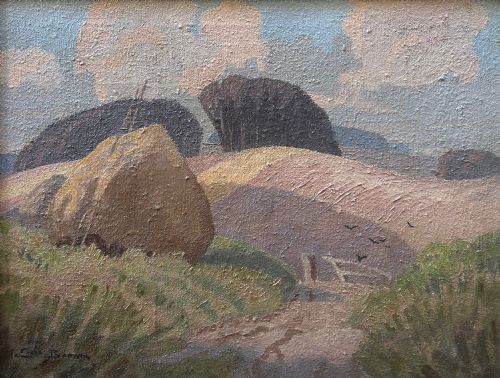
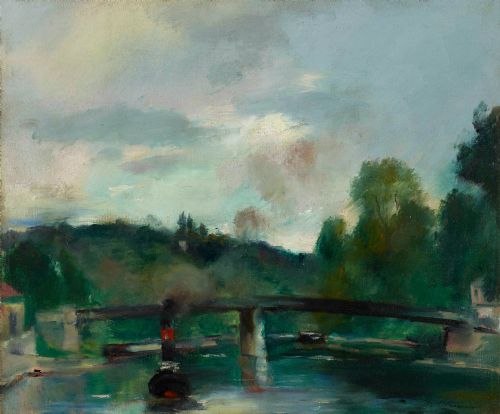
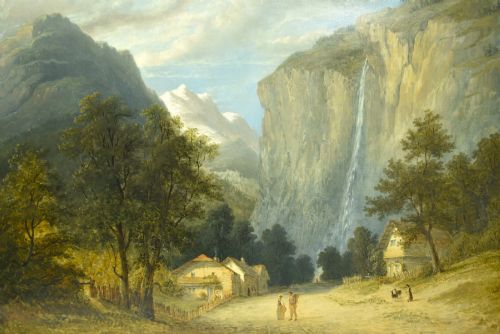
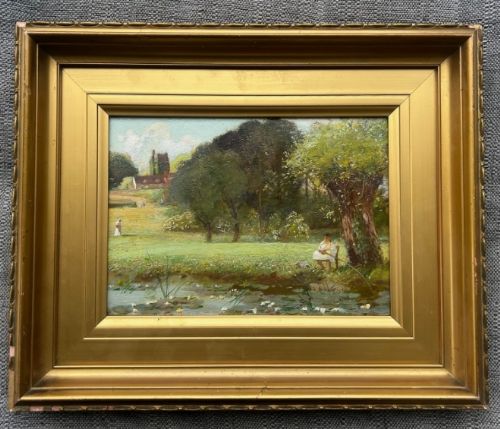
These pieces capture the natural world in verdant hues, offering a green tone landscape painting that brings historic countryside and river scenes directly into your room.
Green Tone Landscape Painting
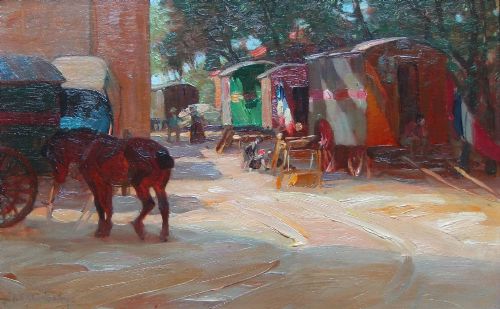
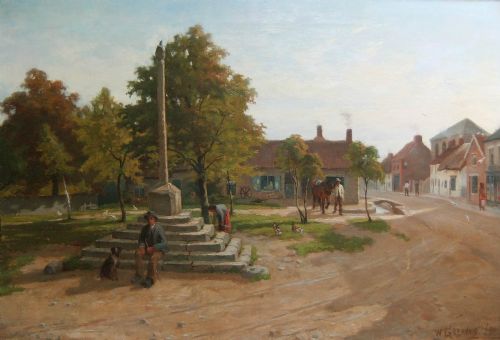
A green tone landscape painting focuses on rural vistas, riverbanks, and pastoral farmyards dominated by verdant palettes and natural earthy tones. These works capture specific locations across Yorkshire, Scotland, and the wider British countryside, often showing figures, livestock, or quiet cottages nestled among trees.
The pieces on this page span from the Victorian era through the early twentieth century, taking the form of framed watercolours on paper and oils on canvas, wood panel, or board. Artists working in Impressionist, Post-Impressionist, and realist traditions recorded these outdoor subjects directly from nature or within studio settings.
Buyers seeking this phrase typically encounter works framed in period settings that reflect the artistic movements of the nineteenth and early twentieth centuries. The selection ranges from sweeping mountain views and misty moorland streams to quiet village lanes and agricultural scenes.
Materials and Methods
Painters applied oil paint or watercolour onto prepared supports including stretched canvas, sturdy wood panels, heavy paper, and rigid boards. Oils allowed artists to build rich, textured layers of pigment, whilst watercolours utilised fluid washes to capture the changing light on rivers and open fens.
Makers utilised traditional brushes and mixed pigments by hand to achieve the subtle green tones, ochres, and muted blues characteristic of these regional landscapes. The resulting works were secured within timber frames, frequently preserving the original artist signatures and period inscriptions.
Listings feature works created using oil paint and watercolour on canvas, paper, wood panel, and board.
Factors That Separate the Range
Quality rests upon the artist's ability to handle light, atmosphere, and spatial depth within the verdant palette. Stronger compositions command attention through confident brushwork and precise tonal control, whereas simpler works rely on conventional arrangements.
The preservation of the original surface, pigment stability, and the integrity of the support distinguish finer examples from standard decorative pieces. Works with clear provenance, artist signatures, and untouched period framing hold greater interest for collectors.
Tom Campbell·Eric Brown·Henri Ottmann·Paul Ehrenberg·William Greaves·Oswald Garside·Sir David Murray·William JB Jenkins·Ernest Higgins Rigg·Reginald Grange Brundrit·George Armfield·James Orrock·David Cox Jnr·Florence Hess·Kershaw Schofield·Sidney James Beer·Fred Stead·John Edward Bale·William Manners·Henry Charles Fox·Thomas James Lloyd·Thomas Creswick·Owen Bowen·John Sowden·Charles Henry Harrison Burleigh
The Green Tone Landscape Painting Glossary
- Watercolour
- A painting method where fine pigment is suspended in a water-soluble binder and applied to paper. This medium produces translucent washes that allow the white of the paper to illuminate the scene.
- Wood Panel
- A rigid flat wooden support used by artists in place of canvas. Painters often prepared these surfaces with a gesso ground before applying oil paint.
- Impressionism
- An artistic movement characterised by relatively small, thin, yet visible brush strokes and an open composition. It emphasises accurate depiction of light in its changing qualities.
- Pastoral
- A genre of art depicting the rural countryside, farmyards, and agricultural life. These scenes celebrate quiet rustic existence and agrarian traditions.
- Provenance
- The chronological record of ownership and custodial history of a work of art. Documented origin helps establish authenticity and historical context.
Green Tone Landscape Painting: Frequently Asked Questions
What periods do these paintings represent?
The works span from the Victorian era through the early twentieth century, capturing distinct artistic shifts across decades.
Collectors will find pieces dated from the eighteen-fifties up to the nineteen-thirties, reflecting regional British and European artistic traditions.
Where were these landscape scenes painted?
Artists painted various locations across the British Isles, including Yorkshire, Scotland, Surrey, and Sussex, alongside continental views.
Many pieces document specific rivers, cottages, and agricultural settings observed directly by the artist during outdoor excursions.
How should I display an antique watercolour?
Watercolours require careful placement away from direct sunlight to prevent fading of the delicate pigments on paper.
Displaying them in rooms with stable humidity levels helps protect both the antique paper support and the original frame.
How do I identify a wood panel painting?
Wood panel paintings feature a rigid wooden support beneath the oil paint layers rather than flexible woven canvas.
Examining the reverse often reveals the natural grain of the wood along with historic dealer stamps or artist inscriptions.