
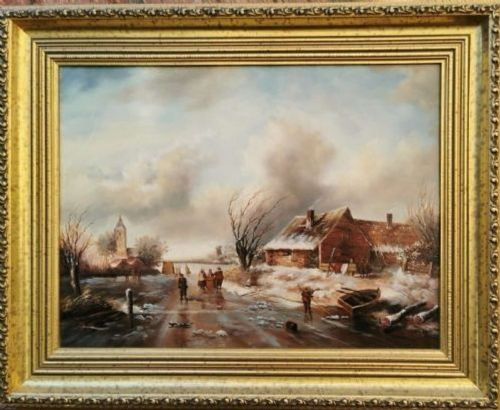


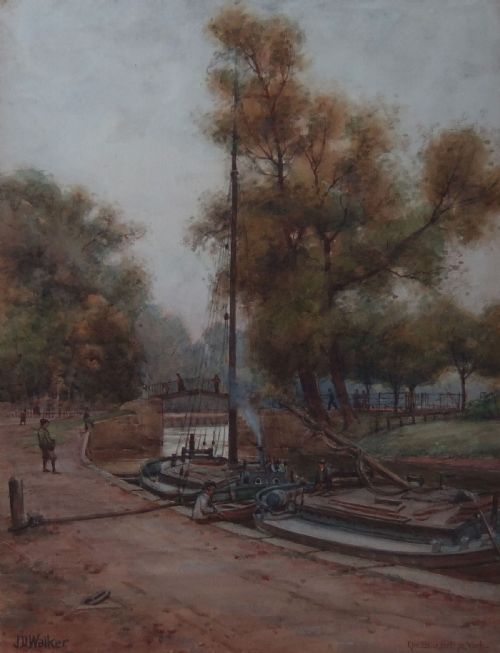

Vintage Canal Scene Picture
These vintage canal scene picture works capture quiet water and old architecture, offering a lasting slice of historic waterways for any wall.
Vintage Canal Scene Picture
A vintage canal scene picture brings together historic waterways, working barges and urban reflections from periods ranging across the nineteenth and twentieth centuries. These artworks record specific locations like Venice, York and the Llangollen canal through the eyes of various painters.
Most examples found here date from the early decades of the twentieth century down to the nineteen-fifties, capturing urban and rural waterways alike. Buyers encounter compositions varying from bright Venetian canals to calm British mooring scenes.
The objects take several forms, including framed oil paintings on canvas, delicate watercolours on paper, and mixed media works involving pastel and gouache. Each piece preserves a distinct atmosphere of life along the water.
Materials and construction
Artists painted these works using oil paint on canvas or watercolours on paper, often framing them behind glass in wooden surrounds. The application ranges from thin washes of pigment to thick, textured brushwork characteristic of impressionist methods.
Draftsmanship plays a central role in many pieces, with ink pen and pastel additions used to define the intricate shapes of gondolas, bridges and historic mansions. Wood and glass protect these fragile organic surfaces over the decades.
The selection includes works dated from eighteen-eighty through to nineteen-sixty, spanning impressionist and twentieth-century styles.
Assessing quality and execution
Quality rests upon the artist's handling of light upon water and the sureness of line in depicting architectural perspective. Stronger works demonstrate a confident balance between loose impressionistic brushwork and precise topographical detail.
The preservation of the original medium also shapes the value of a piece, with undamaged canvas, stable oil paint and unfaded watercolours representing superior survival. Framing contributes to the overall integrity of the object, though period wooden frames often show honest signs of age.
Claude Jousset·Herbert Royle·William Knox·John D. Walker·R Goodhind
The Vintage Canal Scene Picture Glossary
- Impressionism
- A style of painting emphasising light and its changing qualities, visible in many canal works from this selection.
- Gouache
- An opaque water-based paint that provides solid areas of colour and highlights in mixed media works.
- Topographical
- Depicting a specific real place accurately, as seen in named views of Venice and York.
- Pastel
- A dry drawing medium made of powdered pigment, used here alongside gouache and ink.
- Provenance
- The documented history of a work, though here attribution relies on signatures and inscribed titles.
Vintage Canal Scene Picture: Frequently Asked Questions
How do I date a canal painting?
Dating relies on recorded artist active periods, stylistic clues from impressionism, and inscribed dates on the reverse or front of the canvas and paper.
Materials such as older wooden framing components and paper types also help confirm the era of production.
Where were these scenes usually painted?
The subjects range widely across European and British waterways, with Venetian scenes and northern English canal locations appearing frequently.
Artists often worked on location or translated preliminary sketches into finished studio watercolours and oils.
How should I hang watercolour paintings?
Watercolours and works on paper require protection from direct sunlight to prevent fading of the delicate pigments.
Maintaining stable indoor humidity levels ensures the paper support and wooden frames remain secure over time.
What is the difference between oil and watercolour?
Oil paint utilises a slow-drying medium that allows for rich, layered textures on canvas, while watercolour relies on transparent washes on paper.
Each medium creates a distinct atmospheric quality when depicting the reflective surface of canal water.