




Vintage Maritime Art
These vintage maritime art pieces capture coastal scenes and seafaring history through oil, watercolour, and folk craft.
Vintage Maritime Art
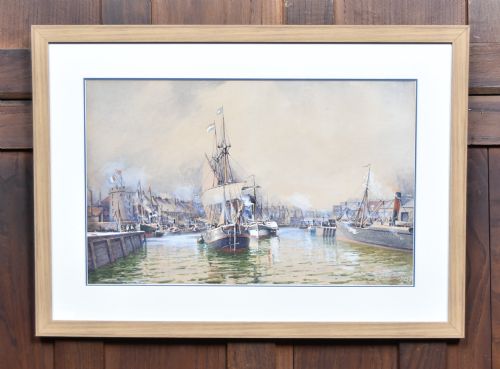
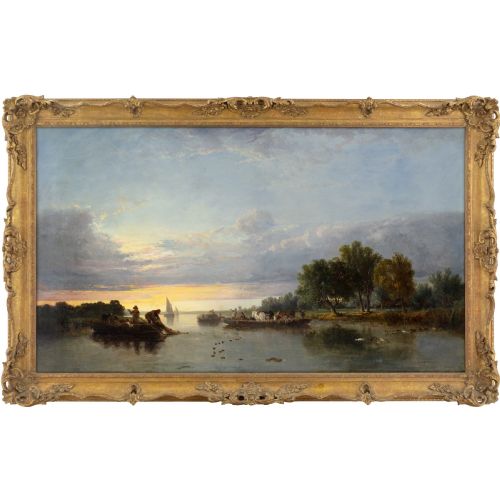
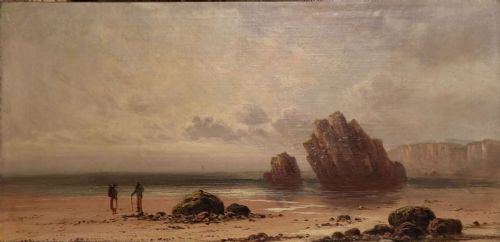
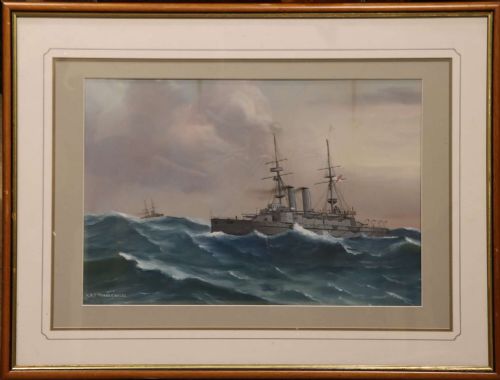
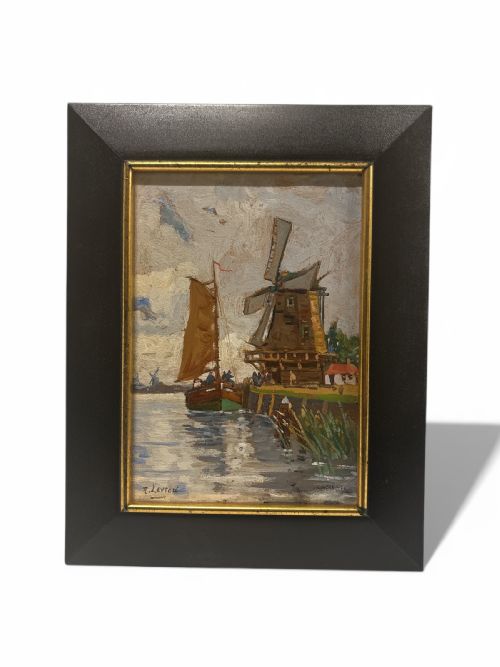
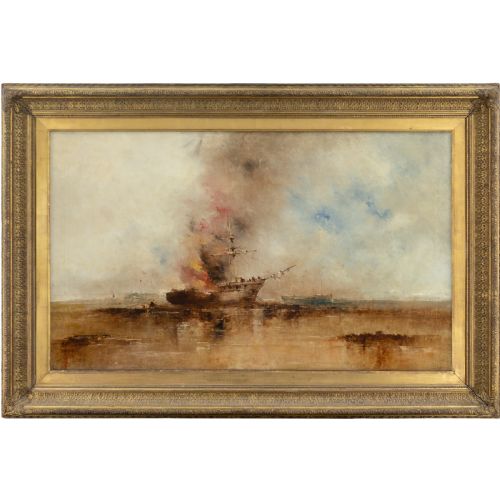
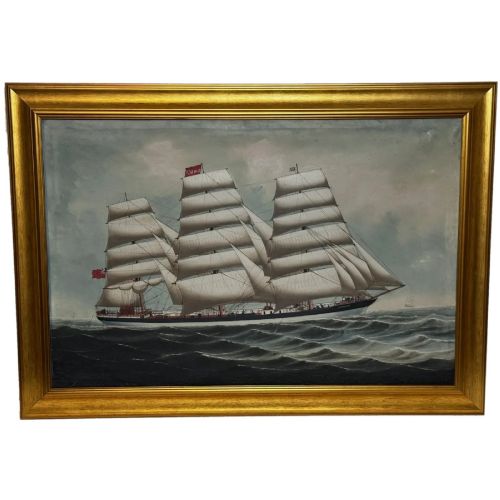
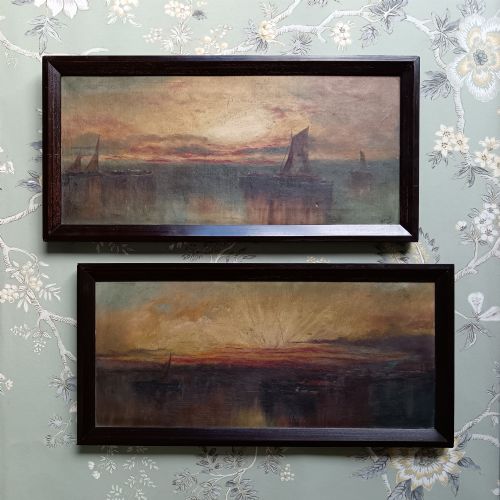
When buyers search for vintage maritime art, they encounter oil paintings on canvas and board, delicate watercolours, and detailed etchings depicting harbours, coastal landscapes, and ships at sea. These works range from late nineteenth-century depictions of British ports to mid-twentieth-century naval watercolours and coastal views.
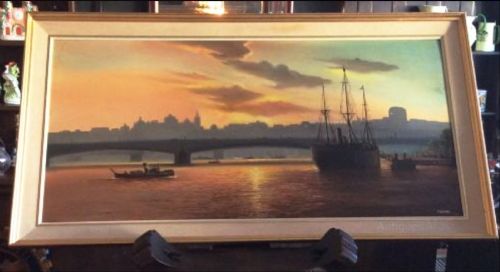
The most common pieces on this page are oil and watercolour paintings created across the Edwardian period and the interwar years. Subjects span busy rivers like the Thames, quiet North Sea havens, stormy coastal waters, and detailed woolwork pictures known as woolies.
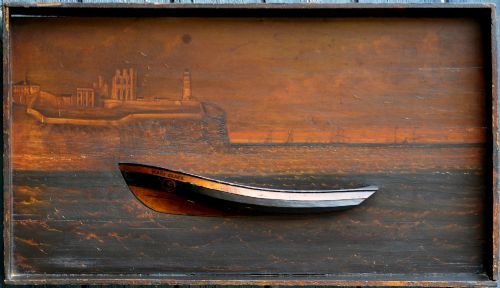
Beyond framed paintings, this category embraces folk art items tied to the sea, including shellwork boxes, ship in a bottle dioramas, and decorative ship's trays. These varied objects record maritime life through diverse media, offering a tangible connection to naval and coastal history.
Materials and techniques
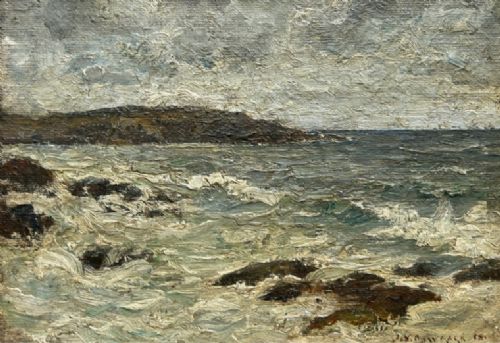
Artists relied primarily on oil paint applied to canvas or board, and watercolour pigments on paper, capturing light and movement across the water. Canvas surfaces often display rich impasto textures in seascapes, whereas watercolours utilise transparent washes to render coastal atmospheres and misty harbours.
Makers of folk art items utilised organic materials such as shells, wood, and textiles to construct decorative boxes, jars, and stitched woolwork panels. Framed works frequently incorporate glass protection alongside gilt or wood frames that match the period of creation.
Sailors spent long months at sea painstakingly gluing tiny sea shells onto wooden boxes to send home as tokens of affection.
Distinctions in quality
Quality rests upon the artist's command of light, atmosphere, and maritime architecture, separating accomplished observational works from standard decorative pieces. Skilled handling of water or turbulent skies creates depth and realism that simpler compositions lack.
The precision and condition of the medium also dictate standard, where stable oil surfaces and well-preserved watercolours without excessive fading command greater appreciation. Folk art items derive their standing from intricate assembly and the careful arrangement of delicate components like shells or thread.
Kenneth Cozens·R Leyton·Eugène-Louis Gillot·William McAlpine·Reginald Arthur Borstel·B. Nash·Edward Mills·James E. Aitken·Charles Edward Dixon·John E. Aitken·Eric Tufnell·William Banks Fortescue·James Kay·Frank Watson Wood·Bernard Gribble·Thomas William Morley·William Lionel Wyllie·Frank William Scarbrough·F. Corpuz·Peter Brannan·Paul Bret·Bernard Benedict Hemy·Cyril Walduck Edwards·Willem Bos
The Vintage Maritime Art Glossary
- Impasto
- Paint applied thickly to a canvas or board, standing out in relief from the surface. This technique adds tactile dimension to turbulent seas and skies.
- Woolie
- A Victorian or Edwardian embroidered textile picture created by sailors using coloured wool yarns. These handmade pieces frequently depict specific ships or coastal scenes.
- Gouache
- An opaque water-based paint medium that dries to a matte finish. It is often combined with watercolour to lend solid highlights to maritime scenes.
- Etching
- A printmaking technique where lines are incised into a metal plate with acid before being inked and pressed onto paper. This process produces fine, sharp linear detail.
- Diorama
- A three-dimensional scene housed within a protective casing, such as a bottle or box. Maritime examples typically feature miniature model ships surrounded by sculpted sea elements.
Vintage Maritime Art: Frequently Asked Questions
What subjects appear in these paintings?
These works depict busy rivers, sailing ships, coastal harbours, and dramatic marine storms. Artists recorded specific vessels, naval engagements, and quiet seaside views from the nineteenth and twentieth centuries.
Scenes range from London's Waterloo Bridge and the River Thames to international ports like Antwerp and Palermo. Coastal landscapes and lighthouse views also feature prominently across the selection.
Are these works signed by artists?
Many pieces bear visible signatures, monograms, or studio attributions inscribed by the original painter or watercolourist. Signed works provide a direct link to known artists active during the Victorian, Edwardian, and interwar periods.
Unsigned pieces also appear, often attributed to specific regional schools or identified through period framing and subject matter. Both signed and unsigned works reflect the broad tradition of historical marine painting.
What framing is typical for these pieces?
Frames typically match the period of the artwork, ranging from ornate gilt mouldings to simple wood surrounds. Edwardian and Victorian oil paintings often feature heavy, decorative frames that complement the canvas.
Watercolours and etchings are generally mounted under glass with paper slips to protect the delicate paper surface from moisture and dust. Original framing helps preserve the historic integrity of each piece.