

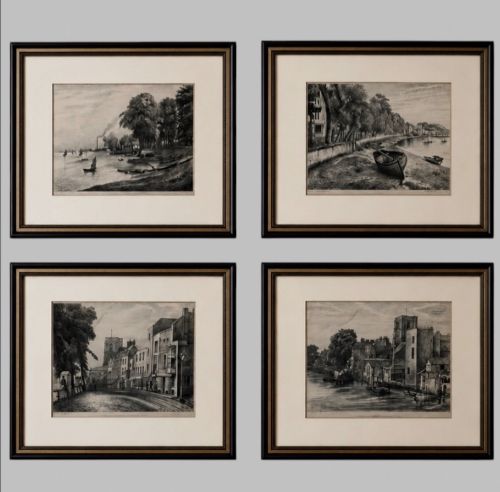
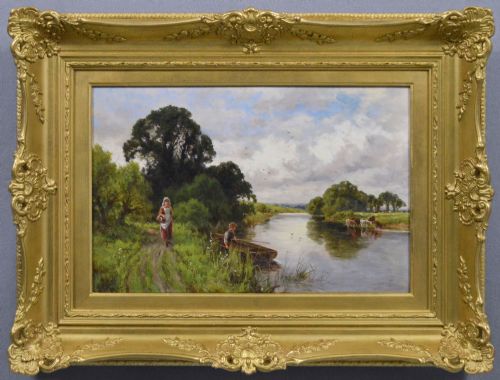


Thames River Wall Art
Thames river wall art captures the historic river and its bridges, bringing maritime heritage and Victorian London into a room.
Thames River Wall Art
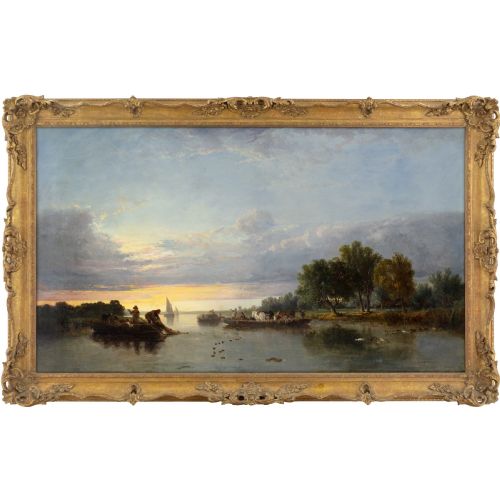
Thames river wall art brings together historic depictions of London waterways, bridges, and surrounding landscapes. These pieces span multiple centuries, capturing bustling industrial traffic alongside quiet reaches of the river valley.
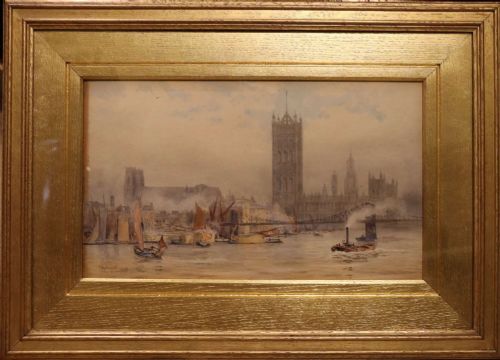
The most common examples on this page are watercolours and oil paintings from the nineteenth and early twentieth centuries. Artists from this era focused heavily on specific landmarks, capturing scenes from Westminster down to the Thames Estuary.
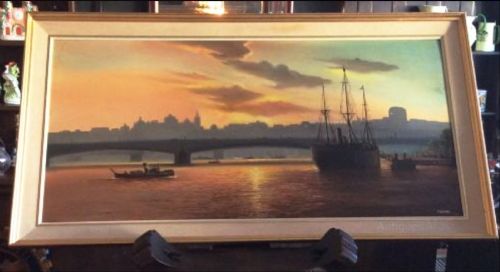
Works range in scale from intimate framed watercolours of country locks to large panoramic oil paintings of London bridges. Buyers select these artworks to anchor a room with topographical history and traditional maritime subject matter.
Materials and technique
Artists relied primarily on oil on canvas and watercolour pigment on paper to render atmospheric river scenes. Watercolours capture the shifting mist and light across the water, while oil paintings allow for heavier texture on bustling industrial reaches.
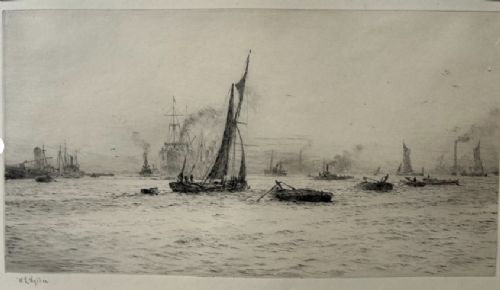
Draftsmanship appears through ink, pencil signatures, and detailed etchings and engravings. Printers and artists also utilised lithography and coloured prints to reproduce topographical views for wider distribution.
Framed presentation is completed with wood and glass to protect fragile works on paper, while oil paintings are traditionally housed in heavy timber frames.
Listings feature paper, glass, wood, oil on canvas, watercolour, ink, and gold leaf.
Quality factors
Quality rests heavily on the artist's ability to capture atmospheric perspective and accurate topographical detail of the riverbanks. The handling of light upon water distinguishes master painters from lesser topographical recorders.
Condition of the paper and pigment integrity dictate the longevity and visual strength of watercolours. Original framing, clear signatures, and contemporary documentation add significant weight to a piece.
H Medlycott·Alfred Young Nutt·William Lionel Wyllie·Henry H Parker·Charles William Wyllie·Edward Henry Eugene Fletcher·Robert Winchester Fraser·Walter Duncan·Frederick George Coleridge·Carleton Grant·Herbert John Finn·Frank William Scarbrough·Jacob Knyff·Gordon Meadows·Hubert Thornley
The Thames River Wall Art Glossary
- Watercolour pigment
- A water-based paint medium applied to paper to create translucent washes of colour. It is frequently employed to capture the shifting mists and skies over the water.
- Etching
- A printmaking technique where lines are bitten into a metal plate with acid before being inked and pressed onto paper. This process creates fine, precise linear details suited to architectural bridge structures.
- Maritime art
- Artistic works that depict ships, boats, and coastal or river scenes. This genre forms a substantial portion of the river views seen here.
- Topographical
- Representing specific real-world places with geographical fidelity. These works serve as visual records of historic London architecture and river settlements.
- Lithography
- A planographic printing process utilising stone or metal plates to produce multiple image impressions. It was widely used for publishing views of city landmarks.
Thames River Wall Art: Frequently Asked Questions
What periods do these artworks represent?
The pieces span from the seventeenth century through the Georgian and Victorian eras up to the mid-twentieth century. Nineteenth and early twentieth-century works are particularly common.
Most items reflect the prevailing styles of their respective decades, ranging from traditional maritime painting to topographical watercolours.
How should I hang heavy oil paintings?
Large oil paintings require secure wall anchors or direct attachment to timber studs due to the weight of the canvas and wood frame. Professional picture wire and robust fixings ensure safe suspension.
Keep heavier works away from direct sunlight and damp walls to protect the canvas and traditional timber frames.
Are watercolours sensitive to light?
Watercolour pigments on paper can fade if exposed to direct, strong sunlight over prolonged periods. Displaying them out of direct rays preserves the integrity of the original hues.
Using conservation-grade glass during framing helps shield the paper from ultraviolet degradation.
What subjects feature in these river views?
Common subjects include London bridges, parliamentary buildings, St Pauls Cathedral, and Windsor Castle. Barges, tug boats, and shipyards also populate the industrial and pastoral stretches.
Artists recorded both bustling commercial activity in the Pool of London and quiet rural locks upstream.