


Framed Thames Landscape
A framed thames landscape captures the enduring maritime and urban character of Britain's most famous river through centuries of artistic interpretation.
Framed Thames Landscape
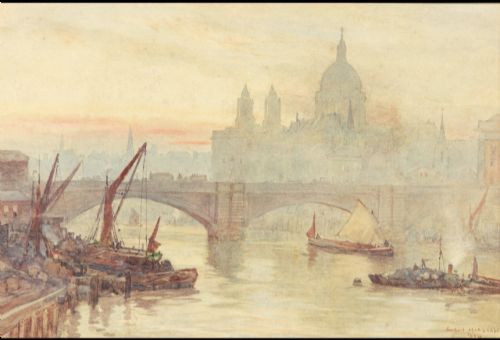
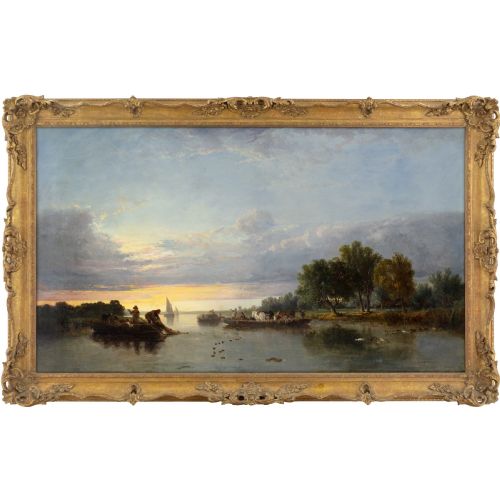
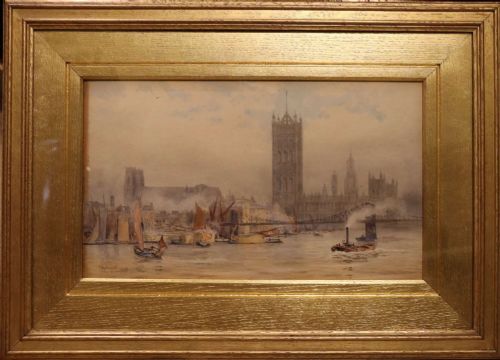
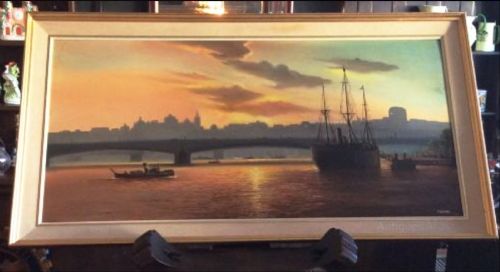
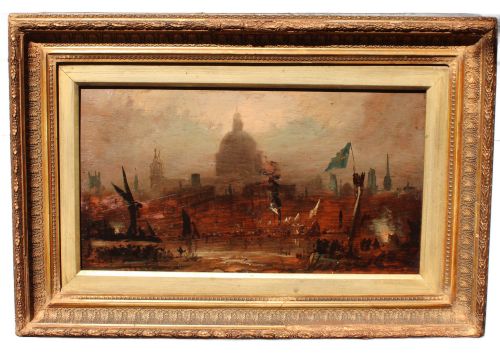
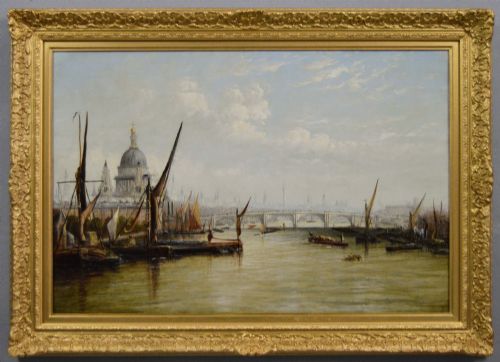
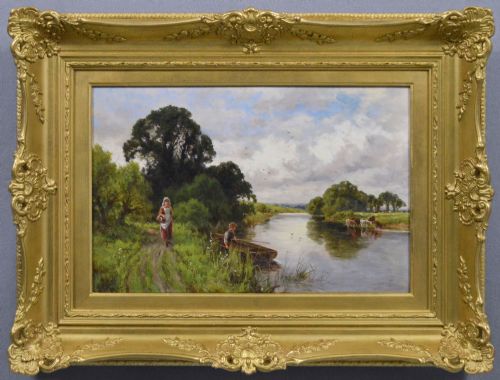
A framed thames landscape brings historical river scenes into a domestic setting, capturing iconic views from Westminster to Windsor and the Pool of London. Buyers encounter diverse interpretations ranging from early nineteenth-century maritime compositions to later impressionistic watercolours and mid-century oil paintings.
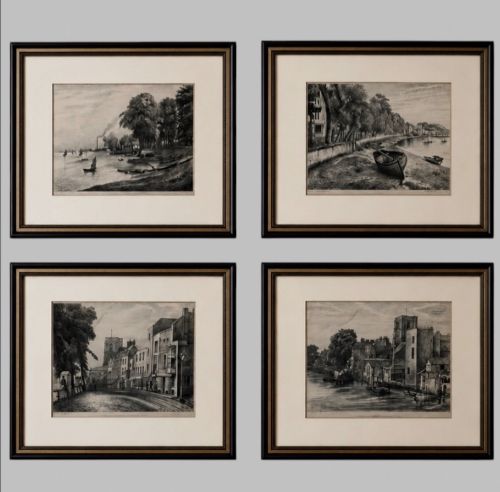
The selections on this page encompass original works on canvas, delicate watercolours on paper, and printed reproductions framed under glass. These depictions record bustling industrial activity, historic bridges, quiet backwaters, and royal castles along the riverbanks across various historic periods.
Materials and techniques
Artists historically employed oil paint on canvas or board to build rich textures and deep tones for grand river scenes, whilst watercolour on paper allowed for luminous, translucent washes suited to atmospheric atmospheric views. Many works are housed in period timber frames, frequently enhanced with gold leaf gilding.
Printmakers utilised techniques such as lithography and aquatint to produce detailed topographical views that were subsequently hand-coloured. Each medium required distinct preparation, from stretching heavy canvas over wooden frames to carefully mounting paper works beneath protective glass.
Listings feature works spanning from the Georgian period through the 1960s, executed in oil, watercolour, and print.
Assessing quality and execution
Quality rests upon the artist's command of light, perspective, and atmospheric depth, distinguishing accomplished topographical recording from formulaic production. Superior examples demonstrate confident brushwork, accurate architectural rendering, and a harmonious balance between natural elements and human activity on the water.
The integrity of the physical components also defines the standard, including the stability of the canvas or paper support and the originality of the accompanying gold leaf or wood frame. Works retaining their early mountings and untouched surfaces command greater regard from collectors.
Francis Moltino·Edward Henry Eugene Fletcher·Robert Winchester Fraser·Henry John Kinnaird·Charles William Wyllie
The Framed Thames Landscape Glossary
- Aquatint
- A printmaking technique that produces tonal effects similar to watercolour washes by using acid to etch resin-coated copper plates. It was frequently employed for eighteenth and nineteenth-century topographical views.
- Topographical
- Pertaining to the accurate depiction of specific places, buildings, or natural scenery. These works serve as visual historical records of changing urban and rural environments along the river.
- Impasto
- Paint applied thickly to a canvas or board, standing out in relief from the surface. This technique imparts tangible texture to water, skies, and architectural details in oil paintings.
- Lithography
- A planographic printing method based on the chemical repulsion of oil and water, enabling the reproduction of detailed artistic compositions. It was widely utilised for nineteenth-century illustrated portfolios.
- Provenance
- The documented history of ownership and exhibition of an artwork. A well-established record verifies the authenticity and origin of the piece.
Framed Thames Landscape: Frequently Asked Questions
What periods do these river artworks cover?
The available selection spans several centuries, encompassing Georgian topographical studies, Victorian maritime watercolours, Edwardian rural scenes, and mid-twentieth-century industrial townscapes.
Each era reflects distinct stylistic approaches to capturing the shifting light and continuous commerce along the waterway.
How were these watercolours and oils traditionally displayed?
Works on paper were typically mounted behind glass within timber frames to protect the delicate pigments from dust and moisture. Oil paintings on canvas or board were housed in substantial wooden frames, often accented with gold leaf moulding.
These traditional enclosures complement the palette and subject matter of the historic river scenes.
What subjects besides London bridges appear in these scenes?
Beyond urban London spans, artists frequently portrayed rural reaches of the waterway, including riverside villages, locks at Mapledurham and Shiplake, and quiet eyots near Marlow. Depictions of commercial barges, sailing vessels, and figures fishing from the banks also recur frequently.
These varied subjects illustrate both the industrial heart of the capital and the tranquil pastoral stretches further upriver.