


London Cityscape Painting
A london cityscape painting captures the capital's historic streets and river views through the enduring mediums of oil and watercolour.
London Cityscape Painting
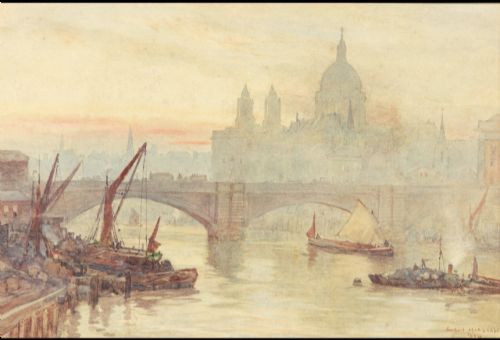
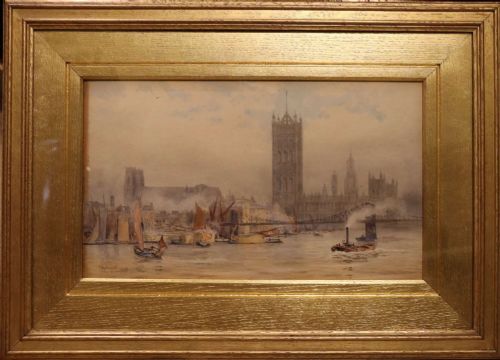
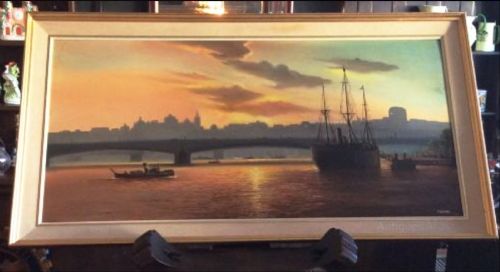
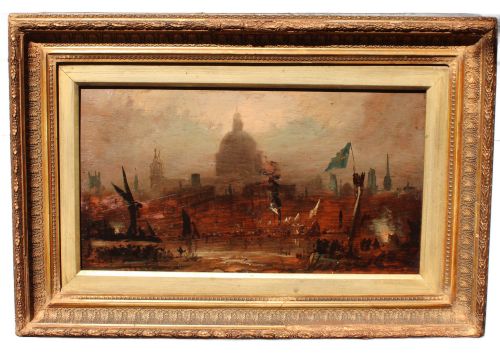
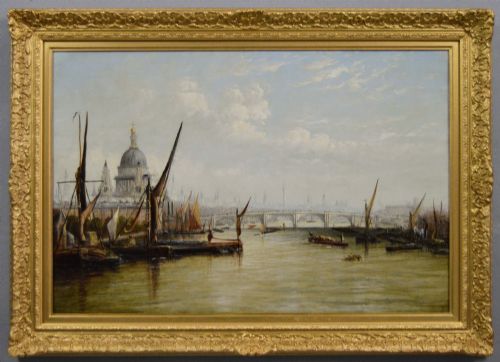
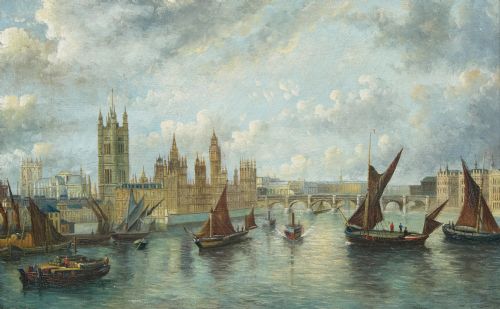
A london cityscape painting depicts recognizable urban landmarks and river scenes, from the Houses of Parliament and St Paul's Cathedral to Waterloo Bridge and Leicester Square. These works record the changing character of the capital across distinct eras, capturing specific atmospheric conditions such as morning mist and evening light.
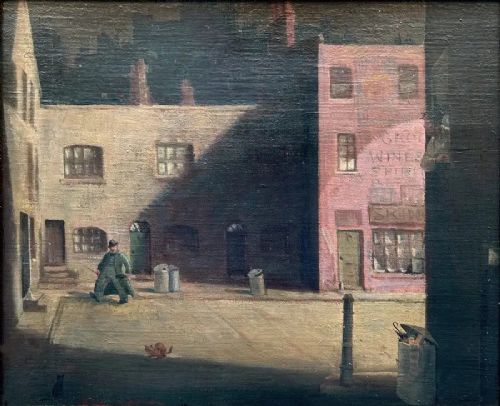
The selections span from the early nineteenth century through to the mid-twentieth century, encompassing Victorian and Edwardian views alongside post-impressionist and mid-century British interpretations. Buyers encounter both panoramic marine views along the Thames and intimate street scenes featuring notable monuments.
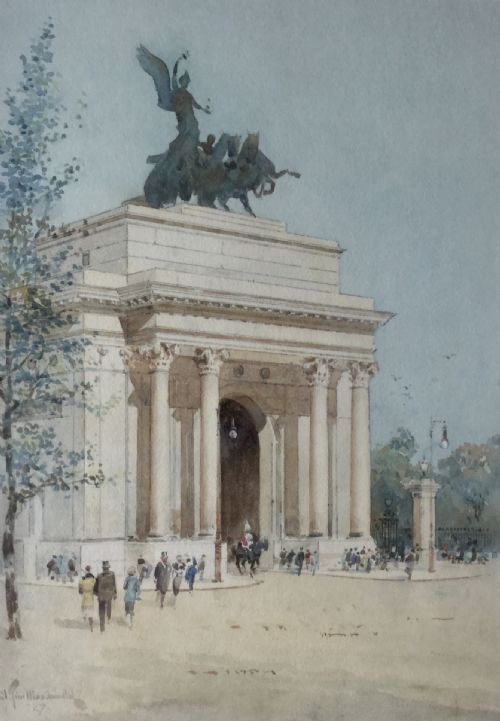
Mediums range from detailed watercolours on paper to substantial oil paintings on canvas and card, often framed in gilt wood and gesso. These pieces vary from hurried compositional oil studies to finished exhibition watercolours by named artists.
What varies in quality
Quality rests on the precision of architectural perspective, the handling of atmospheric light, and the artist's ability to render bustling urban life convincingly. Superior works demonstrate confident brushwork and a sophisticated balance between structural landmarks and natural elements like water and sky.
The distinction between a finished exhibition piece and a quick compositional study marks another tier in the range. Works that retain strong provenance, clear signatures, and original framing materials generally command greater artistic and historical interest.
Listings feature paper, canvas, and card supports framed in wood, gesso, and gold leaf.
H. Medlycott·Francis Moltino·Francisco Sancha·Charles James Lauder·A. G. Hayward·David Small·Jack Merriott·Walter Duncan·Pauline Boumphrey·Rowland Henry Hill·William A. Macdonald·J. Tim Macdonald·T. Girtin
The London Cityscape Painting Glossary
- Gesso
- A plaster-like mixture applied to wood frames as a base for gilding and ornamentation. It provides a smooth surface for subsequent layers of gold leaf.
- Watercolour
- A paint consisting of pigment suspended in a water-soluble vehicle, typically painted on paper. It is prized for its luminosity and immediacy.
- Oil on Canvas
- Pigments bound in a drying oil medium applied to a stretched fabric support. This technique offers durability and depth of colour.
- Gilt Wood
- Wood that has been treated with a thin layer of gold leaf or metallic powder. It enhances the visual presence of the artwork's surround.
London Cityscape Painting: Frequently Asked Questions
How do I date a london cityscape painting?
Dating relies heavily on the depicted architectural landmarks, costume of figures in the street, and stylistic traits typical of periods like the Victorian or Edwardian eras.
Signatures, artist biographical dates, and framing materials also offer reliable clues to establish the approximate decade of creation.
What is the difference between oil and watercolour views?
Oil paintings on canvas generally offer heavier texture and deeper colour saturation, making them suited for dramatic weather and bustling street scenes.
Watercolours on paper utilise translucent washes to capture the soft light and atmospheric mist characteristic of the River Thames.
How were these paintings originally displayed?
These works were typically framed in wood with gesso and gold leaf embellishments to suit period domestic interiors and galleries.
The weight and style of the frame often reflect the aesthetic preferences of the specific decade in which the painting was produced.
Are these paintings historical records?
Many works function as visual archives, documenting urban expansion, demolished bridges, and the changing face of London's waterfront.
Artists often recorded contemporary street life and maritime traffic with notable topographical accuracy.