


Antique London River Scene
An antique london river scene captures the historic capital's waterways through maritime art, offering a window into past shipping, bridges, and cityscapes.
Antique London River Scene
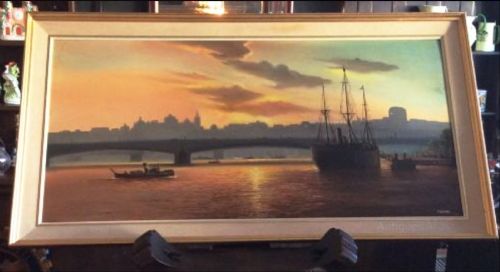
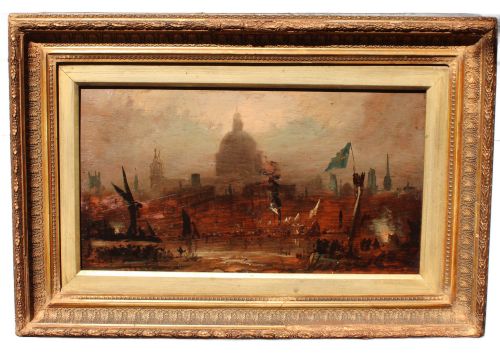
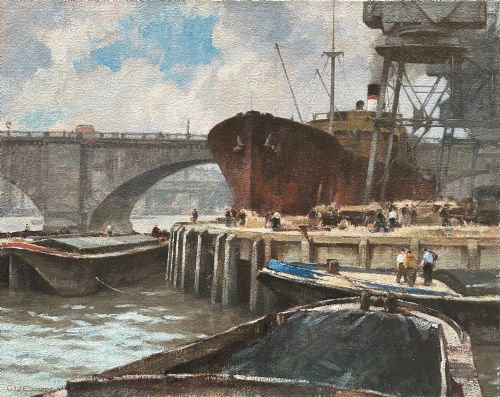
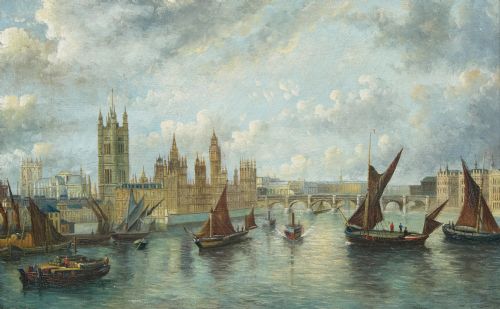
An antique london river scene encompasses works of fine art depicting the Thames, spanning watercolours and oil paintings. These pieces record historic views of the Pool of London, Waterloo Bridge, and St Pauls Cathedral.
The versions most commonly met on this page date from the nineteenth century, the Victorian period, and the Edwardian era. Artists render these subjects in styles ranging from maritime art and Romanticism to British Impressionism.
Representations feature bustling shipping, river processions, and quiet topographical views along the water. The selection includes both detailed watercolours on paper and substantial oil paintings on canvas.
Materials and construction
Works in this category utilise traditional painting media, primarily oil paint on canvas and watercolour paint on paper. Artists build up these compositions using wood for stretchers and frames, occasionally incorporating gold leaf.
The physical support dictates the technique, with oils allowing for rich impasto and layered glazes while watercolours rely on transparency and fluid washes. Painters handle these materials to capture the shifting light and mist characteristic of the Thames.
Artists recorded Lord Mayor processions and crowded Thames barges, ensuring historic river traffic is preserved for modern viewers.
Assessing quality
Quality rests on the precision of the topographical detail and the artist's handling of atmospheric light over the water. Stronger works demonstrate a confident command of perspective, capturing architecture and shipping with convincing scale.
The strength of the composition distinguishes a finished masterwork from a simple study. Superior pieces display harmonious colour relationships and a dynamic arrangement of maritime traffic that brings the historic river to life.
Walter Duncan·Frank W Scarborough·Lieutenant Harold E Frecker·Herbert John Finn·Edward Fletcher·Francis Moltino
The Antique London River Scene Glossary
- Topographical watercolour
- A detailed painting on paper that records specific geographic locations and landmarks with accuracy. These works often serve as historical records of changing cityscapes.
- Oil study
- A preliminary painting executed in oil paint, often created to test composition, light, or colour before embarking on a larger canvas. These pieces reveal the artist's working process.
- Pool of London
- A stretch of the River Thames divided into the Upper Pool and Lower Pool, historically crowded with shipping and port activity. It remains a frequent subject for maritime artists.
- Maritime art
- Works of fine art that focus on or draw main inspiration from the sea, rivers, and shipping. This genre encompasses both calm river scenes and dramatic coastal storms.
- Impasto
- Paint applied thickly to a canvas, standing out in relief from the surface. This technique adds texture and emphasises the play of light across the painted waves.
Antique London River Scene: Frequently Asked Questions
What periods do these paintings date from?
The works span the nineteenth century, including Victorian and Edwardian periods, stretching into the early twentieth century.
Dates recorded by artists range from the early 1800s through to later decades like 1900 and 1920.
Which landmarks appear in these river scenes?
Common landmarks include St Pauls Cathedral, Waterloo Bridge, Tower Bridge, and the Houses of Parliament.
Artists frequently position these structures in the background behind shipping and river traffic on the Thames.
What is the difference between the oils and watercolours?
Oil paintings utilise oil paint on canvas or wood panels, offering rich textures and deep colour saturation.
Watercolours employ watercolour paint on paper, often delivering lighter, more translucent depictions of atmospheric river conditions.
How were these maritime artworks displayed?
These paintings typically hung in private homes and offices, framed behind glass for watercolours or within ornate wooden frames for oils.
Frames often incorporated gold leaf to complement the warm tones within the maritime compositions.