
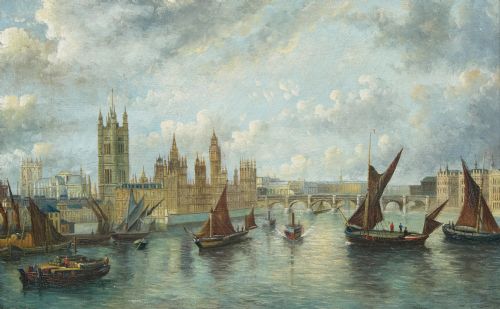


Blue Sky River Painting
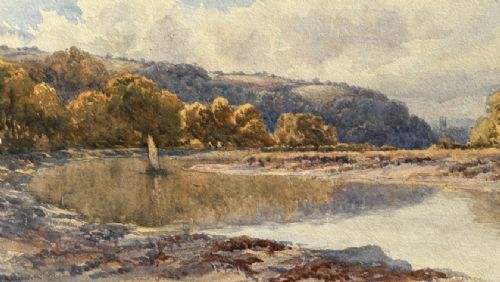
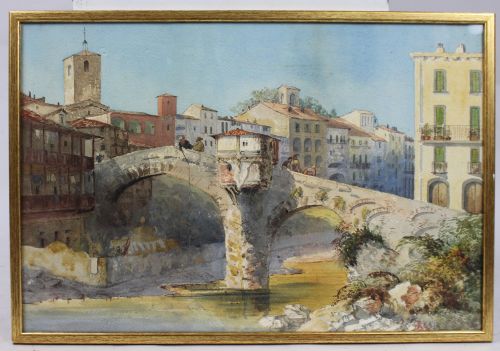
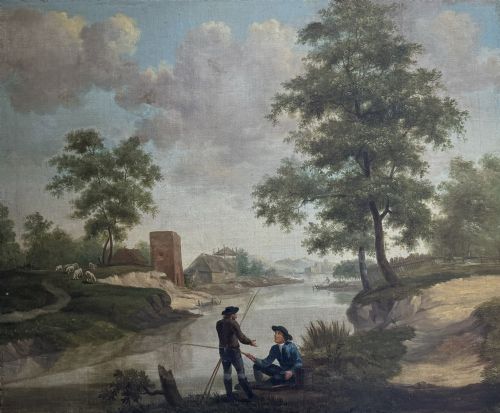
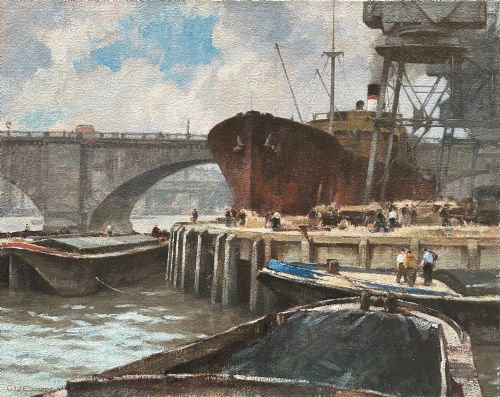
These blue sky river painting works capture open water and atmospheric light through traditional watercolours and oils on canvas or wood panel.
Blue Sky River Painting
A blue sky river painting typically presents pastoral, urban or coastal waterways under open daylight, recorded across the eighteenth, nineteenth and twentieth centuries. These artworks vary from detailed architectural scenes beside the Thames or Medway to impressionistic views of continental rivers.
The version most commonly encountered on this page originates in the nineteenth century, executed in watercolour or oil paint on paper, canvas or wood panel. Such pieces often measure on a substantial scale and reflect British, Scottish, French or Italianate landscapes.
Materials and methods
Artists relied primarily on oil paint applied to canvas and wood panels, or watercolour pigment worked onto paper sheets. These mediums allowed creators to balance opaque texture with translucent washes when rendering open water and expansive skies.
Supports ranged from traditional stretched canvas and prepared timber panels to heavy paper sheets used for plein air watercolours. Framing in glass and wood preserved these delicate surfaces from atmospheric moisture and handling.
Several river scenes feature small historical details, including distant sailing ships, wandering birds and figures crossing nineteenth-century bridges.
Assessing quality in the works
Quality rests upon the artist's command of light, atmosphere and perspective, particularly in the handling of sky reflections on water. A successful composition balances the expanse of the upper register with the movement of the river below.
The distinction between standard decorative works and finer examples lies in the assuredness of the brushwork and the preservation of the original pigments. Stronger pieces maintain paper integrity or stable canvas tension without excessive overpainting.
David Law·Cyril Walduck Edwards·Archibald Kay·William Frederick Settle·Cornelius Pearson·Henry John Kinnaird·Thomas Bush Hardy·George Vicat Cole·John Syer·John Wright Oakes·William Joseph Boyes·Frederick Williamson·Frederick George Coleridge·Robert Anderson·Sir Ernest Albert Waterlow·Herbert Royle·Tom Dudley·Fred Stead·Henri Therme·James Scrimgeour Mann·Charles Eyres Simmons·Jacob Knyff·Edmund John Niemann·John Joseph Cotman·Hubert Thornley
The Blue Sky River Painting Glossary
- Watercolour
- A paint consisting of colour suspended in a water-soluble vehicle, typically applied to paper. It allows for luminous washes that suit river reflections.
- Oil on canvas
- Pigment bound in a drying oil applied to a woven fabric stretched across a wooden frame. This technique permits rich texture and deep colour saturation.
- Plein air
- The practice of painting outdoors to capture direct natural light and atmospheric conditions. This approach defined much nineteenth and twentieth century landscape work.
- Wood panel
- A rigid wooden support used by artists in place of canvas. It provides a firm foundation for detailed brushwork.
- Pastel
- A medium formed of powdered pigment and a binder rolled into a stick. It produces velvety surfaces seen in select mid-century landscape studies.
Blue Sky River Painting: Frequently Asked Questions
What periods do these paintings cover?
The available selection spans from seventeenth-century works up through eighteenth, nineteenth and mid-twentieth century creations. Victorian and Edwardian examples appear frequently alongside later modernist interpretations.
Each period brings distinct stylistic conventions, shifting from precise topographical accuracy toward looser impressionistic handling of light and water.
Where were these river scenes painted?
Subjects include British waterways such as the Thames, Medway, Humber and Severn, alongside Welsh valleys and Scottish landscapes. Continental locations feature French rivers like the Loire, Dutch canals and Italianate scenes.
Artists frequently travelled to record specific towns, bridges, shipyards and rural backwaters directly from observation.
How should I care for a watercolour?
Watercolours on paper require protection from direct sunlight to prevent the fading of delicate pigments. Glazing with glass helps shield the paper surface from airborne dust and moisture.
Maintaining stable indoor humidity levels prevents warping of the paper and preserves the integrity of the original mount and frame.
How do I identify a wood panel painting?
Wood panel paintings utilise a rigid timber support rather than woven fabric canvas. Examination of the reverse often reveals the grain of the wood and the age of the board.
Panels were favoured by artists for small to medium landscape studies, offering a solid surface that required minimal preparation.