



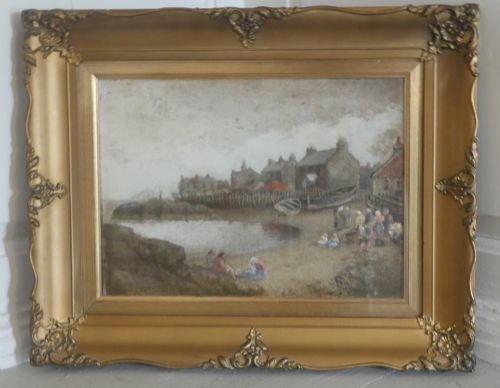

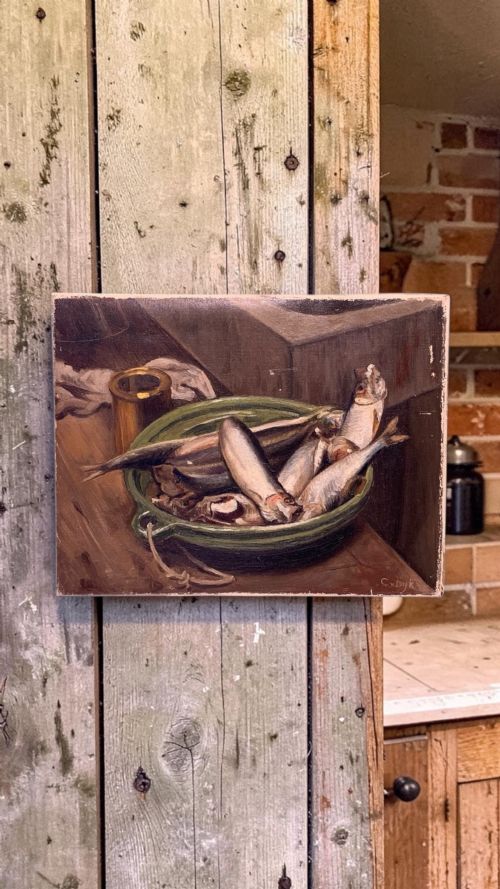
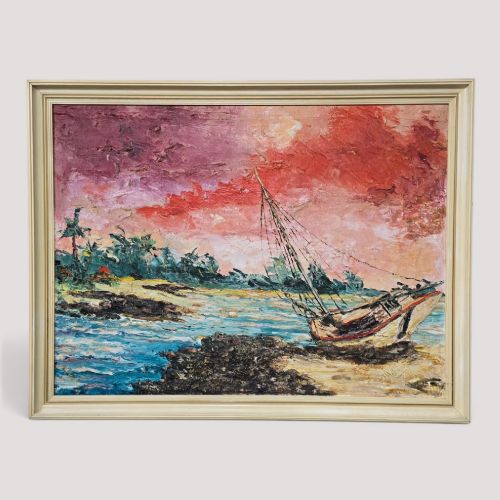
Vintage Marine Oil Artwork
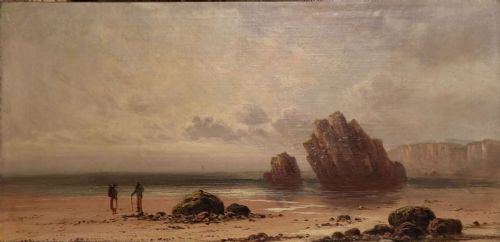
Vintage marine oil artwork captures the movement of water, the grit of harbours and the vastness of the open sea through layers of pigment.
Vintage Marine Oil Artwork
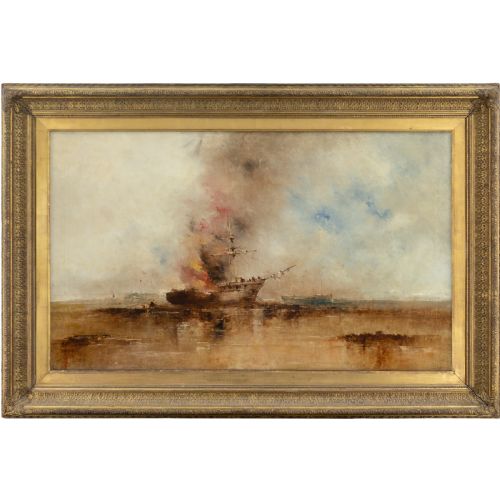
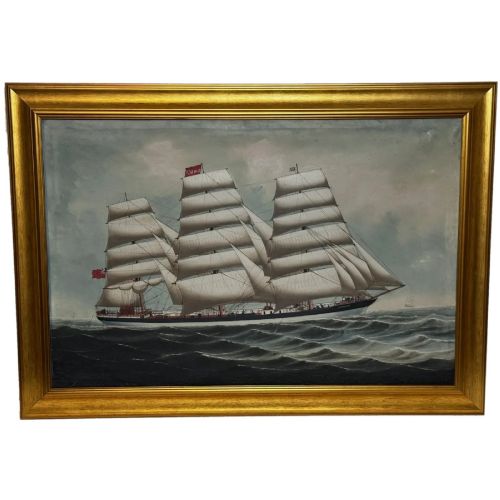
Vintage marine oil artwork covers painted depictions of coastal views, shipping scenes, harbours and open seas produced primarily across the nineteenth and twentieth centuries. These paintings record maritime history, commercial trade, naval vessels and leisure sailing through direct observation and studio reconstruction.
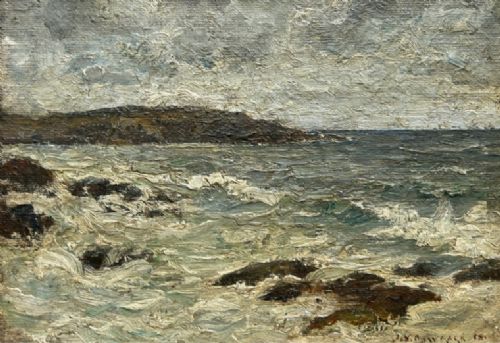
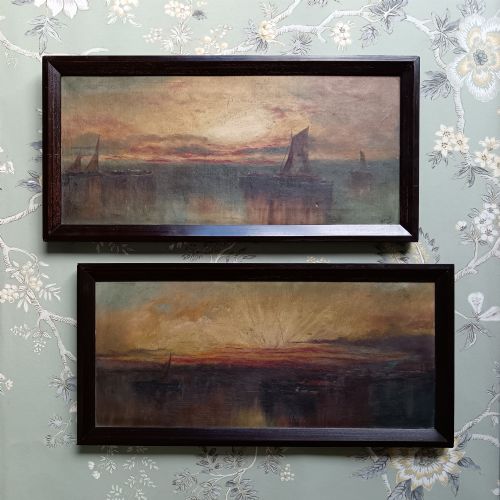
The versions most commonly met on this page span Victorian maritime scenes through to mid-century modern interpretations. Works range from intimate coastal board sketches painted en plein air to large narrative canvases detailing historic ships in heavy seas.
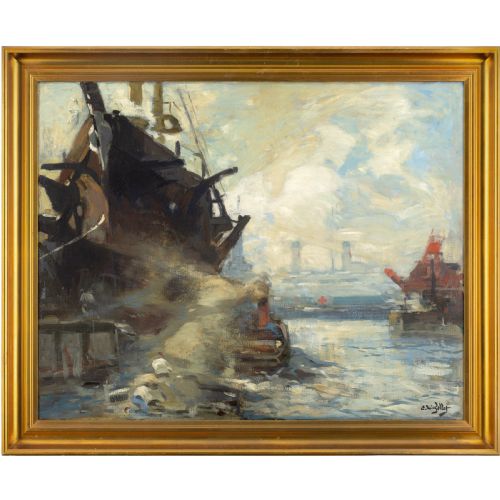
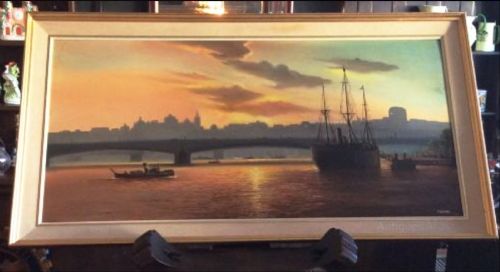
Subjects stretch from British and European coastal villages to international ports, capturing calm estuaries, stormy channels and industrial river traffic with equal weight.
How they were made
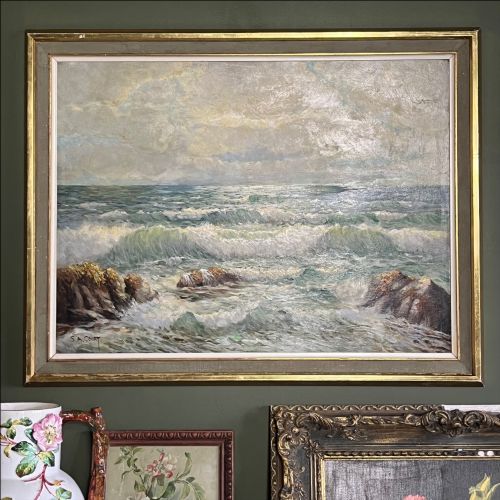
Artists built these works using oil paint applied to woven canvas stretched over wooden frames, or directly onto rigid wooden board. The medium allowed for slow blending of tones to render shifting light on water and the atmospheric haze of coastal skies.
Many pieces incorporate thick impasto application where the paint stands proud of the surface to describe breaking waves, frothing foam or the texture of weathered rigging. Gilt wooden frames often complete the construction, serving both to protect the perimeter and to throw light back into the composition.
Listings feature works spanning the nineteenth century through the 1960s, executed in oil on canvas and board.
What varies in quality
Quality rests upon the artist's command of maritime architecture, rigging accuracy and the fluid dynamics of water. A superior painting conveys weight, momentum and atmospheric depth rather than merely recording the dry facts of a vessel.
Compositional balance and brushwork control separate routine harbour records from accomplished works. The strongest examples demonstrate confident handling of changing light across sea and sky without relying on excessive detail to carry the scene.
Kenneth Cozens·Clifford Hanney·Eugène-Louis Gillot·William McAlpine·Reginald Arthur Borstel·Sidney A Court·Bernard Gribble·Clive Browne·Peter Brannan·Paul Bret·Bernard Benedict Hemy·Willem Bos·Nicholas Condy·William Henry Williamson·John Holland·Abraham Hulk I·Elisabeth Bardon·William Edward Webb
The Vintage Marine Oil Artwork Glossary
- Impasto
- Paint applied thickly to a canvas or board, leaving visible brush or palette knife marks that add physical texture to the surface.
- En plein air
- Painting outdoors in direct contact with the subject and the changing light, common in coastal and landscape work.
- Canvas
- A heavy woven fabric stretched tightly across a wooden frame to act as the primary support for oil paint.
- Board
- A rigid flat wooden or composition panel utilised as a sturdy alternative to stretched canvas for smaller paintings.
- Gilt
- A thin application of gold leaf or metallic paint applied to wooden picture frames to enhance the visual presentation.
Vintage Marine Oil Artwork: Frequently Asked Questions
How do I date a vintage marine oil artwork?
Dating relies on examining the stretcher construction, canvas type, framing style and the specific vessel types depicted in the composition. Maritime history offers firm chronological clues through the evolution of sail plans, steamer funnels and naval architecture.
Signatures, exhibition labels on the reverse and biographical dates of the artist further narrow the production window. Comparison with dated comparative works in the same hand provides additional verification.
Where should I hang marine art at home?
Marine art suits spaces with natural light that mimics the atmospheric conditions captured in the pigment, such as hallways, studies or living rooms. Strong framing in gilt or toned wood anchors the painting against domestic wall colours.
Placement should avoid direct, intense sunlight to protect oil paint and varnishes from premature ageing. Pairing works with neutral backgrounds allows the tonal range of the sea and sky to command the room.
What is the difference between canvas and board?
Canvas provides a flexible, woven textile support that responds subtly to atmospheric shifts and often accommodates larger compositions. Board offers a rigid, unyielding panel favoured for smaller studies painted outdoors.
Both materials host oil paint effectively, but board pieces frequently present an intimate, immediate record of coastal conditions. Canvas works often signal more formal studio production intended for major exhibition.
How do I identify a port or ship in a painting?
Identifying locations involves studying background landmarks, lighthouse designs, pier architecture and coastal topography shown in the composition. Shipping registers and flags provide clues to the nationality and era of vessels.
Many artists inscribed titles, dates or vessel names directly onto the stretcher bars or the reverse of the board. Local maritime museums and port histories offer valuable context for unlabelled coastal scenes.