




Grey Marine Oil Painting
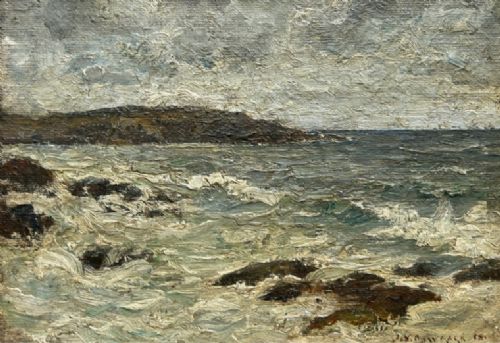
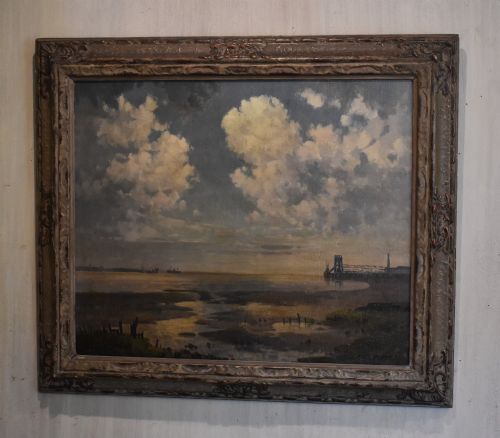
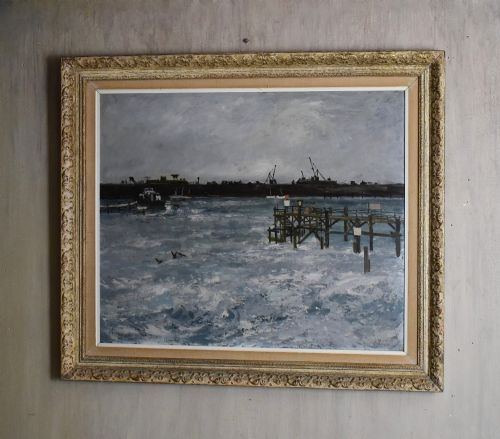
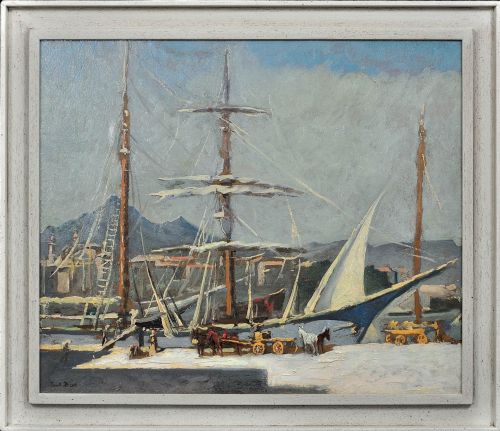
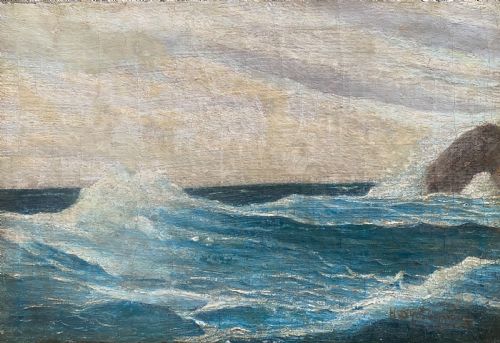
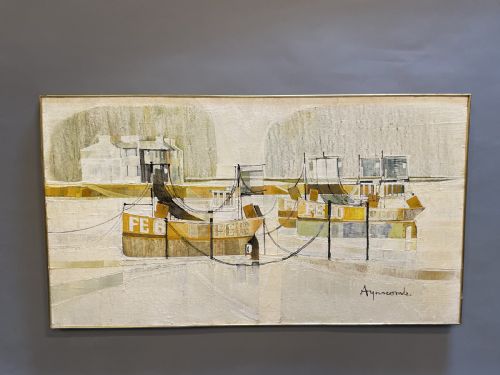
A grey marine oil painting captures the atmospheric mood of coastal waters and shipping under overcast skies.
Grey Marine Oil Painting
A grey marine oil painting focuses on seascapes, harbours, and coastal scenes rendered in muted, tonal palettes dominated by slate and silver hues. When searching this phrase, a buyer encounters works spanning the nineteenth century through the mid-twentieth century, capturing everything from traditional British coastal views to continental impressionist port scenes.
The selections on this page lean heavily towards nineteenth century realism, Victorian maritime art, and twentieth century British and French impressionism. Forms range from intimate board studies of river barges to expansive canvas depictions of stormy seas and bustling industrial harbours.
How they were made
These works are executed primarily in oil paint applied to prepared canvas, wooden panel, or board supports. Artists often built up surfaces with visible brushwork or impasto to render the texture of choppy waves and rugged shorelines.
Many of these paintings are completed within wooden frames, occasionally retaining gilt finishes that complement the maritime subjects.
Listings feature works executed on canvas, board, and wood supports across nineteenth and twentieth century periods.
What varies in quality
Quality rests in the artist's handling of atmospheric light and tonal nuance, where superior works capture the heavy grey atmosphere of sea mist and overcast skies with assured brushwork. Weaker examples often rely on formulaic compositions and flat applications of colour that lack depth.
The strength of the piece depends on the vitality of the composition and the confidence of the mark-making, distinguishing observant studies of coastal life from generic studio productions.
Kenneth Cozens·Clive Browne·Peter Brannan·Paul Bret·Edward Henry Eugene Fletcher·William Greaves·Charles Sim Mottram·Owen Bowen·George Gregory·John Callow·Herbert Royle·Paul Jean Clays·John Davison Liddell·Frank Myers Boggs·Bertram Priestman
The Grey Marine Oil Painting Glossary
- Impasto
- Paint applied thickly to a canvas or board, leaving prominent brush or knife marks that stand out from the surface. This technique adds tactile depth and movement to the representation of crashing waves.
- Board
- A rigid wooden or fibrous panel utilised as a painting support instead of stretched canvas. Artists often preferred these for smaller plein air studies painted directly on location.
- Gilt
- A thin layer of gold leaf or metallic paint applied to frame surfaces to create a decorative golden finish. It provides a traditional border that isolates and enhances the tones of the painting within.
- Marine art
- Artistic representations of the sea, ships, beaches, and maritime activities. This genre encompasses historical naval battles, quiet river estuaries, and stormy coastal scenes.
- Impressionism
- A style of painting emphasising small, thin brush strokes and accurate depiction of changing light. In marine subjects, it captures the fleeting atmospheric effects of weather over water.
Grey Marine Oil Painting: Frequently Asked Questions
What subjects appear in these paintings?
The works depict coastal shorelines, busy commercial ports, fishing harbours, and open seas under overcast skies. Barges, sailing ships, and coastal figures frequently populate the water and the shore.
Scenes range from calm river estuaries in Britain to industrial harbours and continental fishing ports across Europe.
How do I care for an oil painting?
Keep the painting away from direct sunlight and significant fluctuations in temperature and humidity to protect the canvas and wood supports. Displaying the work in a stable environment prevents warping of the boards and cracking of the oil paint.
Dust the surface gently with a soft, dry brush and avoid using water or chemical cleaners on the paint layer.
Are these works painted outdoors?
Many nineteenth and twentieth century artists worked directly on location by the shore to capture accurate natural light and atmospheric weather conditions. These plein air studies were often executed on small wooden boards for ease of transport.
Larger canvases were typically finished inside studios using field sketches and direct observations as reference.
How do I identify the period of a work?
Dating relies on stylistic clues, including the evolution from detailed nineteenth century maritime realism towards freer impressionist and modernist brushwork in the twentieth century. Costume details on figures and the specific rig of the ships also provide clear chronological markers.
Signatures, framing styles, and artist biographies help narrow the window of creation further.