




Vintage Marine Landscape Artwork
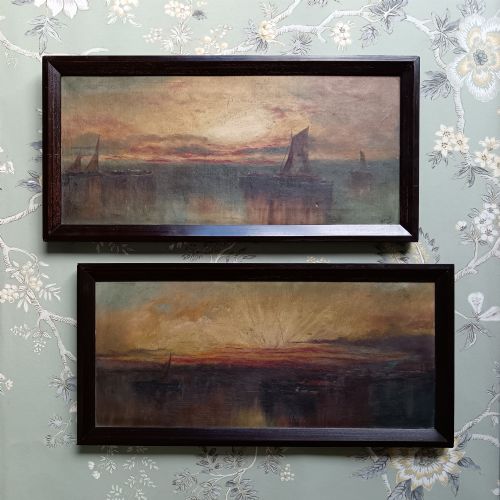
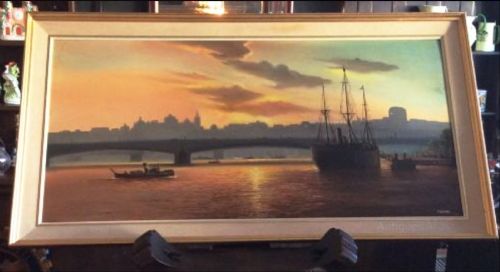
Vintage marine landscape artwork captures the enduring pull of coastlines, harbours, and open water through the eyes of artists working across the nineteenth and twentieth centuries.
Vintage Marine Landscape Artwork
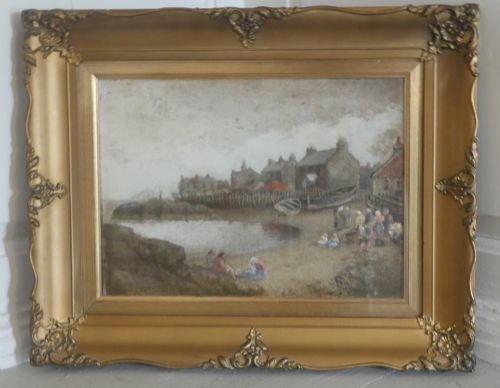
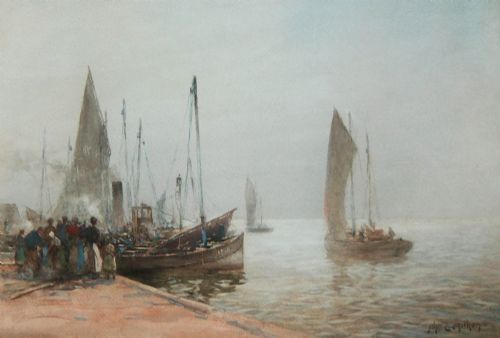
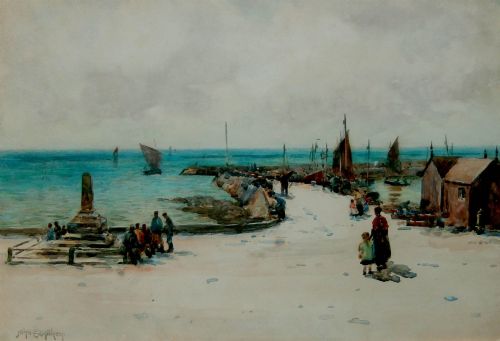
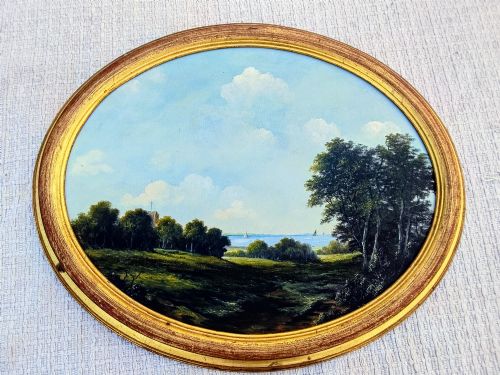
When you search for vintage marine landscape artwork, you encounter oil paintings, watercolours, and fine art paintings depicting coastal scenes, bustling harbours, and open seas. These works range from late nineteenth-century maritime watercolours to mid-century British and French coastal views.
The version you are most likely to meet on this page is an original painting on canvas, board, or paper dating from the Victorian era up to the 1960s. These pieces frequently record specific British and European coastal locations, from Cornish harbours to northern shipping channels.
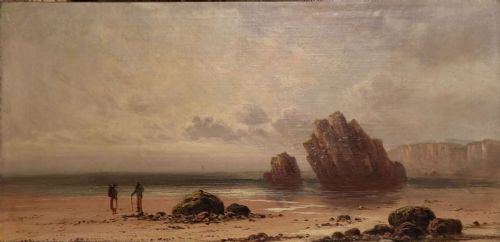
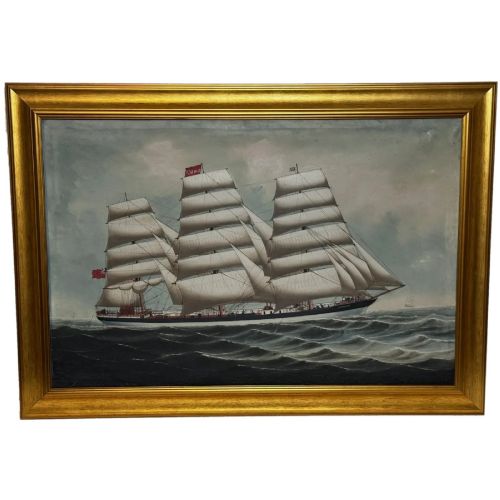
Subject matter spans tranquil river estuaries, rocky shores, and dramatic seascapes featuring working boats, clippers, and coastal villages. The visual language shifts from traditional topographical accuracy to broader impressionistic handling as the decades progress.
Materials and Technique
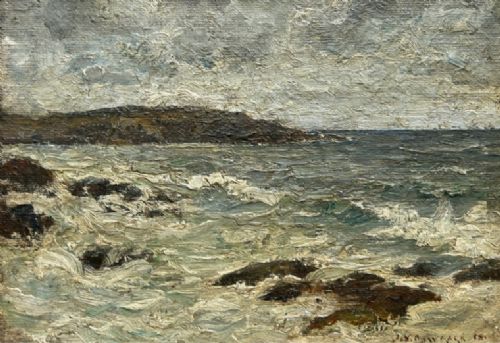
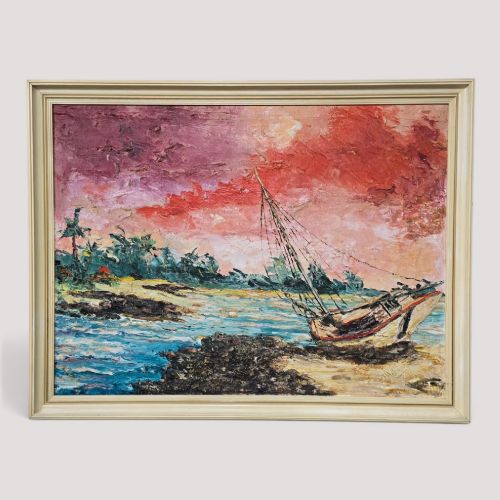
Artists working in this genre relied primarily on oil paint applied to canvas or wood board, alongside watercolours worked on heavy paper. Oil allowed for rich impasto texture to capture breaking waves and stormy skies, while watercolours offered swift, transparent washes suited to changing light on the water.
Support materials developed from traditional stretched canvas and linen to sturdy wooden boards and primed panels during the early twentieth century. Many surviving works retain their original gilt wood frames, which complement the maritime subject matter and protect the edges of the paper or canvas.
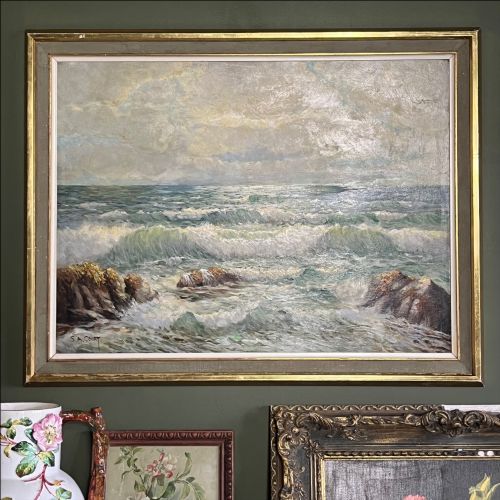
Techniques varied between meticulous studio finishes and en plein air execution, where painters worked directly on the shore to capture transient weather conditions. Impasto application appears frequently in works depicting rocky coastal seascapes, building a physical sense of movement and depth.
Several artists braved bracing North Sea winds to capture these views, proving that salt water in the paint was an occupational hazard.
Distinctions in Quality
Quality in these works rests upon the artist's ability to render the weight of water, atmospheric light, and spatial depth convincingly. Stronger pieces demonstrate confident brushwork and precise tonal control, particularly in capturing reflections and shifting coastal weather.
Provenance and documentation elevate certain examples, especially where titles, signatures, and exhibition histories tie a painting to a recognised coastal location or a documented hand. Pieces that retain their period framing intact also hold greater visual integrity.
Kenneth Cozens·Clifford Hanney·Reginald Arthur Borstel·Sidney A Court·B Nash·Edward Mills·James E Aitken·John E Aitken·William Banks Fortescue·Clive Browne·Peter Brannan·Paul Bret·Bernard Benedict Hemy·Willem Bos·William Henry Williamson·Robert Leslie Howey·John Holland·George Stanfield Walters·Frank Kelsey·Walter Goodin·F A Roylance·Liberty and Co·William Frederick Settle·Alfred George Morgan·Lionel Horsnell
The Vintage Marine Landscape Artwork Glossary
- Impasto
- Paint applied thickly to a canvas or board, standing out in relief from the surface. This technique lets the artist build tangible texture into breaking waves and rocky shorelines.
- En plein air
- The practice of painting outdoors directly from the subject. Artists using this method aimed to capture natural light and atmospheric shifts on the coast.
- Watercolour
- A painting method where fine pigment is suspended in a water-based solution on paper. It produces translucent washes ideal for depicting calm seas and misty harbours.
- Maritime
- Pertaining to ships, shipping, and the sea. In these artworks, the term denotes scenes where vessels form a central focus alongside the coastal topography.
Vintage Marine Landscape Artwork: Frequently Asked Questions
What is a marine landscape artwork?
A marine landscape artwork is a painting or watercolour focused primarily on the sea, coastline, beaches, or harbour activities. These pieces document maritime environments as interpreted by artists from the nineteenth century onwards.
The genre includes everything from calm river estuaries and shipping traffic to rugged coastal cliffs and stormy open waters.
How do I care for a vintage oil painting?
Vintage oil paintings require stable indoor humidity and protection from direct sunlight to prevent the canvas or board from warping and the paint from fading. Keep the surface clean using a soft, dry brush without applying water or chemical cleaners.
Displaying the artwork away from direct heat sources ensures the conservation of both the paint layer and any original gilt wood frame.
How can I tell a watercolour from an oil painting?
Watercolours are painted on paper, usually displayed under glass, and display transparent washes where the texture of the paper remains visible beneath the pigment. Oil paintings are executed on canvas or wood board with opaque paint that often holds physical texture.
Examining the surface under natural light reveals whether the medium sits on a woven textile, a rigid panel, or paper.
Where were these coastal scenes typically painted?
Artists painted these coastal views along working ports, fishing villages, and popular shores across Britain, France, and wider Europe. Locations often included Cornish harbours, Yorkshire coastal towns, and Breton inlets.
Many works record specific regional landmarks, providing a historical record of coastal communities and maritime trade routes.