





Vintage Marine Boat Landscape
Vintage marine boat landscape works bring coastal waters, working harbours, and open sea into focus through oil and watercolour.
Vintage Marine Boat Landscape
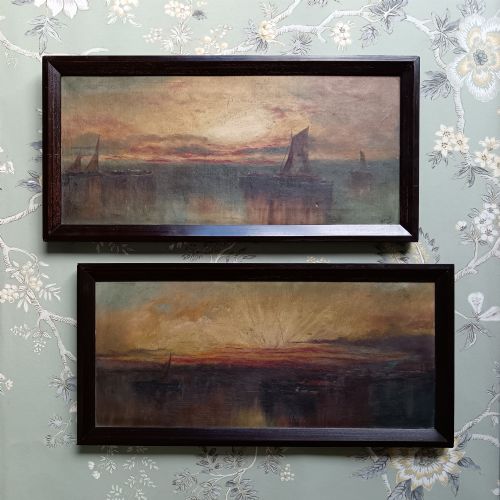
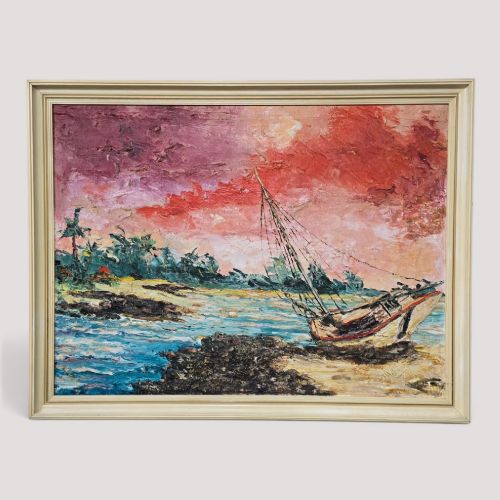
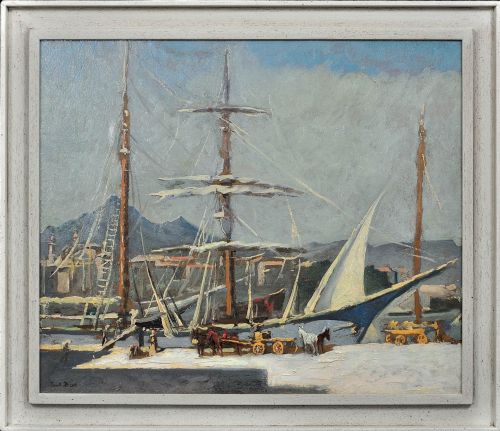
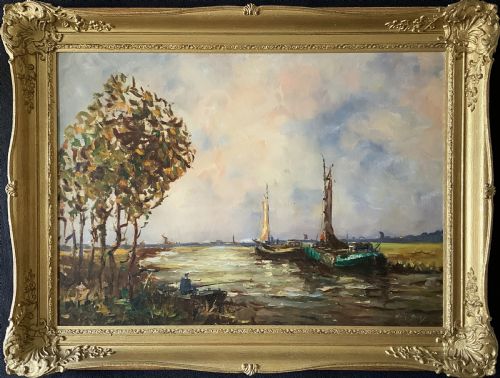
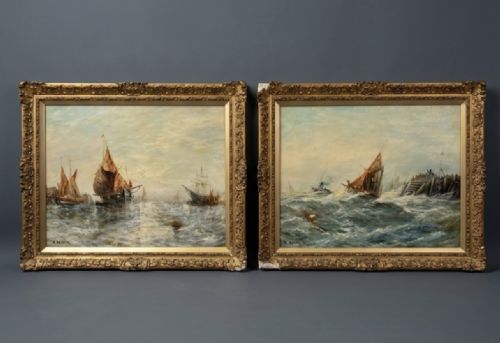
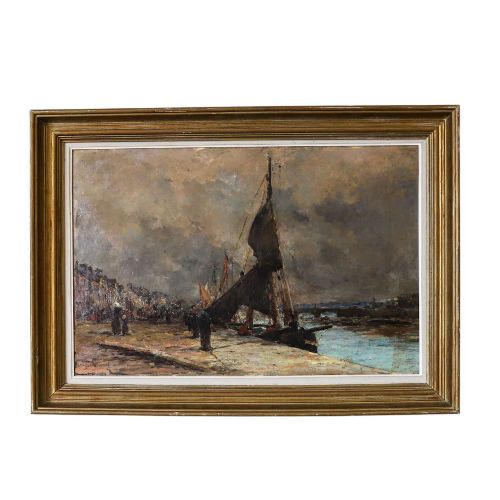
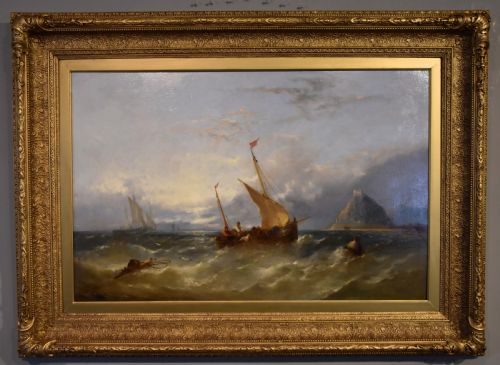
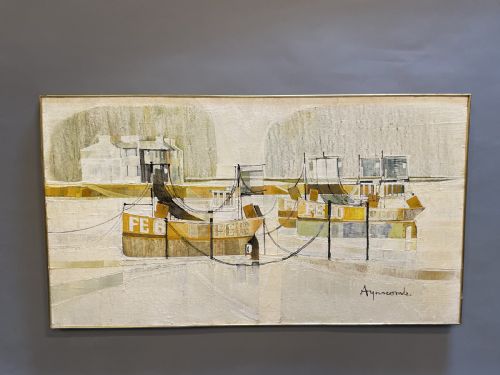
Vintage marine boat landscape paintings capture maritime subjects, from bustling harbour quays to quiet coastal shores. The selection spans the nineteenth century through to the mid twentieth century, encompassing Victorian works as well as later impressionist interpretations.
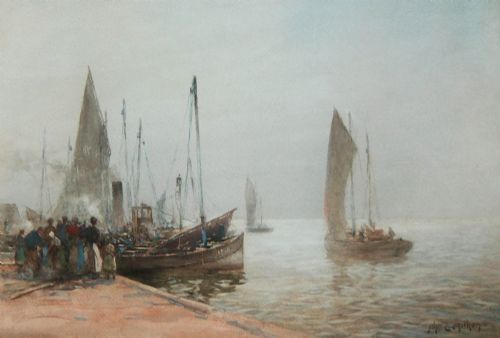
Most examples take the form of oil paintings on canvas or board, alongside watercolours on paper. Buyers frequently encounter framed works depicting sailing vessels, fishing boats, and canal scenes across British and European locations.
Materials and construction
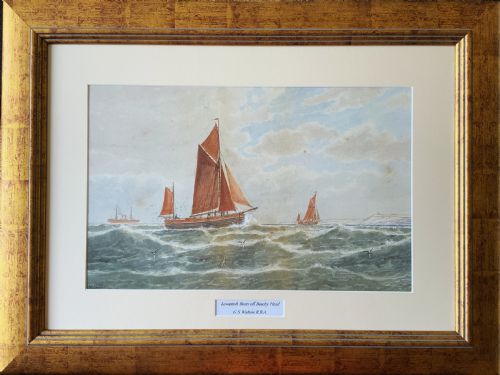
Artists relied primarily on oil paint applied to prepared canvas or wooden board, yielding textured brushwork and deep colour retention. Watercolours on paper offer a lighter medium, often capturing translucent light across coastal skies and water.
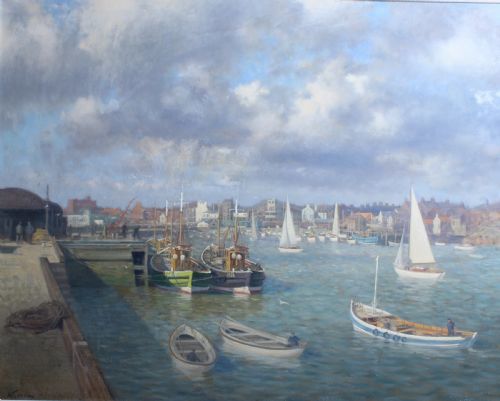
Several artists recorded the bustle of specific European harbours, capturing salt spray and canvas sails across the centuries.
Distinguishing quality across the range
Quality rests on the sureness of the brushwork and the artist's ability to render light, atmosphere, and the movement of water. Stronger compositions display confident handling of vessels and rigging against the expanse of sea and sky.
The integration of the painting with its period frame contributes to the overall integrity of the piece. Skilled execution in capturing specific coastal locations elevates an individual work above standard decorative examples.
Kenneth Cozens·B. Nash·James E. Aitken·Paul Bret·Willem Bos·William Henry Williamson·George Stanfield Walters·Walter Goodin·William Edward Webb·Raymond Picque·William Lee Hankey·Edward Seago·Fernando Del Basso·Thomas Bush Hardy·Adrian Van Porten·Tom Clough·William Tuck·Edward Henry Eugene Fletcher·Fred Waugh·Abraham Hulk Snr·T.S. Wallis·Hendrik Willebrord Jansen·George Gregory·John Bell·Donald McIntyre
The Vintage Marine Boat Landscape Glossary
- Seascape
- A work of art depicting the sea or marine subjects. These pieces focus on coastal views, open water, and maritime activity.
- Canvas
- A heavy woven fabric used as a surface for oil painting. Artists stretch it over a wooden frame before application.
- Gilt wood
- Wood coated with a thin layer of gold leaf or gold paint. This finish is typical for traditional picture frames.
- Impressionism
- An art style characterised by relatively small, thin, yet visible brush strokes. The emphasis rests on accurate depiction of light and its changing qualities.
- Watercolour
- Paint made with water-soluble pigments. It is traditionally applied to paper to achieve translucent effects.
Vintage Marine Boat Landscape: Frequently Asked Questions
What periods do these paintings cover?
The available selection spans from the nineteenth century through the Edwardian era and into the mid twentieth century. Works from the Victorian period sit alongside later modernist and impressionist interpretations.
Dates recorded across the pieces range from the eighteen hundreds up to the nineteen seventies, reflecting shifts in artistic style over time.
What subjects appear most frequently?
Common subjects include working fishing boats, sailing barges, and bustling harbour quays across Britain and Europe. Scenes often feature specific locations such as Whitby, Folkestone, or Dutch coastal waters.
Artists also recorded calm anchorages, stormy seas, and quiet river estuaries under varying atmospheric conditions.
How do oil paintings differ from watercolours here?
Oil paintings utilise heavy pigments on canvas or board, offering rich texture and depth of colour. Watercolours use water-soluble paint on paper to achieve a lighter, translucent effect.
Both mediums captured maritime light, but watercolours generally present softer tones suited to atmospheric coastal views.