




Dutch Windmill Painting
A dutch windmill painting brings the characteristic flat horizons, waterways and towering mills of the Low Countries straight onto the wall.
Dutch Windmill Painting
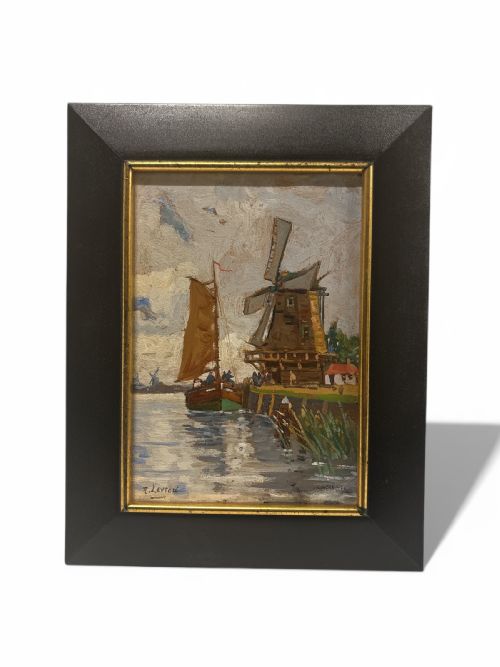
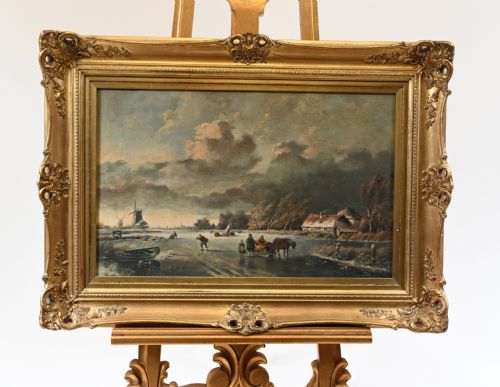
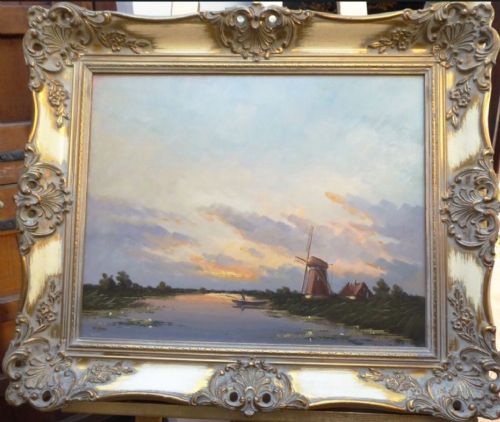
When you search for a dutch windmill painting, you encounter works spanning the nineteenth century, the Edwardian era, and the mid twentieth century. These pieces capture rural landscapes, frozen winter scenes, and river views dominated by traditional mills, executed primarily in oil on canvas, oil on panel, and watercolour on paper.
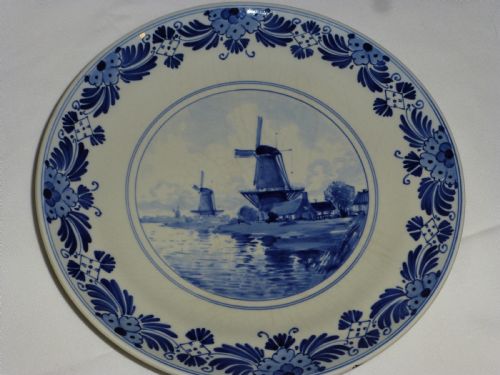
The version you are most likely to meet on this page is a nineteenth century oil painting depicting a canal or river landscape with a windmill. Alongside paintings, the selection occasionally embraces related decorative objects such as blue and white earthenware chargers, inkstands, and miniature furniture pieces.
The style ranges from impressionist interpretations and atmospheric Dutch School realism to maritime and coastal watercolours. These works reflect both domestic Dutch output and British artists painting continental scenes during the Victorian and Edwardian periods.
Materials and Techniques
Artists working on these landscapes relied on oil paint applied to woven canvas stretched over wooden frames, or directly onto prepared wood panels. Watercolours on paper appear frequently among British and continental works, capturing lighter atmospheric effects along rivers and canals.
Many of the canvases and panels sit within substantial decorative wooden frames, often finished in gilt to complement the composition. Earthenware items employ hand-painted blue and white pigments fired onto a ceramic body, reflecting traditional Delft methods.
Materials recorded include canvas, wood panels, paper, plaster, and blue and white faience.
Assessing Quality and Execution
The distinction between ordinary and superior works lies in the handling of light and atmosphere across the flat landscape. Stronger examples demonstrate confident brushwork that defines water reflections, sky depth, and the architectural structure of the mill without becoming rigid.
Provenance and attribution also shape the standing of a piece. Signed works by recognised painters from the Dutch School or associated maritime traditions carry greater weight than unsigned canvases of the same period.
Thomas Bush Hardy·Pieter Cornelis Dommersen·Kershaw Schofield·George Sheffield
The Dutch Windmill Painting Glossary
- Dutch School
- A broad term denoting artists working in the Netherlands, or painters adopting the realist and landscape traditions of that region. It encompasses various nineteenth-century movements focused on local scenery.
- Panel
- A flat piece of wood used as a rigid support for oil painting instead of canvas. Artists often favoured panels for smaller landscapes and winter scenes.
- Faience
- Tin-glazed earthenware, particularly associated with blue and white decorative pieces and chargers produced in imitation of porcelain. It forms the basis of traditional Delftware.
- Grisaille
- A painting executed entirely in shades of grey or neutral monochrome. This technique emphasises tone and form over local colour.
- Polder
- A low-lying tract of land enclosed by dikes, forming an artificial hydrological entity. It represents a common motif in Dutch landscape painting.
Dutch Windmill Painting: Frequently Asked Questions
What periods do these paintings come from?
The selection spans the nineteenth century, including Victorian and Edwardian examples, alongside mid twentieth-century works.
Earlier pieces often reflect nineteenth-century Dutch Realism or the Hague School, while later items date up to nineteen sixty.
Are these paintings always on canvas?
Not exclusively, as artists used several different supports depending on the scale and style of the work.
While canvas is common, many oil paintings are executed on wood panels, and watercolours are worked on paper.
How should I care for an antique oil painting?
Keep the piece away from direct sunlight and dramatic shifts in temperature or humidity to protect the canvas and wood.
Dust the surface gently with a soft, dry brush and avoid using liquid cleaners on the paint or the gilt frame.
What is the difference between a watercolour and an oil painting?
Watercolours use pigment suspended in a water-based solution applied to paper, typically requiring glass protection.
Oil paintings use slow-drying pigments bound in oil on canvas or panel, offering a richer texture and deeper tones.