




Framed Maritime Watercolour Landscape
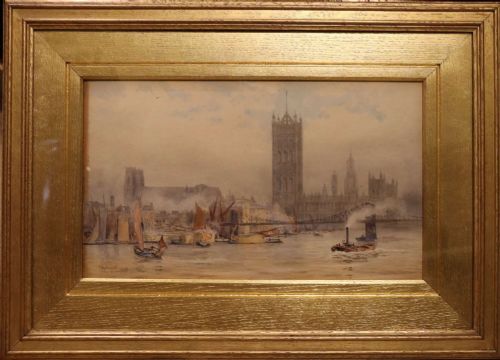
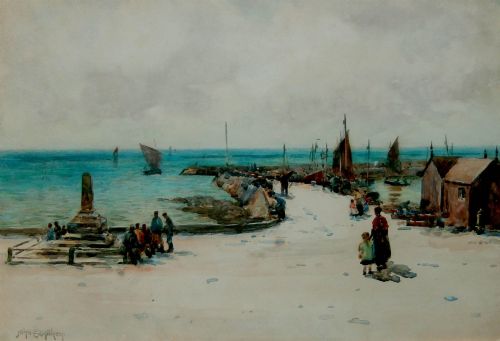
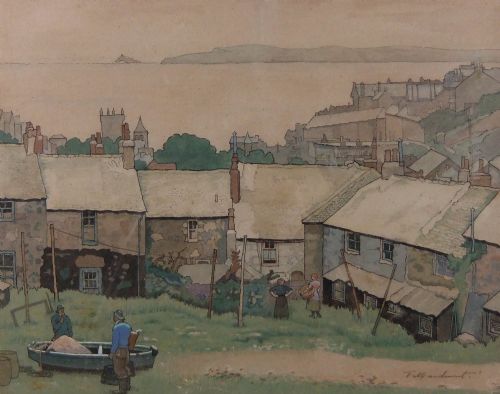
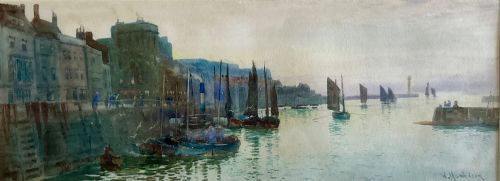
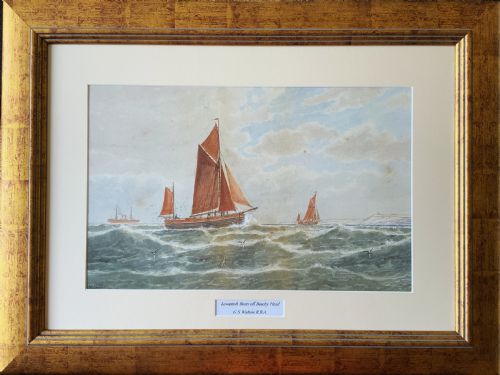
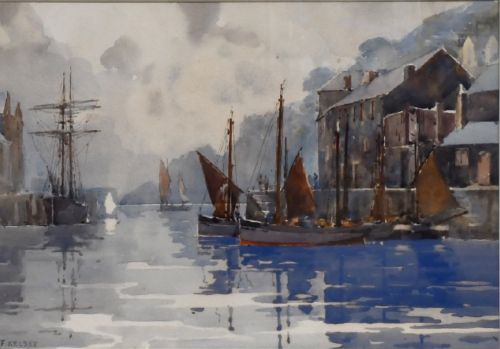
When you search for a framed maritime watercolour landscape, you are tracking down nineteenth and early twentieth-century views of harbours, coastal villages and open seas.
Framed Maritime Watercolour Landscape
A framed maritime watercolour landscape captures coastal life, bustling fishing ports and tidal rivers across Britain and continental Europe. These watercolours span the Victorian era, Edwardian period and the early decades of the twentieth century, reflecting a sustained fascination with the sea.
The subjects on this page lean heavily towards working harbours, sandy bays and estuaries, from Whitby and St Ives to Venice and the Thames. They range in scale from intimate local sketches to detailed fine art paintings produced during distinct regional art movements.
Most examples arrive preserved behind glass within wooden frames, occasionally featuring gilt or ebonised finishes. They document maritime activity and coastal topography through the direct, fluid touch of watercolour pigment upon paper.
Materials and Technique
The fundamental components of these pieces are watercolour pigment applied to paper sheets, relying on the natural white of the paper to provide luminosity and light. Artists utilised washes of varying opacity alongside fine brushwork to render sky, water and stone.
Protection from the elements required proper framing behind glass, secured within wood mouldings that were sometimes painted, ebonised or gilded. The combination of water-soluble pigments and paper necessitated this physical barrier to prevent moisture damage over generations.
Several artists braved stormy northern tides just to capture the precise list of a stranded barque.
Judging Quality
Quality rests upon the artist's command of atmospheric light, fluid brush control and the structural accuracy of the composition. The finest works capture movement in water and sky with economy and confidence, avoiding overworked surfaces.
Framing and preservation also play a decisive role in overall merit. Works that retain their original glass and matching wooden frames without heavy foxing or fading offer a more complete historical survival.
H Medlycott·James Orrock·John E Aitken·William Banks Fortescue·Thomas Maidment·William Matthison·George Stanfield Walters·Frank Kelsey·F A Roylance·Alfred George Morgan·Charles William Adderton·William Lee Hankey·Thomas Bush Hardy·William Tuck·Fred Waugh·F J Aldridge·James Watson·George Hamilton Constantine·Frederick William Hattersley·James Thomas Watts·John Mitchell·Jan van Couver·Stanley Orchart·John McDougal·Frank Wood
The Framed Maritime Watercolour Landscape Glossary
- Foxing
- Brown spots and patches that develop on older paper due to chemical reactions over time. This common ageing process occurs when iron impurities in the paper react with moisture.
- Wash
- A thin, transparent layer of diluted watercolour pigment spread evenly across the paper. Artists use this technique to build up expansive skies and calm stretches of sea.
- Gilt Wood
- Timber framing coated with a thin layer of gold leaf or metallic paint. This finish was frequently applied to enhance the presentation of formal Victorian fine art.
- Ebonised
- Wood stained or treated to imitate the dark, dense appearance of ebony. These stark black frames are characteristic of period presentations for marine watercolours.
- Seascape
- A thematic genre focusing primarily on the sea, ships, beaches and coastal views. It forms the core subject matter for the maritime watercolours found in these listings.
Framed Maritime Watercolour Landscape: Frequently Asked Questions
How do I date an old maritime watercolour?
Dating relies primarily on artist signatures, framing materials, and stylistic markers tied to specific periods like the Victorian era or the early twentieth century. Paper stocks and handwritten inscriptions on the reverse often provide further clues to the exact year of creation.
Changes in maritime attire, shipping types, and architectural details within the coastal landscape also help narrow down the decade in which the painter stood before the scene.
Were these watercolours painted outdoors?
Many artists created initial pencil or watercolour sketches directly on location at harbours, beaches, and cliffs to capture immediate weather conditions and light. Finished watercolours of this scale were frequently completed back in the studio using those observational field studies.
This hybrid method allowed painters to achieve both spontaneous atmospheric effects and careful compositional balance in their finished works.
How should I display a vintage watercolour?
Watercolours require careful placement away from direct sunlight to prevent the pigments from fading and the paper from degrading. Maintaining a stable indoor environment helps protect both the antique paper and its original wooden frame.
Using conservation-grade backing materials when re-framing ensures the artwork remains stable and protected against atmospheric pollutants over the long term.
What defines British Impressionism in marine art?
British Impressionism in maritime painting shifts focus toward loose brushwork, shifting light effects, and the transient qualities of weather over the English and Scottish coasts. Artists working in this manner prioritised mood and colour harmony over rigid topographical precision.
This approach produced expressive scenes of fishing boats and harbour walls that captured the everyday atmosphere of coastal communities.