
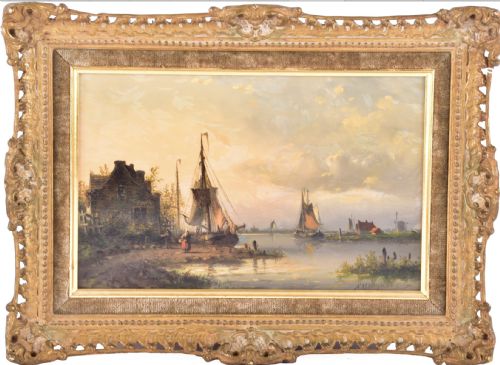
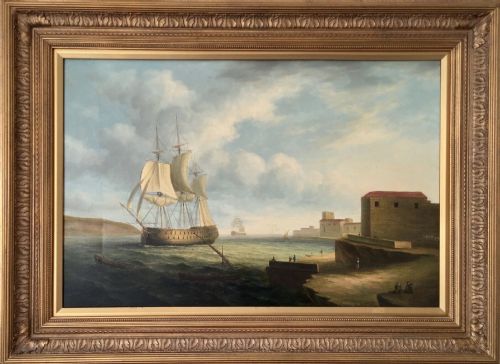
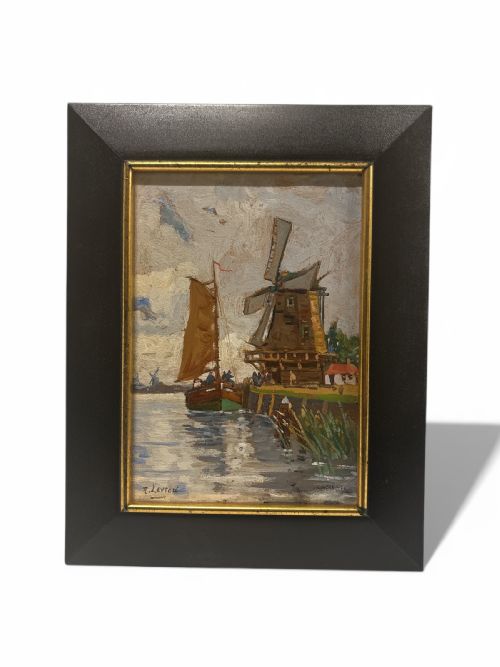

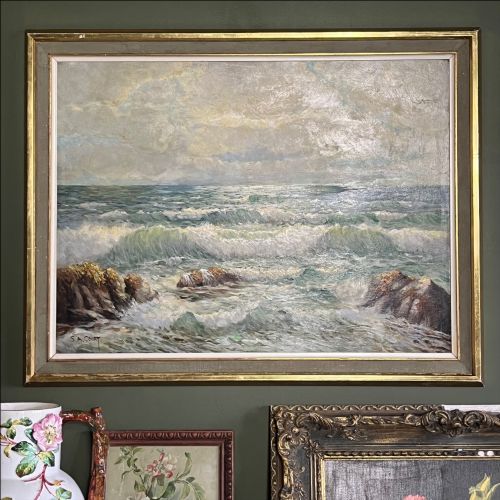
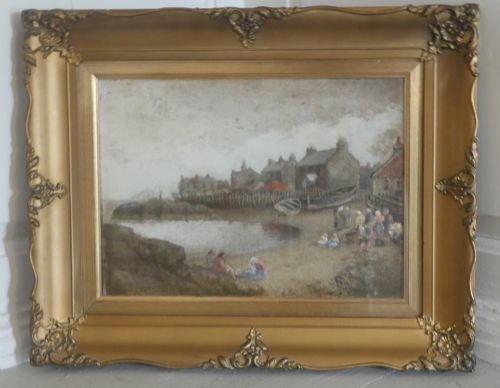

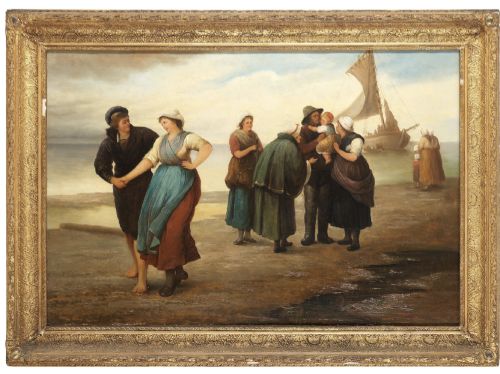
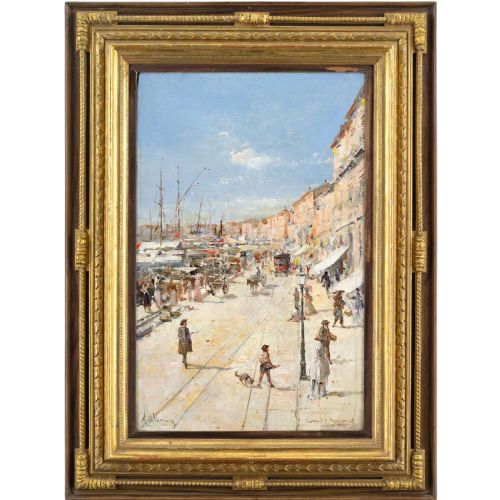
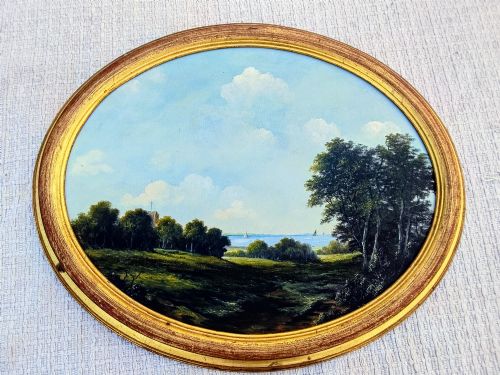
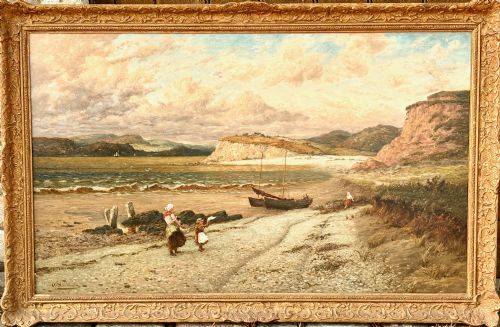
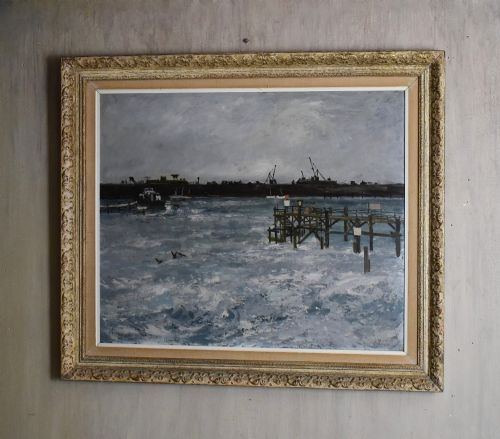

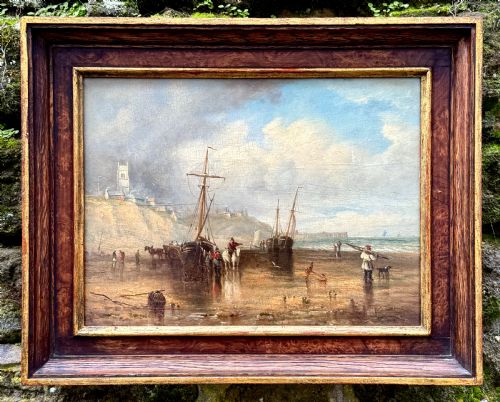
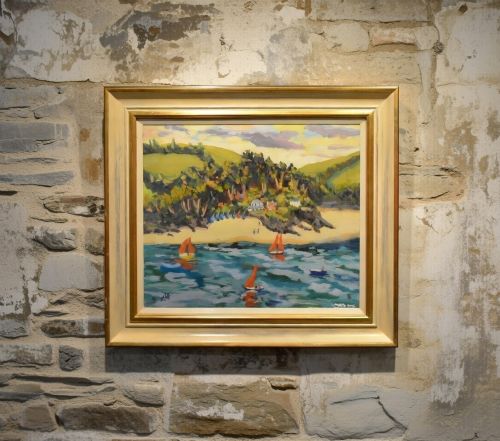
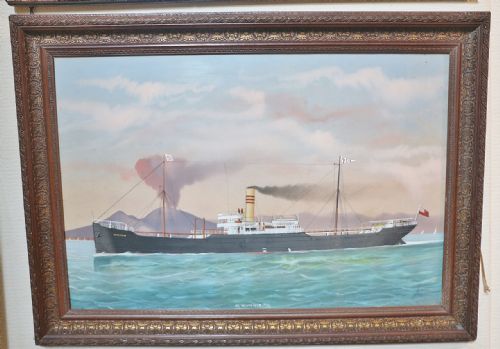
Gilt Framed Coastal Artwork
These gilt framed coastal artwork selections bring the atmosphere of harbours, cliffs and open seas into an interior.
Gilt Framed Coastal Artwork
When you search for gilt framed coastal artwork, you encounter paintings capturing maritime scenes, fishing fleets and shores contained within gilded wood surrounds. The selection spans 19th-century watercolours and oils alongside later 20th-century impressions of coastal life.
Most pieces on this page originate from the nineteenth and early twentieth centuries, featuring British and French coastal locations from Cornwall to the Mediterranean. Subjects range from busy harbour entrances with sailing vessels to quiet shorelines and dramatic seascapes.
The formats vary from intimate panels to large canvases, each paired with a decorative gold frame that complements the maritime subject matter. These works record historical shorelines, shipping movements and coastal communities through traditional artistic lenses.
How They Were Made
Artists painted these coastal scenes using oil paint or watercolour upon canvas, panel, board or paper supports. Oil on canvas allows for textured waves and atmospheric skies, whilst watercolours capture the translucent light of harbours and estuaries.
The supporting frames are constructed from wood and finished with gilt layers to create the characteristic metallic sheen. These frames often feature moulding and ornamentation typical of their respective periods to enhance the painted view.
Listings feature oil on canvas, watercolour and oil on board, framed in gilt wood across Victorian and 20th-century periods.
What Varies in Quality
The strength of the composition and the artist's handling of light and maritime atmosphere distinguish different works. Skilled brushwork conveys the movement of water and the play of sunlight on sails with greater conviction.
The harmony between the painting and its gilt frame influences the overall integrity of the piece. Period frames that suit the scale and era of the artwork elevate the presentation compared to later or mismatched replacements.
Bernard Benedict Hemy·John Moore of Ipswich·William Henry Williamson·Abraham Hulk I·George Stanfield Walters
The Gilt Framed Coastal Artwork Glossary
- Seascape
- A work of art depicting the sea, coastal views or maritime activity. These subjects often focus on ships, waves or shorelines.
- Gilt Wood
- Wood that has been coated with gold leaf or metallic paint to produce a bright finish. This material forms the decorative border surrounding many historic paintings.
- En Plein Air
- A French term describing painting outdoors to capture direct natural light and atmospheric conditions. Artists utilised this method to record immediate coastal weather.
- Maritime
- Relating to the sea, navigation and ships. This category encompasses harbour views, naval vessels and coastal craft.
- Watercolour
- A paint consisting of pigment suspended in a water-soluble binder, typically applied to paper. This medium creates translucent washes suitable for skies and water.
Gilt Framed Coastal Artwork: Frequently Asked Questions
How do I hang a heavy framed oil painting safely?
Heavy oil paintings require sturdy wall fixings anchored directly into wall studs or masonry using appropriate picture hooks. Steel wire or robust brackets rated for the weight ensure the piece stays secure.
Position the artwork at eye level, typically with the centre of the canvas around shoulder height. Ensure the wall space avoids excessive direct sunlight to protect the pigments and gilt frame.
What periods do these coastal artworks represent?
The selections span from the nineteenth century through the Edwardian era and into the mid-twentieth century. Nineteenth-century works often show detailed maritime scenes, whilst later pieces explore Impressionist and post-Impressionist styles.
Each period brings distinct painting techniques and framing styles to the coastal genre. Examining the canvas, medium and signature helps determine the specific era of creation.
How should I clean a gilt wood frame?
Dust gilt wood frames gently using a soft, dry brush or a microfiber cloth to remove surface particles. Avoid liquid cleaners, water or chemical sprays, as moisture can damage the gold leaf finish.
Regular, gentle dusting prevents grime accumulation without disturbing the delicate metallic surface. Consult a professional restorer if the gilding shows flaking or structural wear.
Where were these maritime scenes usually painted?
Artists painted these scenes along active working ports, fishing villages and rugged coastlines across Britain and Europe. Popular locations include Cornish harbours, Dutch shores and Mediterranean ports.
Many painters worked en plein air directly on the coast to capture authentic weather and light conditions. These locations provide a visual record of historical maritime activity and coastal geography.