





Paper Marine Landscape Painting
A paper marine landscape painting captures coastal life, bustling harbours and tall ships through delicate brushwork.
Paper Marine Landscape Painting
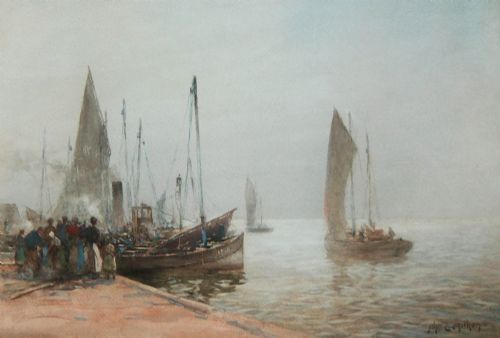
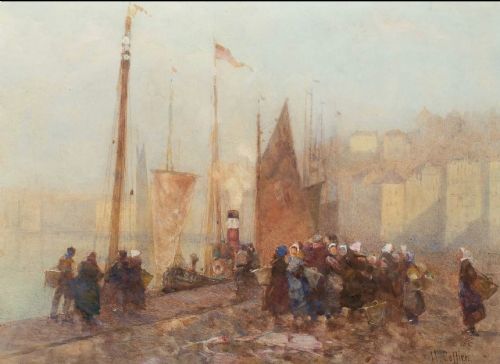
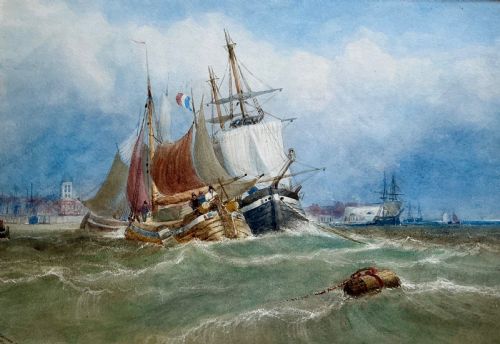
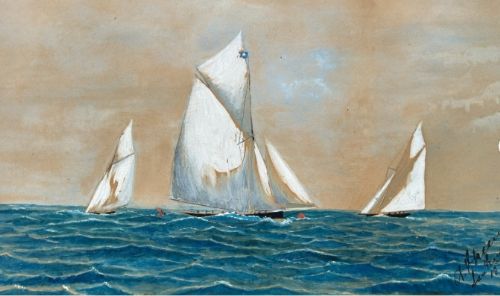
A paper marine landscape painting brings the nineteenth and early twentieth-century coastline directly into view through delicate washes and maritime subjects.
The selections available here focus heavily on British and European coastal scenes, featuring fishing boats, harbour docks and tidal estuaries.
These watercolours range from intimate Victorian sketches to more expansive Edwardian coastal views executed on paper support.
Materials and Technique
Artists applied watercolour pigment and ink onto paper sheets, often utilising the white of the unpainted paper to capture luminous highlights on water and sky.
Framing typically incorporates protective glass and wooden mouldings to preserve the fragile paper ground from atmospheric moisture.
Several Victorian artists clearly braved very damp Yorkshire weather to capture Whitby harbour at low tide.
Judging Quality
Quality rests upon the artist's handling of light, atmospheric perspective and the confident fluidity of the brushwork across the paper.
Stronger examples display precise control over wet-in-wet watercolour techniques, creating convincing movement in waves, sails and clouds.
James Orrock·Hector Caffieri·Henry Barlow Carter·Thomas Bush Hardy·Edward Seago
The Paper Marine Landscape Painting Glossary
- Watercolour
- A painting method where the paints are made of pigments suspended in a water-based solution. It is traditionally applied to paper surfaces to create transparent washes of colour.
- Seascape
- A type of artwork that depicts the sea, coastal views, ships or maritime activities. These scenes often focus on tidal changes and harbour life.
- Vignette
- A painting or illustration that fades away into the edges of the paper without a definite border. This style concentrates attention on the central subject.
- Provenance
- The documented history of ownership of an artwork. It helps establish authenticity and traces the journey of the piece through time.
Paper Marine Landscape Painting: Frequently Asked Questions
What is a paper marine landscape painting?
These works are original watercolours executed on paper that depict coastal scenery, harbours and maritime vessels. Artists from the nineteenth and early twentieth centuries favoured this medium for capturing changing light on the water.
They record historical working ports, fishing fleets and coastal architecture across Britain and Europe. Each piece offers a direct window into maritime life of the era.
How should I display these watercolours?
Watercolours on paper require careful protection from direct sunlight to prevent the pigments from fading over time. Professional framing with acid-free mount board helps keep the paper flat and away from the glass.
Positioning the artwork in a room with stable humidity levels protects the paper ground and wooden frame. Subdued ambient light ensures the delicate washes remain clear and vibrant.
How do I identify the period of a painting?
Dating often relies on artist signatures, framing materials, exhibition labels and stylistic traits associated with Victorian or Edwardian art. Subject matter, such as specific types of sailing vessels or historical clothing, also provides clues.
Signatures combined with known active dates of the painter help narrow the creation window to a specific decade. Paper watercolours from the nineteenth century frequently exhibit distinct tonal palettes and paper textures.
Were these paintings made outdoors?
Many marine watercolours began as quick plein air sketches created directly on the coast to capture shifting weather and tides. Artists often completed the more detailed finished works back in their studios using these initial observations.
This working method allowed painters to record accurate reflections, wave action and atmospheric conditions before the light changed. The resulting sheets preserve an immediate sense of the seaside environment.