

Vintage Mahogany Vanity Desk
A vintage mahogany vanity desk brings together deep timber and practical drawers to serve as a private dressing space in a bedroom.
Vintage Mahogany Vanity Desk
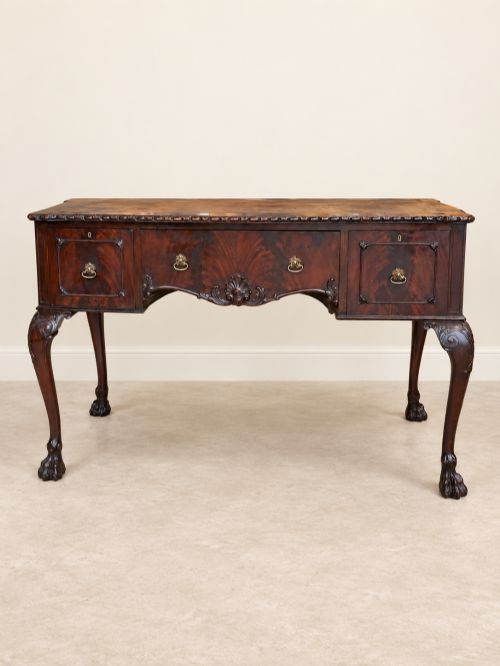
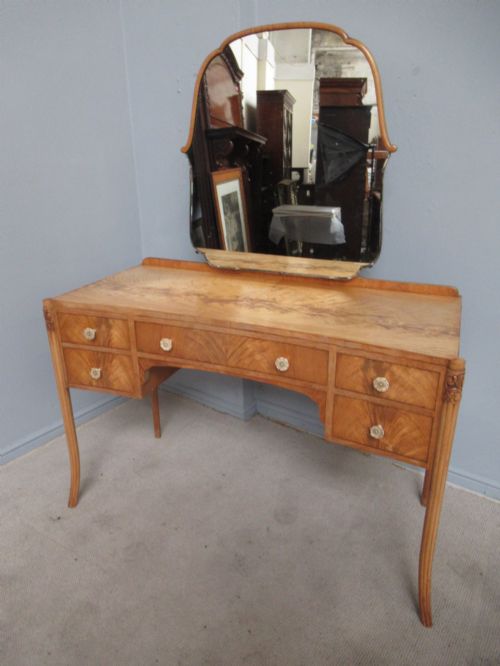
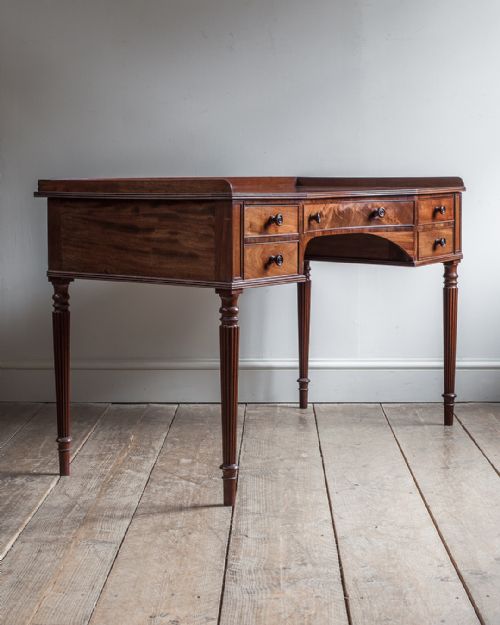
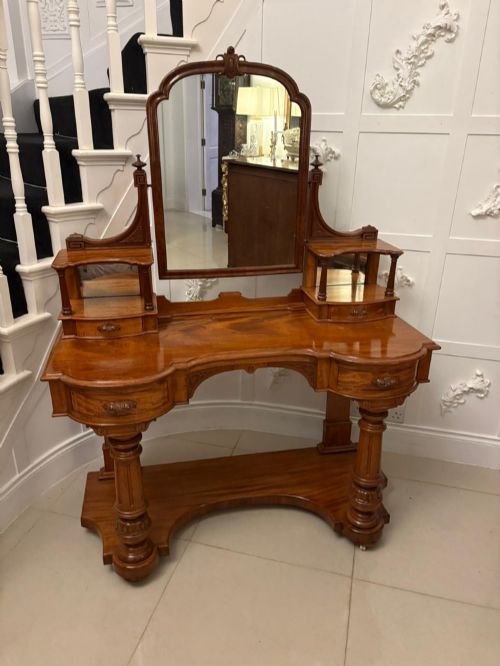
A vintage mahogany vanity desk combines the surface utility of a writing table with the grooming focus of a dressing chest, often featuring integrated mirrors, drawers, and sometimes leather-lined slides. These pieces span from the clean lines of Georgian craftsmanship through the elaborate carvings of Victorian examples to the lighter proportions of Edwardian and early twentieth-century designs.
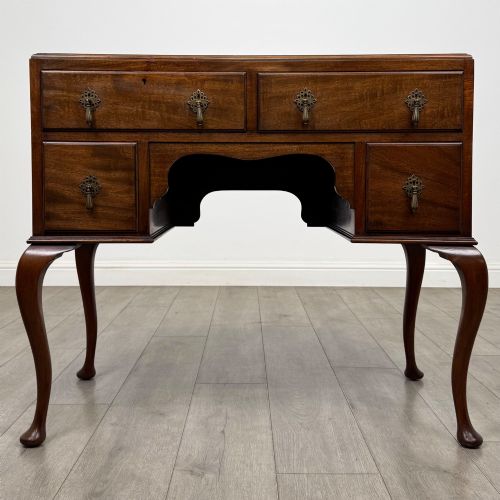
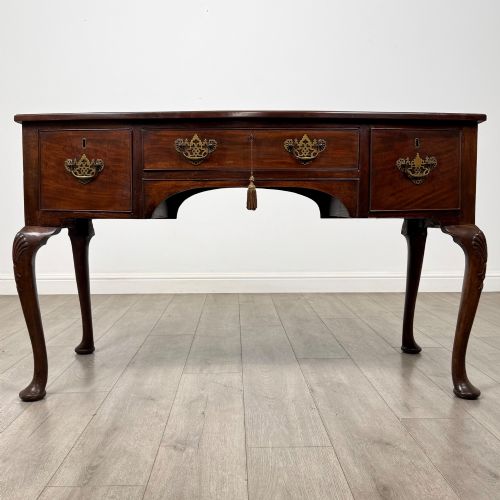
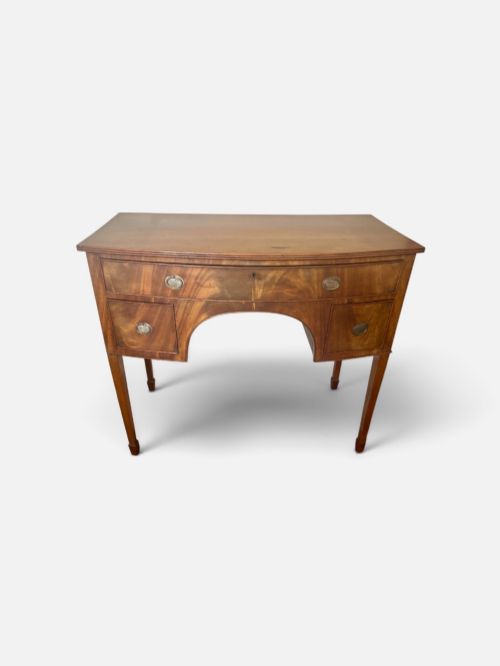
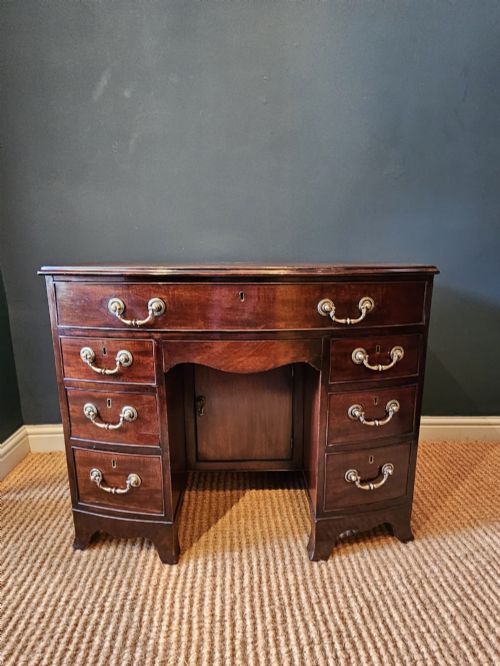
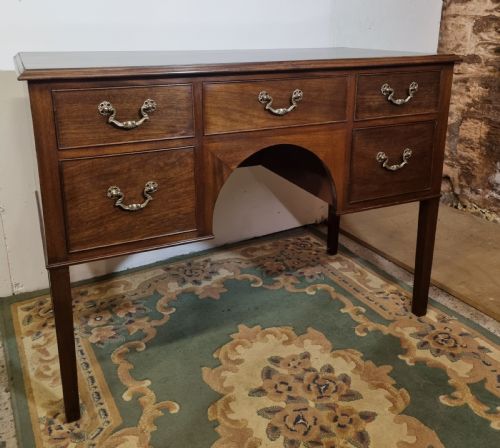
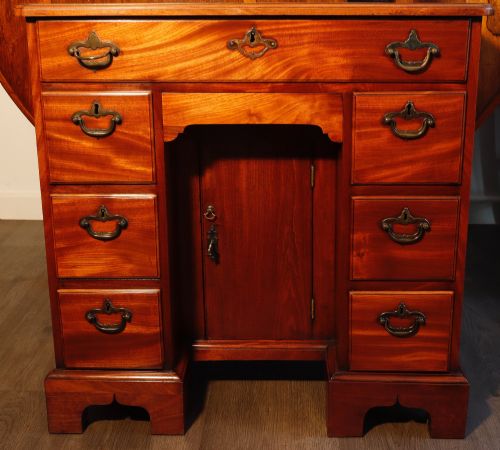
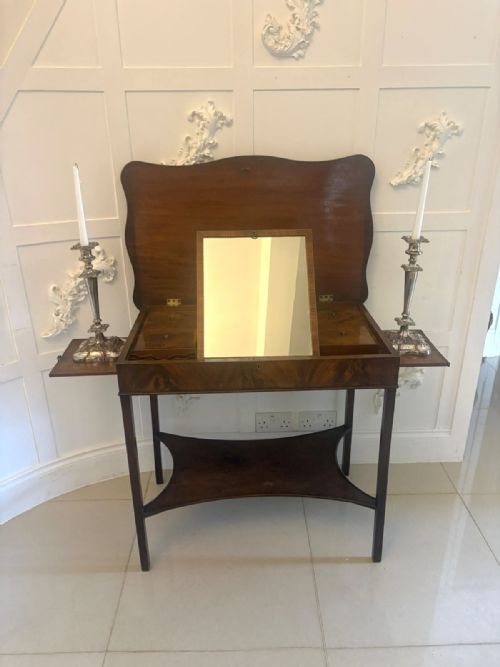
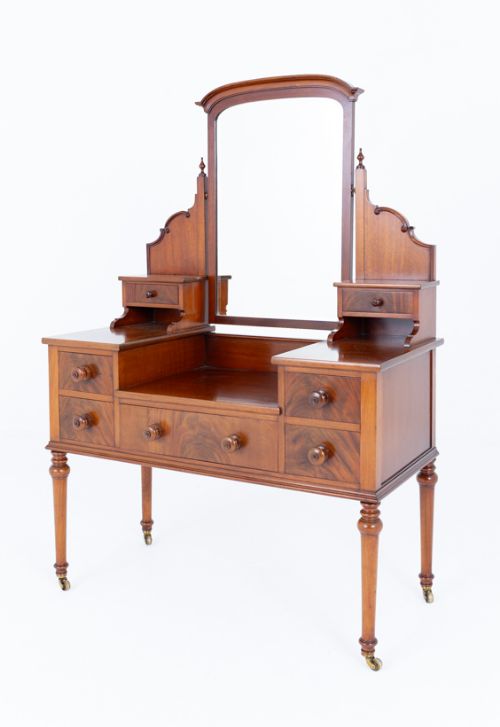
The version most commonly met on this page is the Edwardian or early twentieth-century mahogany dressing table, frequently built with multiple small drawers for personal items and supported on slender legs. Alongside these, buyers find writing tables adapted for similar domestic use, kidney-shaped desks, and compact kneehole chests designed for smaller dressing rooms.
How they were made
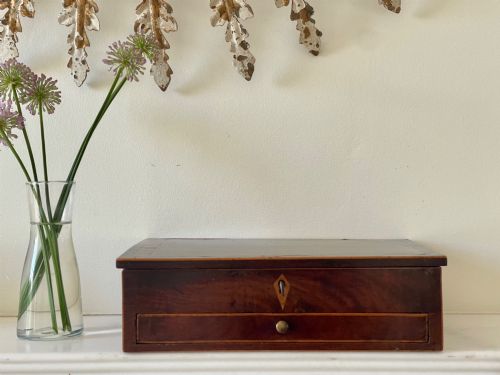
Cabinet makers relied primarily on solid mahogany and flame mahogany veneer, often accenting the rich reddish-brown timber with lighter contrasting woods such as satinwood and maple inlay. Brass hardware, including handles and key escutcheons, provides functional detailing alongside inset leather writing surfaces and clear glass mirror plates.
Construction techniques visible across the period range from traditional dovetail joints in the drawer construction to fine marquetry inlay and carved cabriole legs. Workshops balanced structural stability with decorative flair, applying polished finishes that accentuate the natural figuring of the wood.
A few clever Edwardian designs included hidden compartments for rogue hairpins and secret love letters.
What varies in quality
The visual appeal of a vintage mahogany vanity desk often rests on the selection and matching of the timber veneers, particularly where striking flame mahogany figure is laid across drawer fronts and tops. Subtle details such as fine string inlay, hand-carved mouldings, and secondary woods used inside drawer carcases distinguish superior workshop output from simpler utilitarian pieces.
Proportion and integrity of the original hardware also dictate the standing of an individual desk. Pieces that retain their matching brass pulls, original glass mirrors, and sound internal drawer construction command greater appreciation among collectors and interior designers alike.
Edwards & Roberts·Thomas Rubergall
The Vintage Mahogany Vanity Desk Glossary
- Flame mahogany
- A highly figured wood veneer displaying a distinctive flame-like pattern caused by the way the timber was cut from the log. It was frequently utilised on drawer fronts and primary surfaces during the Georgian and later revival periods.
- Kneehole desk
- A writing table or vanity featuring a central recessed space for the user's knees, flanked by pedestals of stacked drawers. This form allows for generous storage while maintaining a compact footprint.
- Marquetry
- The art of applying decorative pieces of veneer to a structure to form intricate picture designs or geometric patterns. It appears on selected Victorian and Edwardian examples using contrasting timbers like satinwood.
- Secretaire
- A cabinet or desk incorporating a pull-down writing flap that conceals a fitted interior of small drawers and pigeonholes. It merges the function of a chest of drawers with a writing surface.
Vintage Mahogany Vanity Desk: Frequently Asked Questions
How do I spot a genuine vintage mahogany vanity desk?
Examine the timber selection and drawer construction to identify period building methods. Genuine pieces often show hand-cut dovetails and consistent ageing within the mahogany and secondary woods.
Check for period-appropriate hardware, veneer matching, and traditional polishing techniques rather than modern synthetic finishes.
Can I use a vintage vanity desk as a writing table?
Many examples on this page double as compact writing desks because their proportions and surface layouts accommodate daily correspondence. Desks with built-in leather slides or kneehole spaces function particularly well for writing.
Care should be taken with pieces featuring integrated mirrors or delicate compartment tops to ensure adequate legroom and workspace.
How do I care for a mahogany vanity surface?
Protect the polished mahogany wood from direct sunlight, excessive heat, and moisture to prevent fading and veneer lifting. Regular dusting with a soft, dry cloth preserves the natural lustre of the timber.
Apply quality furniture wax sparingly when the surface appears dry, avoiding silicone-based polishes that can damage the antique finish.
What periods do these vanity desks come from?
The listings span from the eighteenth century through the Georgian and Victorian eras into the Edwardian period and the early twentieth century. Each era brings distinct decorative traits, from simple eighteenth-century proportions to ornate Victorian carvings.
Revival styles from later decades frequently echo these earlier aesthetic traditions using traditional timber methods.