
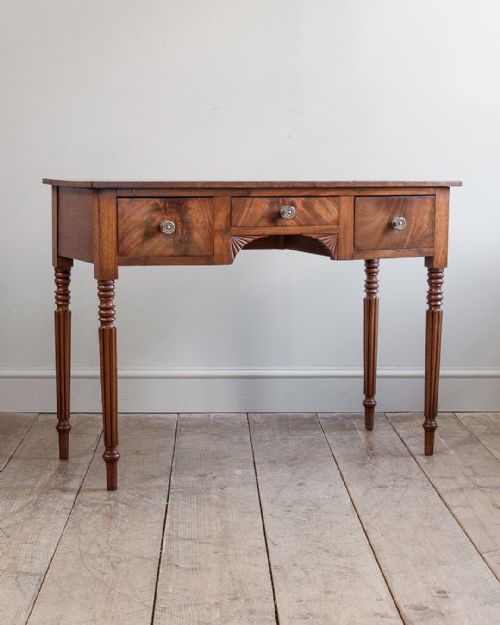
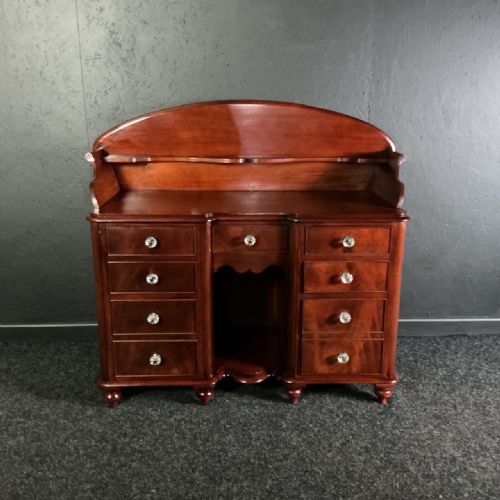
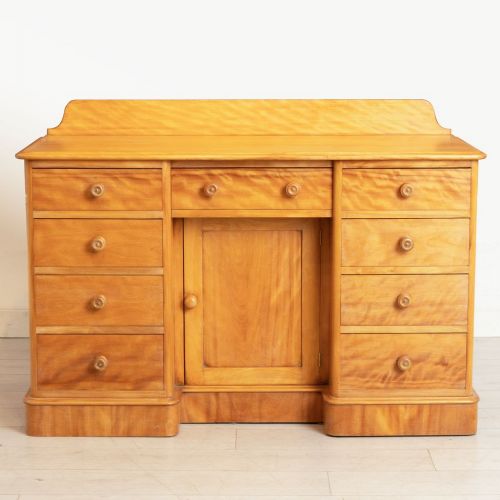


Victorian Kneehole Dressing Table
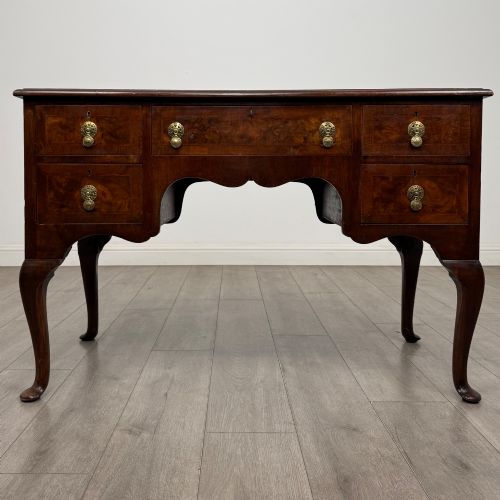
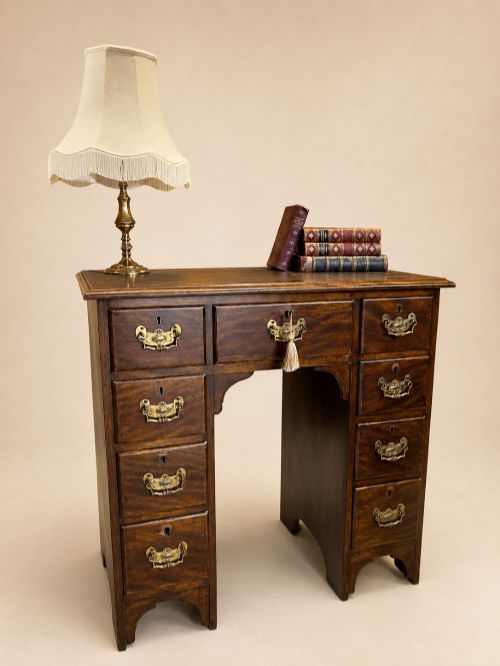
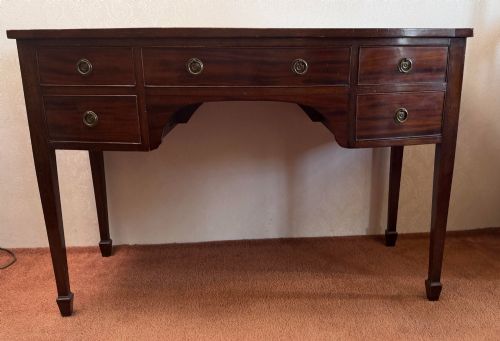
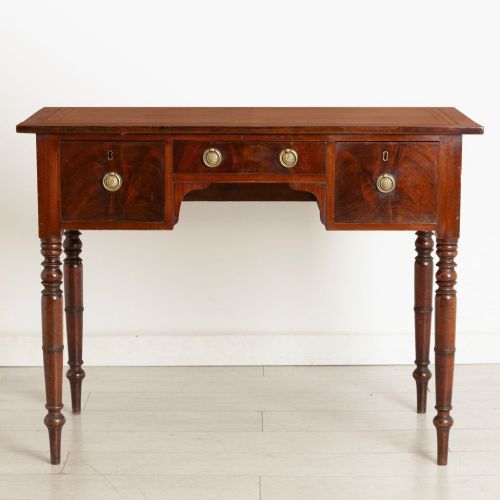
These victorian kneehole dressing table examples combine utility with refined timber work, offering the dedicated collector a practical workspace outfitted with multiple drawers.
Victorian Kneehole Dressing Table
When you search for a victorian kneehole dressing table, you encounter a specialised form designed for personal grooming and writing, characterised by a central recessed space flanked by pedestals of drawers. The pieces available span the nineteenth century and incorporate related forms such as writing desks and washstands.
Mahogany predominates among the materials recorded, though examples in satin birch, satinwood, burr walnut, pine, and ash also appear. These items range from plain utilitarian variants to pieces featuring inlaid details, stencilled decoration, or marble tops.
The style umbrella extends beyond strict Victorian output to embrace Regency, Georgian, George II Style, and Sheraton Revival influences. Such diversity reflects the revivalism popular during the nineteenth century, resulting in desks and dressing tables that echo earlier centuries.
Distinctions in quality
Quality rests upon the selection of timber veneers and the preservation of original mounts, such as brass handles and stencilled decoration. Pieces retaining their fitted interior elements and undamaged marble tops stand apart from altered examples.
The precision of the cabinet work, visible in the tightness of the drawer dovetails and the balance of the proportions between the central kneehole and side pedestals, determines the standing of an individual piece within its period.
Recorded materials span mahogany, pine, glass, satinwood, leather, satin birch, and burr walnut across multiple nineteenth-century styles.
The Victorian Kneehole Dressing Table Glossary
- Kneehole
- A central recessed space beneath a desk or dressing table top, designed to accommodate the user's legs when seated. This arrangement allows banks of drawers to sit on either side.
- Pedestal
- A structural support column containing multiple stacked drawers, positioned beneath the main writing or dressing surface. Pairs of these form the flanks of a kneehole desk.
- Satinwood
- A hard, durable timber with a characteristic golden-yellow sheen, frequently utilised for fine nineteenth-century furniture veneers and decorative inlay work.
- Burr walnut
- Timber harvested from the growth excrescences of walnut trees, yielding an intricate, swirling grain pattern prized for high-status cabinet fronts.
- Washstand
- A domestic item designed to hold a basin and pitchers for washing, closely related in form and period to dressing tables within the archive.
Victorian Kneehole Dressing Table: Frequently Asked Questions
How do I use a kneehole dressing table today?
These pieces adapt readily to modern domestic spaces as functional dressing desks or compact writing tables in a study.
The central kneehole provides comfortable legroom while the surrounding drawers accommodate modern daily essentials.
What woods were used for these tables?
Mahogany remains the most common timber encountered across the surviving inventory, supported by pine internals.
Finer examples employ decorative veneers such as satinwood, satin birch, and burr walnut.
Are these desks or dressing tables?
The forms often overlap, with many nineteenth-century pieces serving dual functions for both writing and grooming.
Some variants include integrated mirrors or marble tops suited specifically to ablutions.
How do I distinguish Victorian from Georgian styles?
Victorian interpretations frequently incorporate heavier proportions and revivalist details like stencilled decoration or Aesthetic movement motifs.
George II Style examples lean toward earlier eighteenth-century cabinetry traits while retaining nineteenth-century construction methods.