

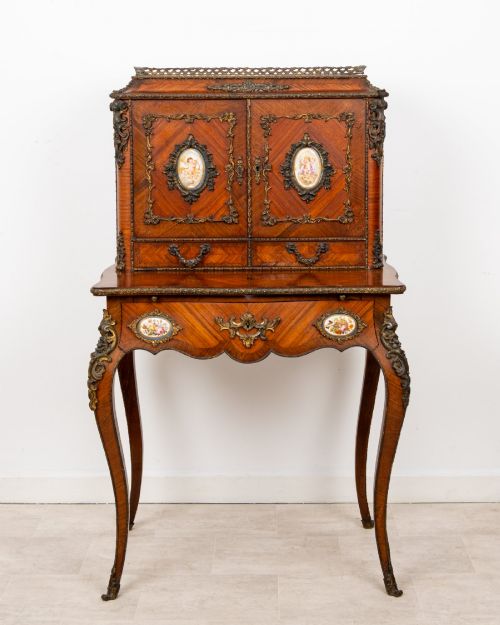
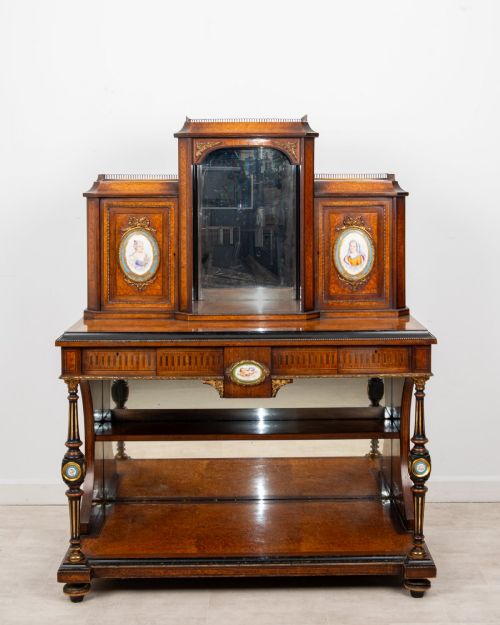
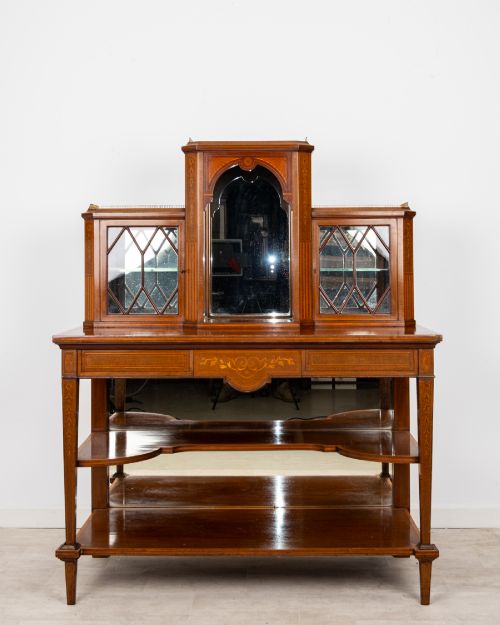
Antique Writing Table Cabinet
An antique writing table cabinet combines the practical surface of a desk with the enclosed storage of a cabinet.
Antique Writing Table Cabinet
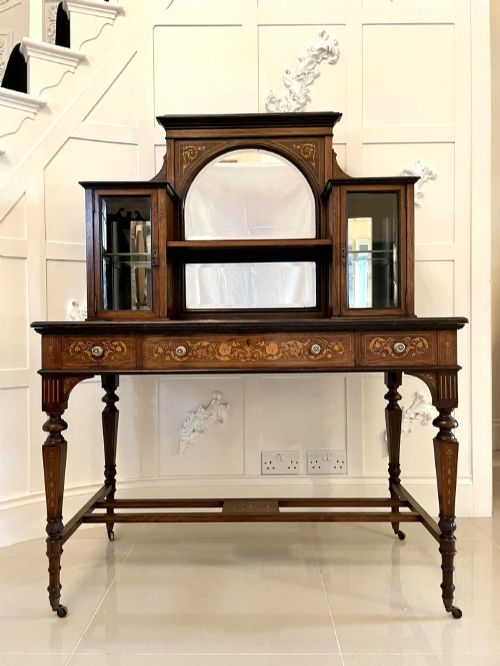
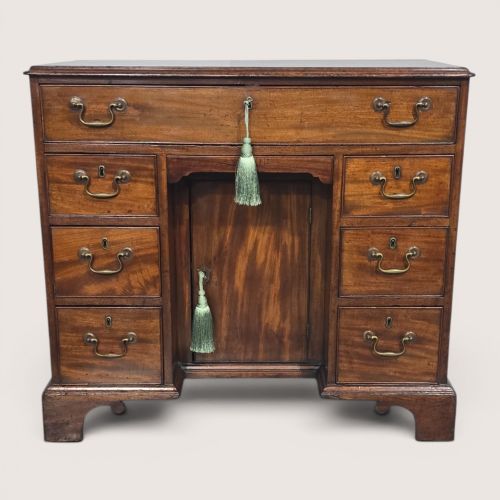
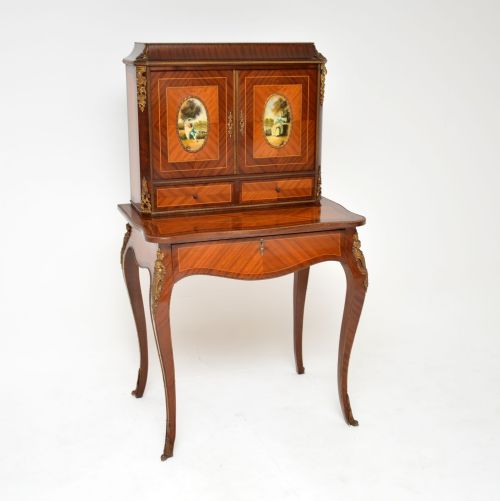
An antique writing table cabinet merges a fitted workspace with compartments for correspondence and ledgers. You will frequently encounter compact French bonheur du jour styles alongside robust English mahogany and walnut bureaux.
These pieces bridge domestic administration and refined display, often incorporating small drawers, pigeonholes, and cupboards above a writing surface. The selection spans Georgian elegance through to elaborate Victorian and Edwardian interpretations.
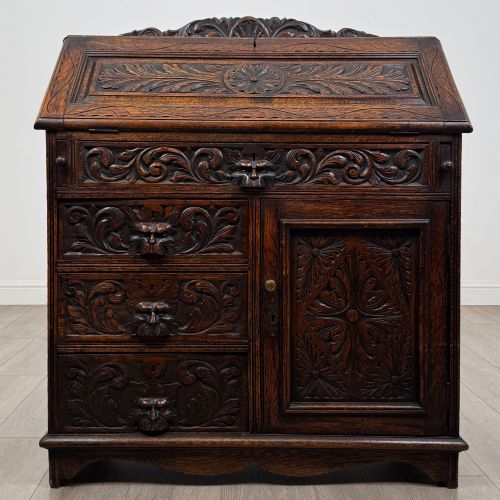
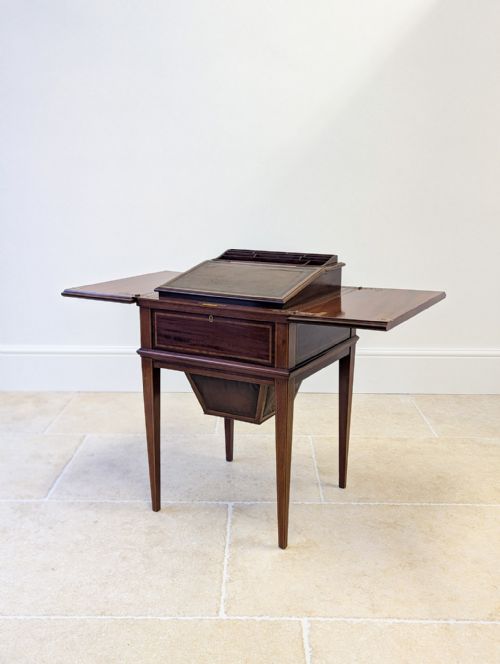
The layout accommodates historical writing implements and paper formats, reflecting the precise domestic and professional routines of past centuries. Many examples incorporate fold-down flaps or sliding surfaces to conceal the desk interior when not in use.
Materials and Construction Methods
Cabinet makers utilised dense hardwoods such as mahogany, walnut, and kingwood as foundational structures, frequently applying decorative veneers like burr walnut, satinwood, and amboyna to primary visual surfaces. Marquetry and delicate stringing provide geometric or floral contrast.
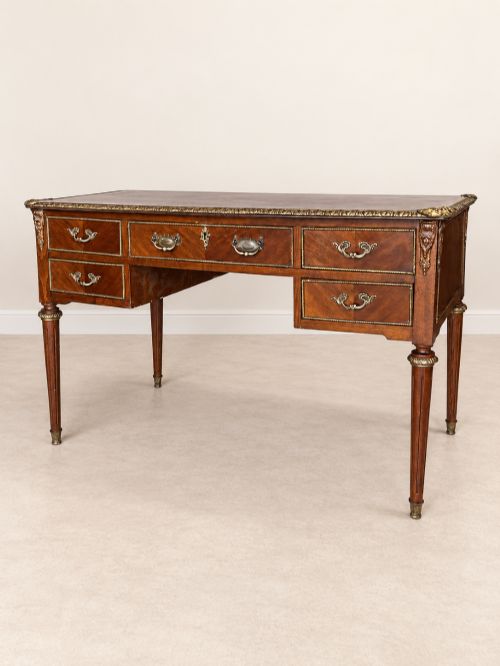
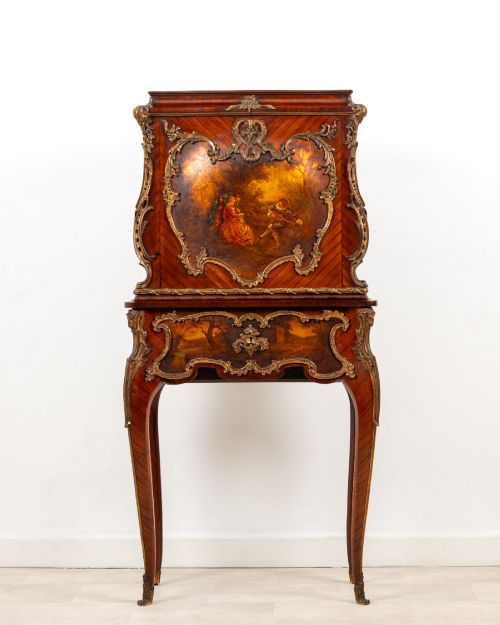
Ornate cast or chased ormolu mounts, brass handles, and leather writing inserts punctuate the timber surfaces. French pieces often integrate porcelain plaques and painted Vernis Martin panels into the upper cabinet doors and backsplashes.
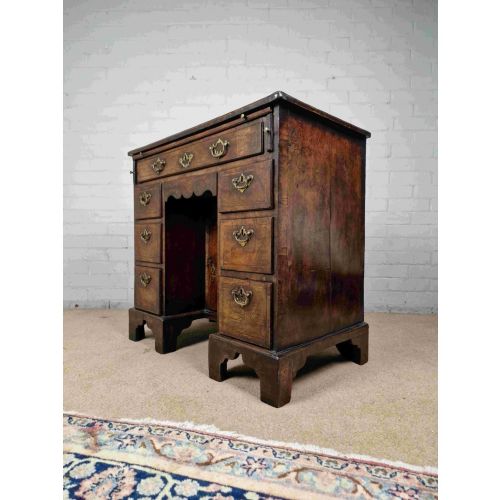
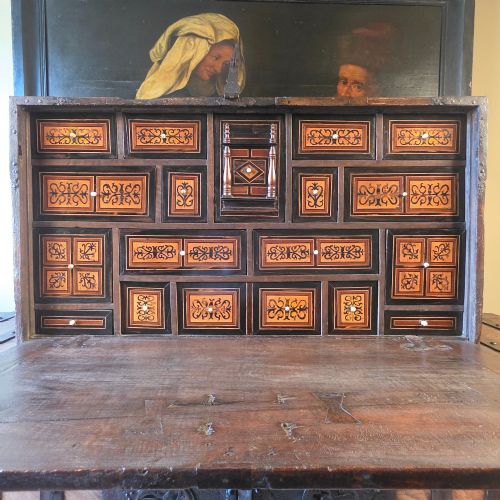
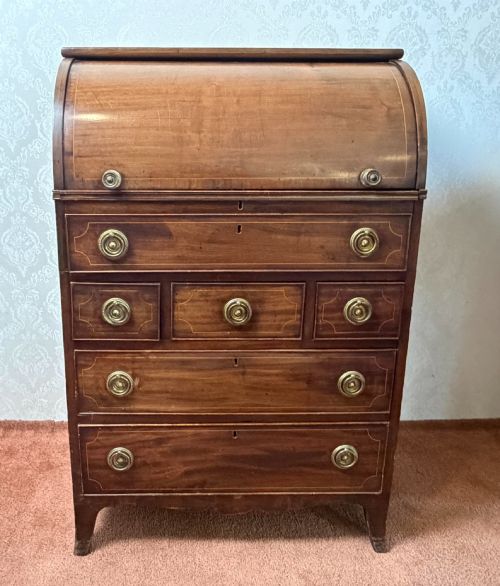
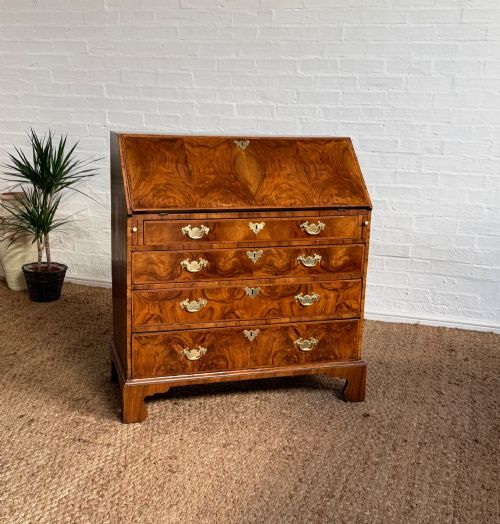
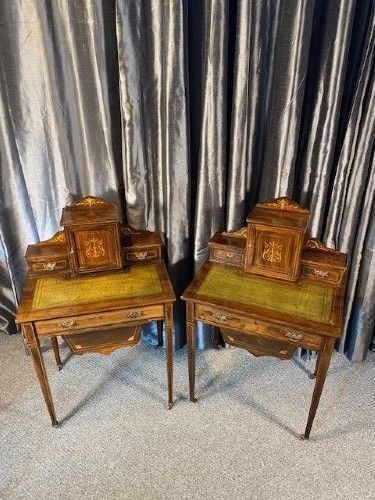
Listings feature writing table cabinets spanning from the seventeenth century through to the Edwardian period, constructed in mahogany, walnut, rosewood, and kingwood.
Measures of Quality and Execution
Finer pieces display meticulous grain matching across drawer fronts and fall-front panels, ensuring visual continuity where timber meets timber. The crispness of marquetry work and the weight of cast ormolu mounts signal workshop investment.
Internal engineering separates standard production from superior cabinet making, visible in smooth drawer actions, tightly dovetailed joints, and the precision of integrated locking mechanisms. Secondary timbers used for drawer linings remain consistent in quality with the primary exterior.
J A Mein Edinburgh Cabinet Maker·J.C Vickery of London
The Antique Writing Table Cabinet Glossary
- Bonheur du jour
- A small, light lady's writing desk featuring an enclosed cabinet or set of pigeonholes on the upper surface. It typically stands on slender legs and gained popularity during the eighteenth century.
- Davenport desk
- A compact Victorian form comprising a small desk box with a sloping writing surface, set atop a pedestal of side drawers. The writing surface often lifts to reveal additional stationery storage.
- Ormolu
- Gilt-bronze mounts applied to furniture for decorative accent, prominent in French cabinet work. The alloy is cast and chased before receiving a gold finish.
- Marquetry
- Inlaid patterns formed from various decorative woods or alternate materials applied to a carcase. It creates pictorial or geometric designs across flat surfaces.
- Secrétaire à abattant
- A tall vertical cabinet featuring a drop-front writing flap that conceals an interior arrangement of small drawers and compartments. This form originated in France and offers significant enclosed storage.
Antique Writing Table Cabinet: Frequently Asked Questions
What is a bonheur du jour?
A bonheur du jour is a light writing desk featuring a small cabinet or shelving superstructure on top. The design emerged in France and became favoured for private correspondence.
These pieces typically feature delicate proportions, slender legs, and a pull-out or hinged writing surface suited to brief letters rather than heavy ledgers.
How do I care for antique leather inserts?
Leather writing surfaces benefit from gentle cleaning with a damp cloth, avoiding harsh chemical solvents or excessive water. Conditioning balms help maintain suppleness across older sheepskin or cowhide.
Keep these desks away from direct sunlight and strong heat sources to prevent the leather and surrounding timber veneers from drying out or warping.
Where were these cabinets placed?
Writing table cabinets typically resided in private withdrawing rooms, bedrooms, or dedicated home offices. Their finished backs often allowed them to sit away from walls in the centre of a room.
Victorian and Edwardian households utilised these compact desks for managing domestic accounts, writing letters, and storing personal stationery.
How can I date a writing cabinet?
Dating relies on examining construction techniques, timber choices, and stylistic markers such as brass hardware or leg shapes. Georgian pieces favour solid mahogany or satinwood with clean geometric lines, while Victorian examples often incorporate burr walnut, elaborate marquetry, or ormolu mounts.
Internal drawer construction, dovetailing methods, and secondary woods offer further clues to the manufacturing decade.