
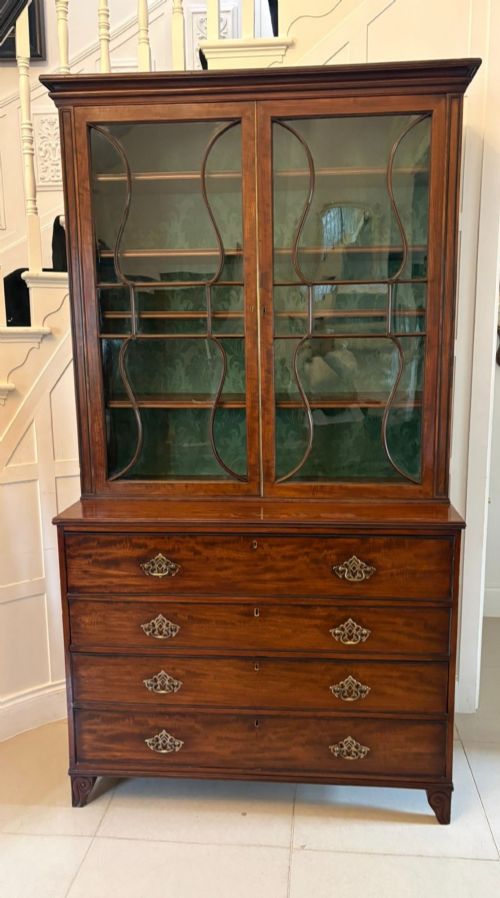
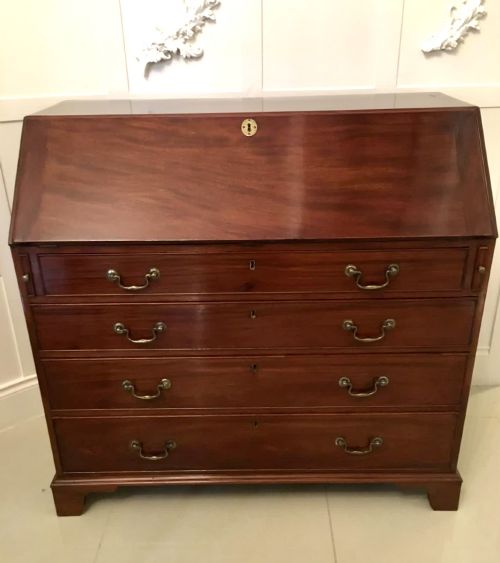
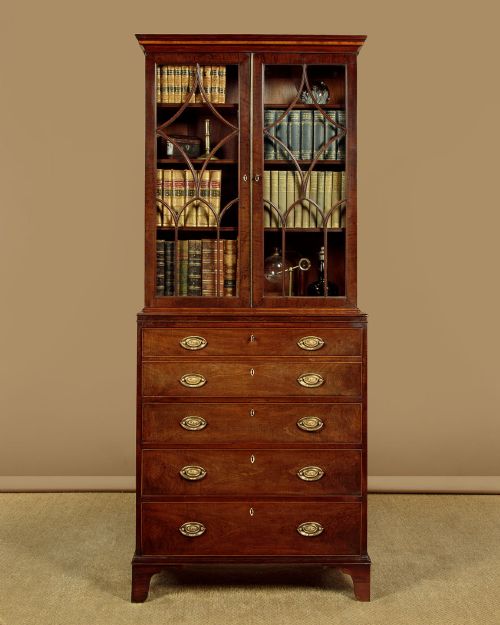
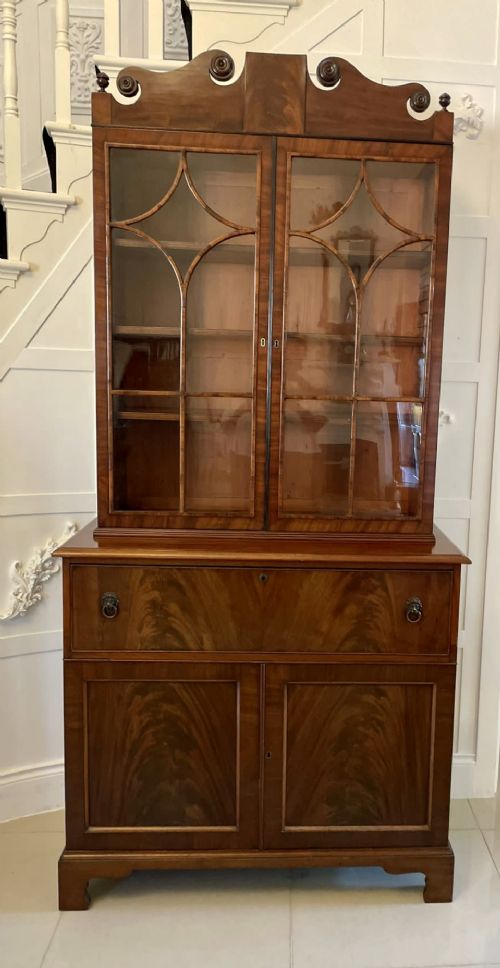
Vintage Mahogany Secretary Cabinet
A vintage mahogany secretary cabinet combines a practical writing desk with a tall bookcase, offering period presence and storage for rooms of character.

Vintage Mahogany Secretary Cabinet
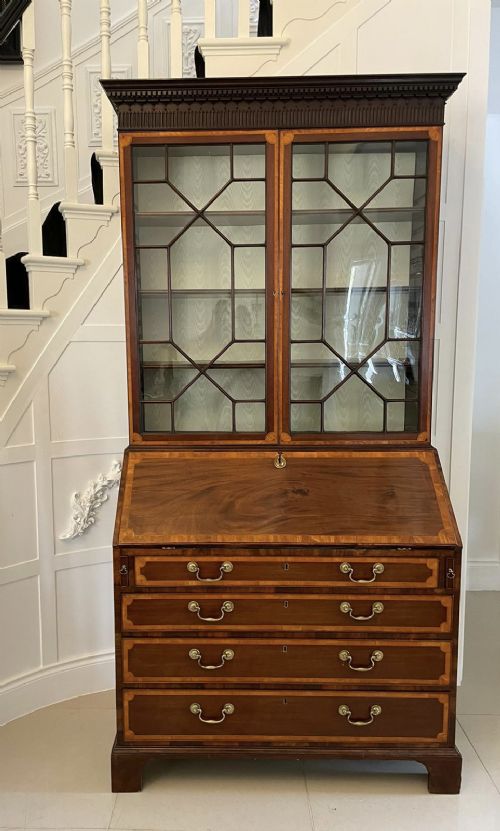
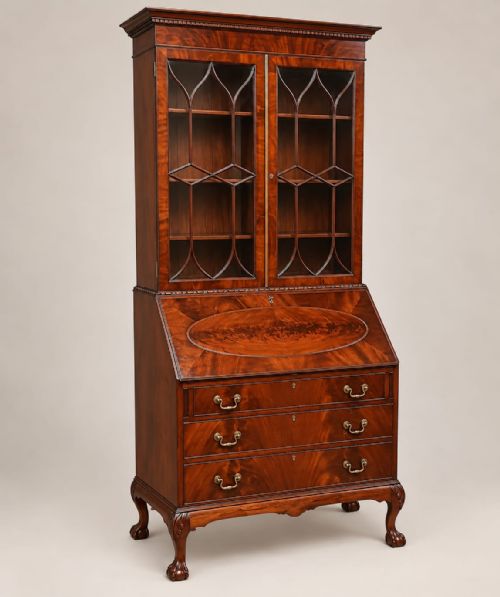
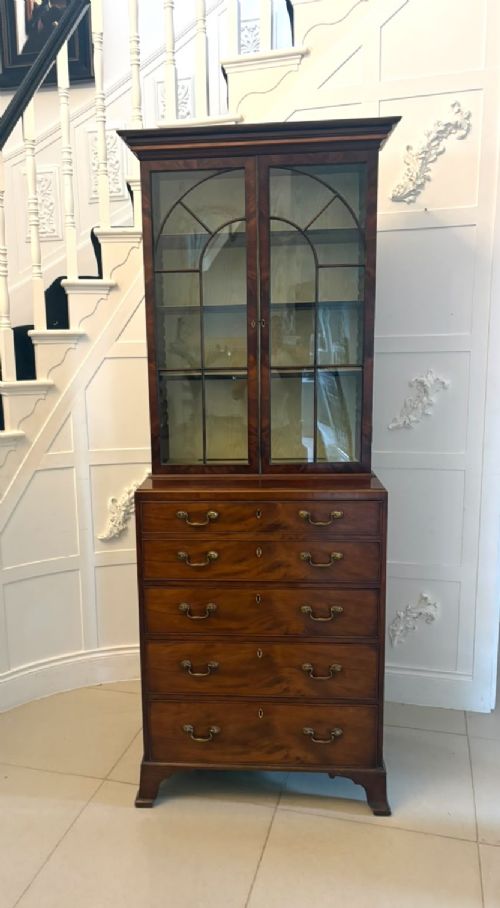
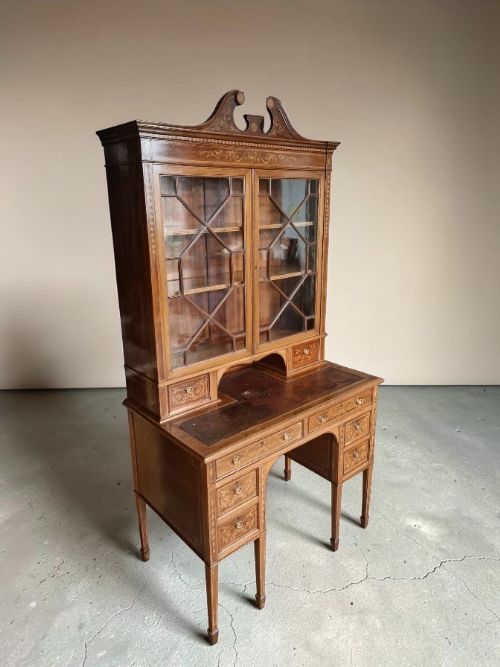
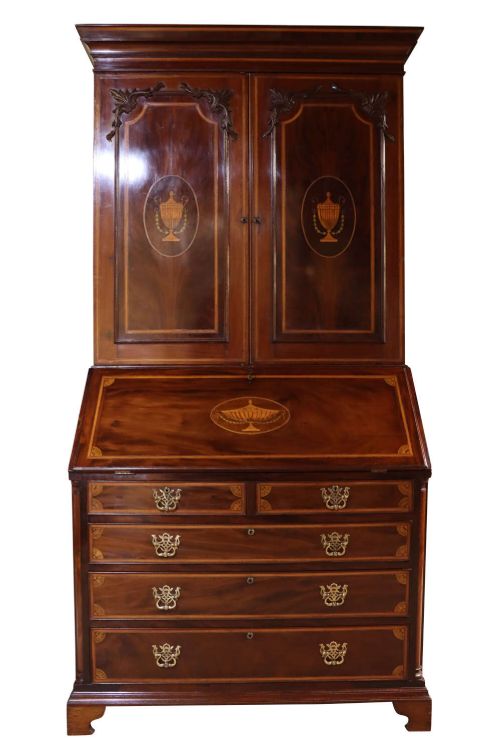
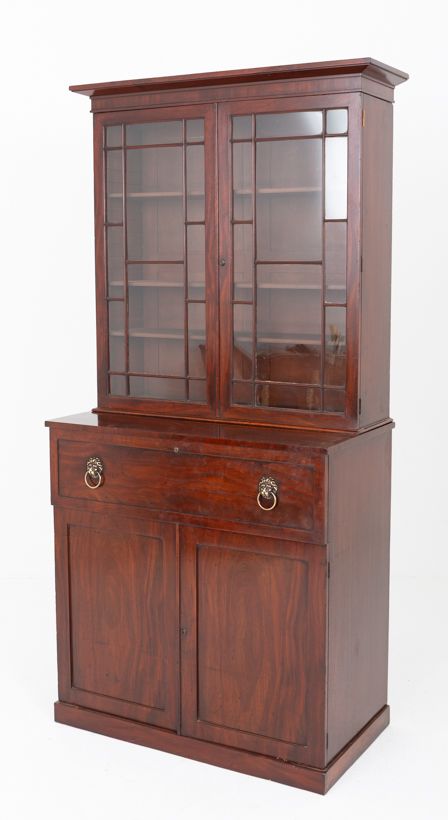
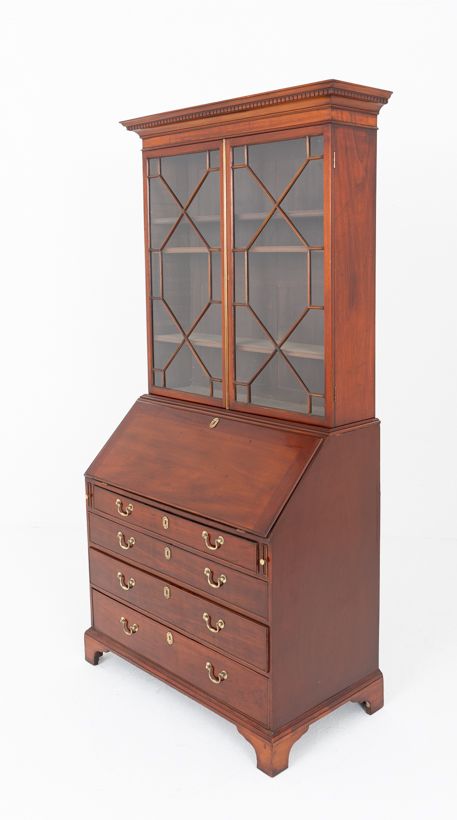
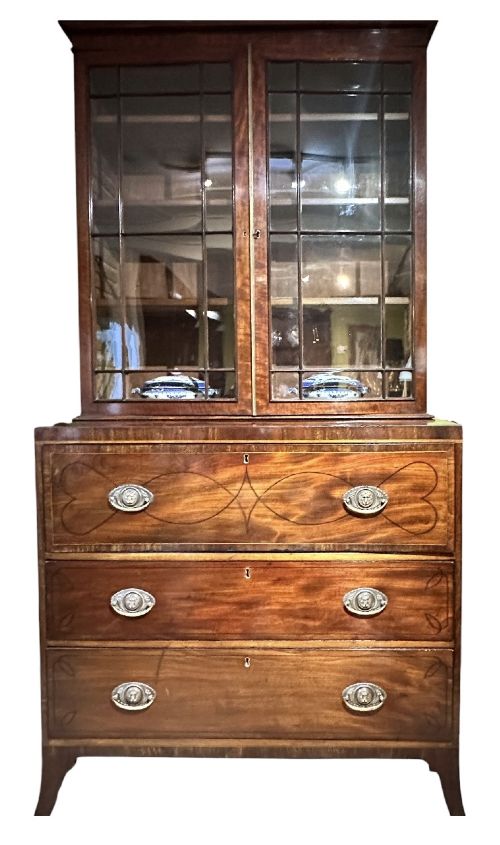
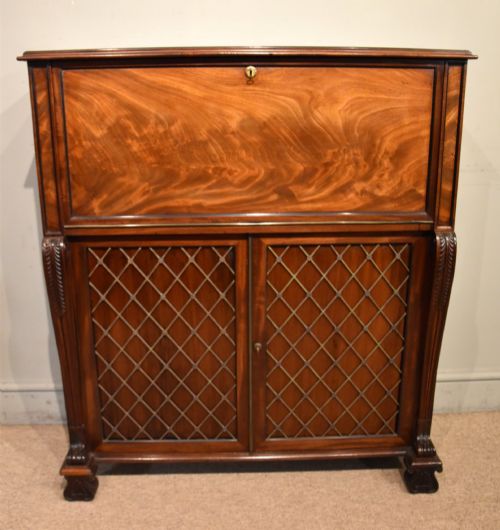
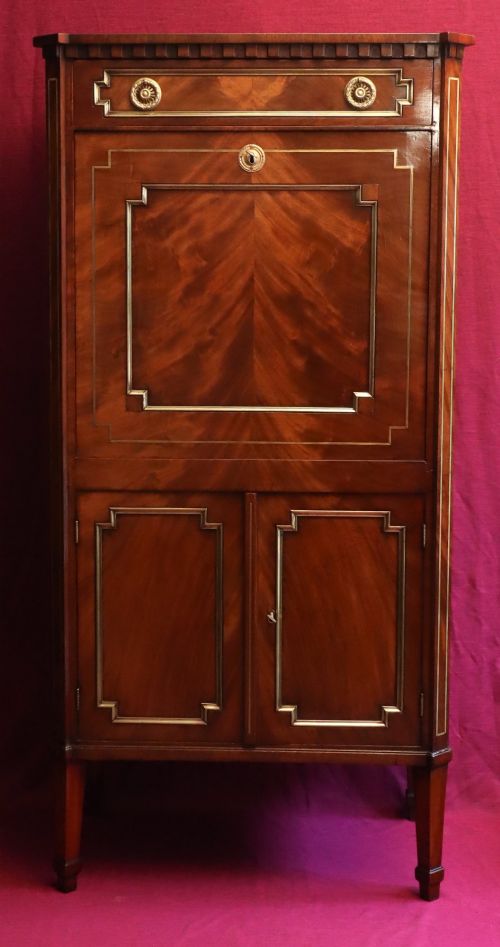
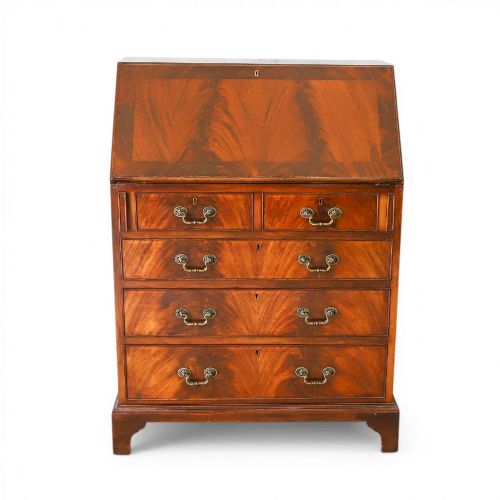
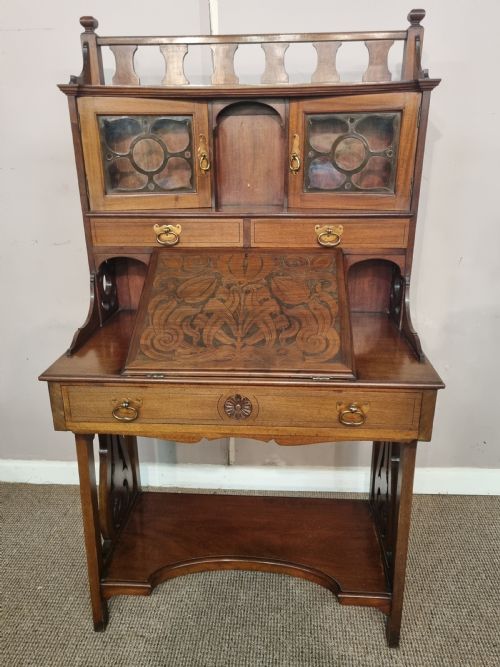
A vintage mahogany secretary cabinet takes several forms across this selection, including tall bureau bookcases with glazed upper doors, compact secretaire chests, and refined writing desks. These pieces merge a drop-down writing flap or fitted drawer with upper shelving for books and display.
The versions most commonly met span the Georgian, Regency, and Edwardian periods, constructed primarily in solid timber and decorative veneers. Makers utilised mahogany alongside satinwood inlay and brass hardware to create imposing library furniture as well as smaller domestic writing desks.
How they were made
Craftsmen built these cabinets using solid mahogany and flame mahogany veneer over secondary timbers such as oak, applying figured grain patterns to drawer fronts and fall-front desks. Glazed doors feature individual glass panes held by timber bars, while interiors house numerous small pigeonholes and letter drawers.
Hardware consists of brass handles, escutcheons, and hinges, occasionally complemented by inlaid satinwood stringing. Surfaces finished with warm traditional polish highlight the natural depth and colour of the timber.
Listings span from the 18th century through the Georgian, Regency, Victorian, and Edwardian eras into the 1930s, using mahogany, glass, brass, satinwood, leather, and oak.
What varies in quality
Quality in a vintage mahogany secretary cabinet is evident in the choice of timber and the complexity of the interior fittings. Cabinets featuring highly figured flame mahogany veneers and intricate pigeonhole layouts with secret compartments stand apart from simpler utility pieces.
Construction details such as dovetailed drawer construction, original brassware, and finely proportioned astragal glazed doors distinguish pieces produced by notable workshops from standard cabinet work.
Gillows of Lancaster
The Vintage Mahogany Secretary Cabinet Glossary
- Secretaire
- A desk or chest of drawers featuring a pull-out or drop-front writing drawer that conceals a fitted interior. This mechanism allows the piece to function as a writing surface while maintaining the appearance of a standard chest or cabinet.
- Astragal glazed
- A glass door divided into smaller panes by thin wooden mouldings called astragals. This glazing method is characteristic of Georgian and Regency bookcase doors.
- Flame mahogany
- A veneer cut from timber where the branch meets the trunk, producing a distinctive flame-like pattern. It was widely used on high-grade cabinet fronts during the 18th and 19th centuries.
- Bureau bookcase
- A dual-purpose furniture form combining a slant-front or drop-front desk compartment with an upper shelved bookcase enclosed by doors. These large pieces formed a central part of period library and parlour furnishings.
- Bonheur du jour
- A light lady's writing desk featuring a small cabinet or set of drawers on the upper surface. These delicate pieces appear in Edwardian variations within mahogany.
Vintage Mahogany Secretary Cabinet: Frequently Asked Questions
How do I use a secretary desk?
The fall-front flap or pull-out drawer folds down to provide a stable writing surface supported by internal arms or brackets. Inside, pigeonholes and small drawers organise stationery and letters.
When not in use, the flap closes to conceal the writing area and keep documents out of sight behind locked doors.
How do I date a mahogany cabinet?
Dating relies on stylistic markers, construction methods, and timber choice. Georgian and Regency pieces exhibit distinct proportions and astragal glazing patterns, while Edwardian examples often incorporate lighter inlays and different secondary woods.
Hardware styles and interior drawer construction also provide clear indicators of the period of manufacture.
How should I care for mahogany furniture?
Keep mahogany cabinets away from direct sunlight and heat sources to prevent the timber and veneers from drying out or splitting. Dust regularly with a soft, dry cloth and avoid silicone-based polishes.
Applying a traditional beeswax occasionally helps nourish the polished finish and maintain the depth of the wood's colour.