
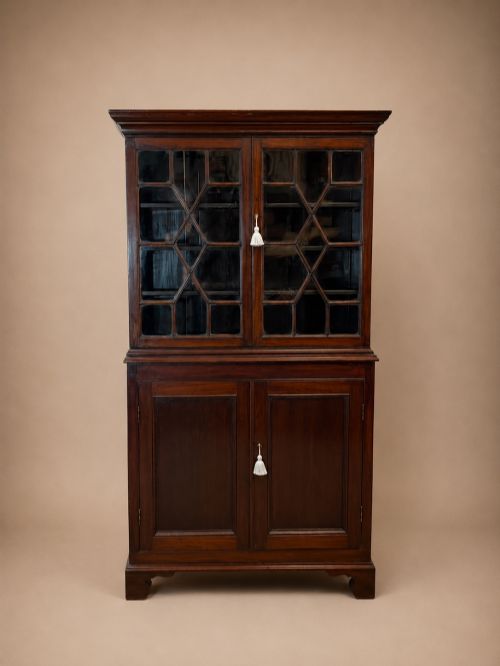
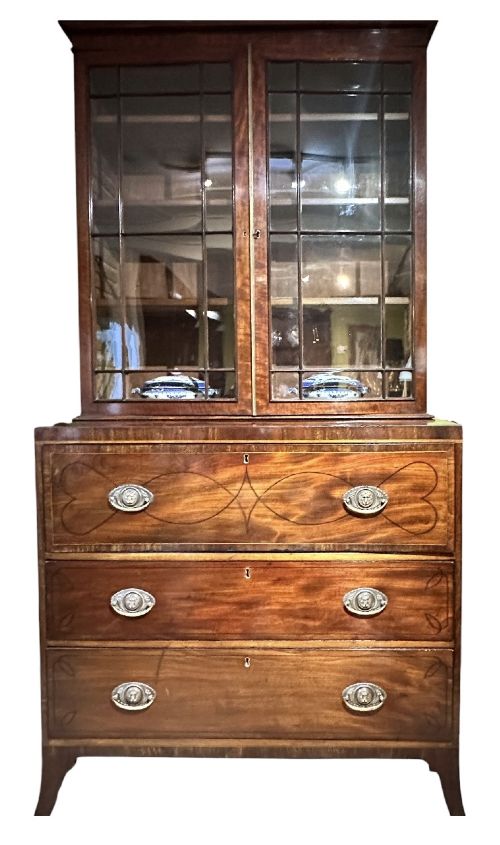
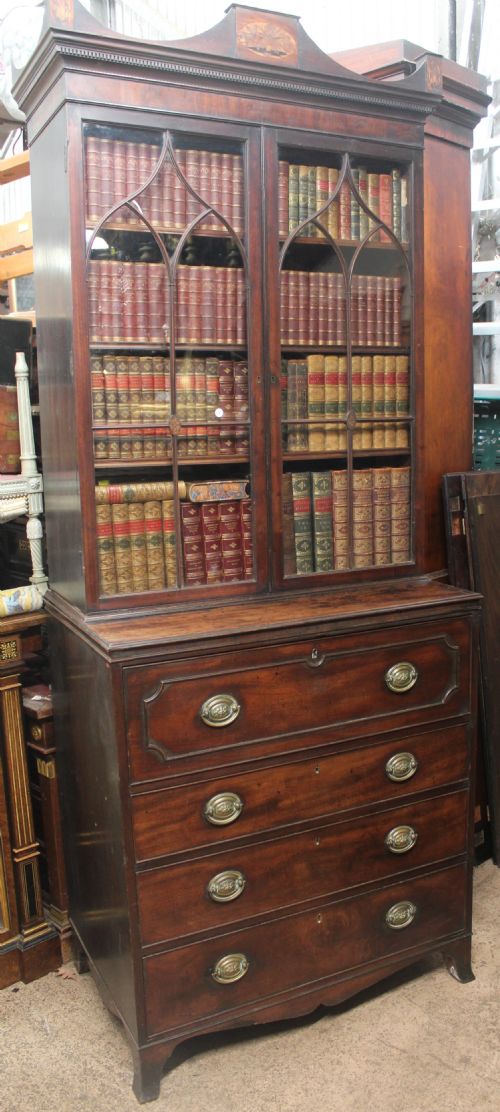
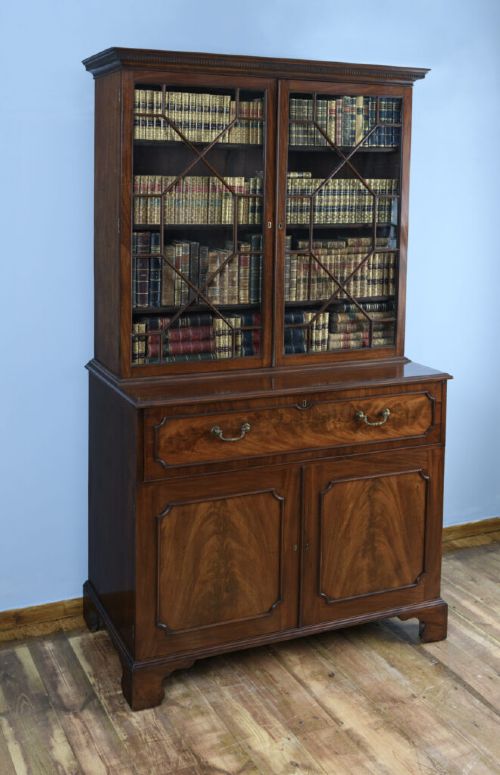
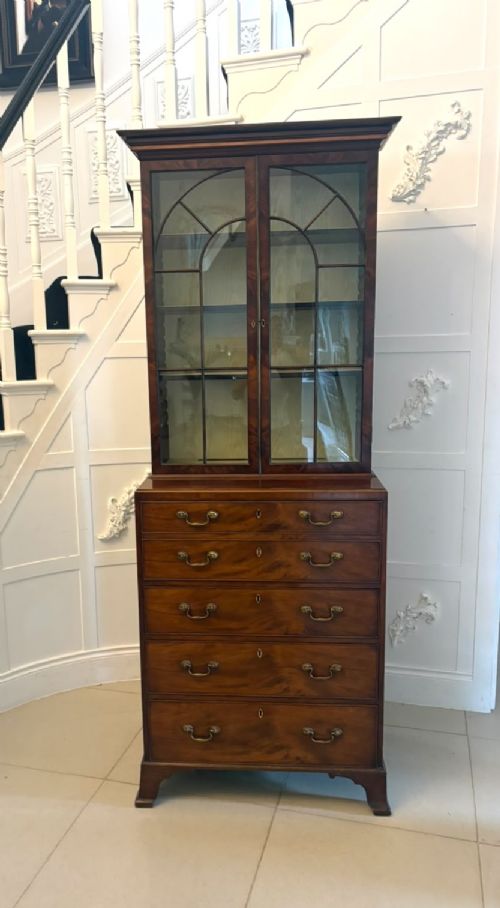
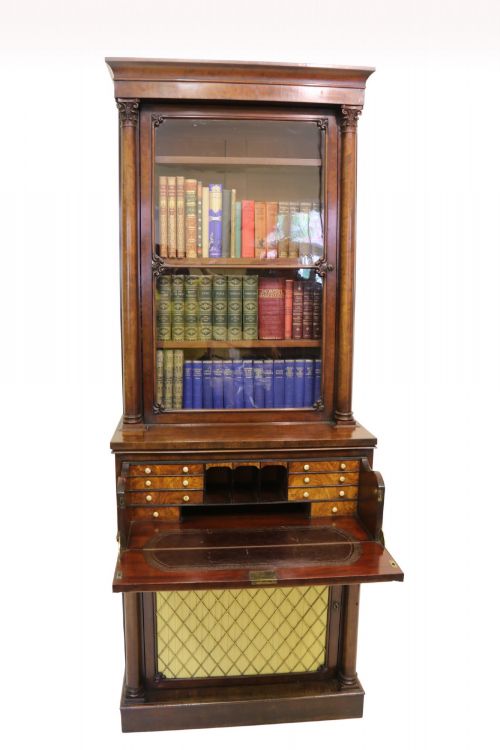


Vintage Mahogany Bureau Bookcase
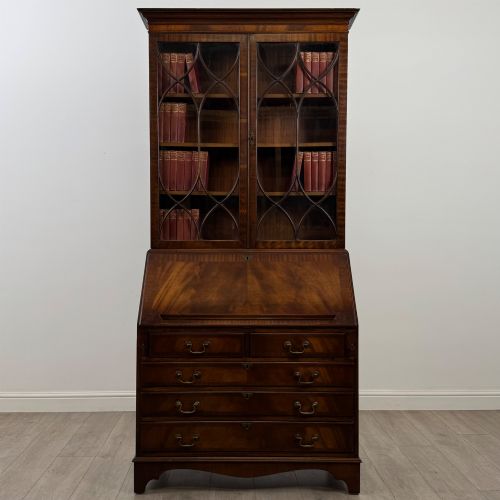
A vintage mahogany bureau bookcase combines a writing slope and a shelved library cabinet, offering stately storage and a practical writing surface for the home.
Vintage Mahogany Bureau Bookcase
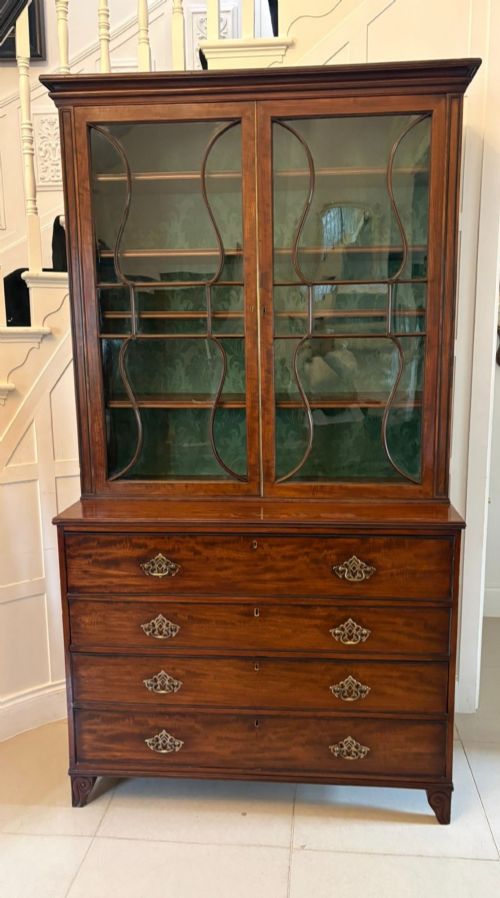
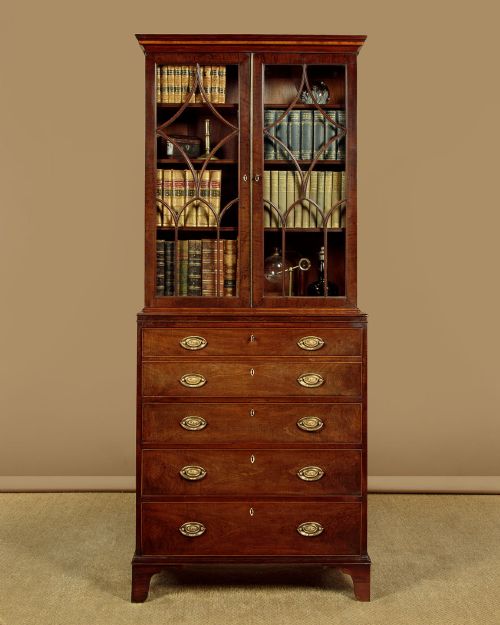
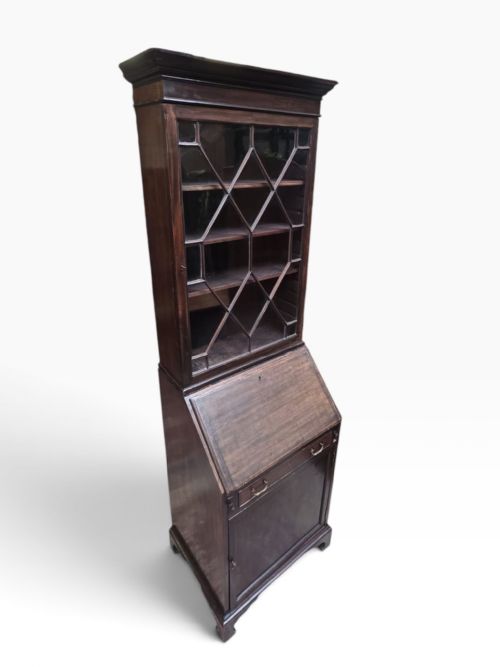
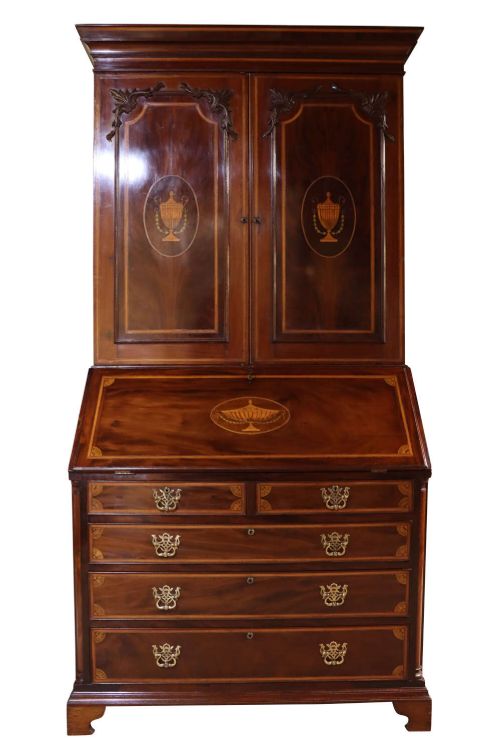
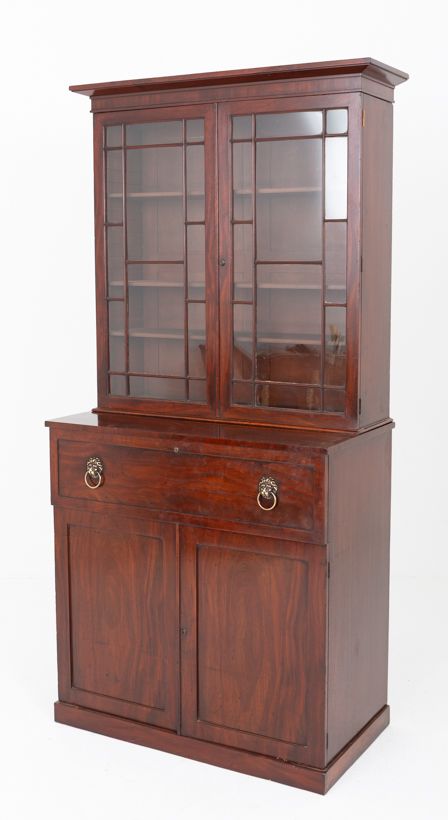
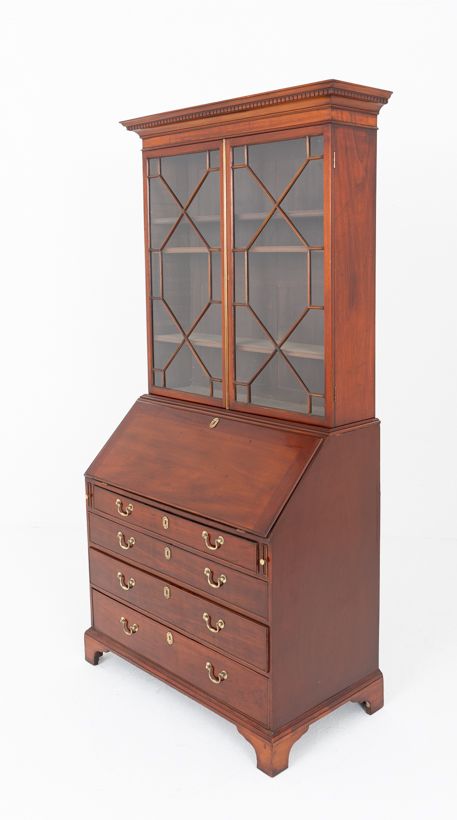
A vintage mahogany bureau bookcase is a substantial two-part item featuring a lower writing section with a fitted interior and an upper glazed cabinet for books. These pieces span multiple eras, appearing most frequently in Georgian, Regency, and Edwardian manifestations.
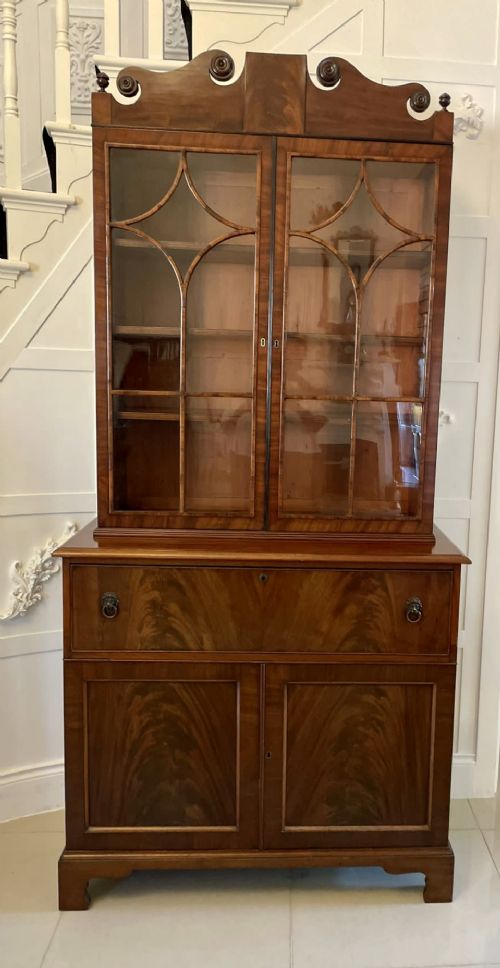
The lower section typically uses a fall front or a secretaire drawer that drops down to reveal pigeonholes and small drawers. Above this, glazed doors enclose adjustable shelving for a library collection.
Makers designed these cabinets for parlours, studies, and libraries, combining display space with concealed desk facilities. Buyers encounter various proportions, from tall Georgian formats to smaller Edwardian and Regency examples.
Materials and construction methods
Cabinet makers utilised solid mahogany and flame mahogany veneer over secondary timbers, often embellishing surfaces with subtle wood inlay and satinwood details. Brass hardware such as escutcheons, handles, and hinges provides functional contrast to the dark timber.
Listings feature mahogany, brass, glass, leather, satinwood, and oak alongside flame mahogany veneer and wood inlay.
Distinctions in quality and execution
Quality rests upon the selection of timber figures, where rich flame mahogany veneer and consistent grain patterning elevate a piece above plain stock. The refinement of the interior fitments, including secret compartments and finely dovetailed small drawers, signals superior workshop production.
Proportion and joinery integrity dictate overall standing, visible in the crispness of inlaid details and the precise alignment of heavy glazed doors. Maker attribution, particularly to established workshops like Gillows, distinguishes notable pieces from standard cabinet work.
Gillows of Lancaster
The Vintage Mahogany Bureau Bookcase Glossary
- Secretaire
- A drawer configured with a drop-down front that reveals a fitted writing desk interior. This mechanism conceals writing materials behind a single drawer facade.
- Astragal glazed
- Glass doors divided into smaller panes by narrow wooden strips. These framing bars create geometric patterns across the bookcase front.
- Flame mahogany
- Timber veneer cut from the fork of the mahogany tree to produce a flickering, fiery grain pattern. Cabinet makers used this figure on prominent exterior surfaces.
- Fitted interior
- The arrangement of small pigeonholes, drawers, and central compartments housed inside the bureau section. These compartments organise letters and stationery.
- Fall front
- A hinged writing flap that pulls down to a horizontal position for desk work. It closes vertically to conceal the interior workspace.
Vintage Mahogany Bureau Bookcase: Frequently Asked Questions
How do I use a bureau bookcase?
Drop the front flap or pull out the secretaire drawer to reveal the writing surface and pigeonholes for daily desk tasks. Store books and display items behind the upper glazed doors.
Keep the timber conditioned and position the piece away from direct heat sources to protect the mahogany veneer and polish.
How can I tell a Georgian piece from an Edwardian one?
Examine the proportions, timber selection, and construction details of the cabinet. Georgian examples often display deeper mahogany tones and hand-cut dovetails.
Edwardian reproductions and variations generally show lighter secondary woods and different interior construction methods beneath the surface veneer.
What is the difference between a bureau and a secretaire?
A traditional bureau uses a sloping fall front that hinges downwards to create a writing surface. The interior sits exposed once this slanted flap opens.
A secretaire incorporates a drawer facade that pulls forward and drops down on horizontal hinges, maintaining the exterior appearance of a chest or cabinet drawer.
Are the shelves adjustable?
Many period examples feature fixed wooden shelving systems built directly into the upper cabinet carcase. Later pieces often include adjustable timber supports.
Check the interior uprights inside the glazed doors to see if shelf pegs or rack strips allow for height adjustments.