



Georgian Standing Desk Cabinet
A georgian standing desk cabinet offers purposeful writing space raised on a stand, combining practical storage with classic proportions for daily utility.
Georgian Standing Desk Cabinet
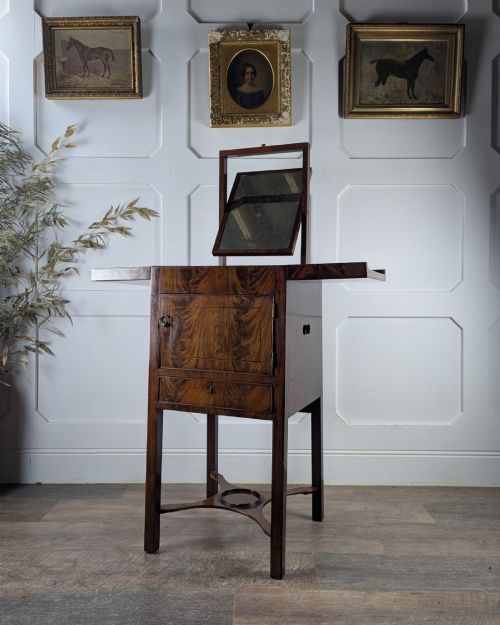
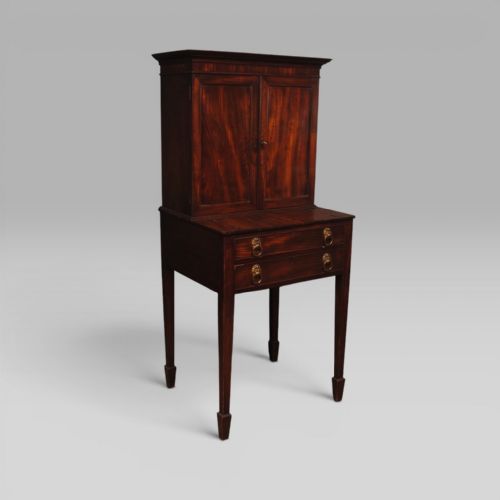
When you search for georgian standing desk cabinet, you encounter substantial writing furniture designed to elevate working surfaces off the floor. The selections span writing cabinets on stand, bureau cabinets, and escritoires dating from the eighteenth century onwards.
Most pieces combine a sloping desk compartment or fold-away writing surface supported by a dedicated frame or stand. Makers incorporated brass hardware, glazed upper display sections, and fitted interiors to organise correspondence and books.
Examples encompass regional variations like Irish Georgian pieces alongside revival styles produced in later decades. The forms prioritise enclosed storage paired with a stable working height.
Materials and construction
Construction relies heavily on figured timbers including mahogany, Cuban mahogany, burr walnut, and burr elm. Cabinetmakers selected these dense hardwoods for durability and rich grain patterns across large surfaces.
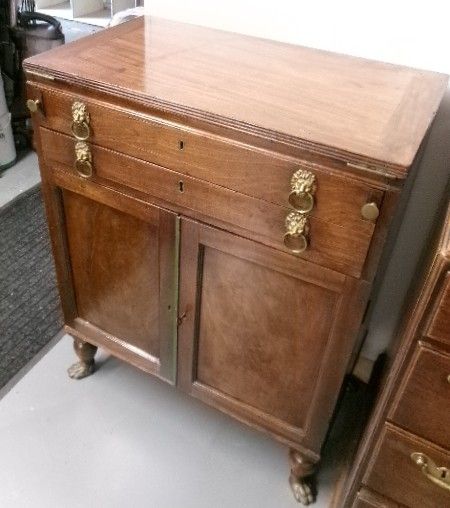
Decorative details feature satinwood inlay and cast brass elements such as paw feet. Interior drawers and compartments require precise joinery to fit neatly within the sloping desk lids and cabinet doors.
Cuban mahogany grew so prized for cabinetry that British ships transported the dense timber across the Atlantic specifically for fine furniture.
Judging the standard
Quality rests on the selection of timber figure, such as the depth of grain in Cuban mahogany or burr elm veneers. Superior examples display crisp inlay work and original brass mountings that complement the proportions of the stand.
Internal arrangement and the retention of fitted pigeonholes and small drawers distinguish finer pieces from simpler utilitarian variants. The integration between the upper cabinet and its supporting stand reveals the skill of the original workshop.
The Georgian Standing Desk Cabinet Glossary
- Bureau
- A sloping desk used for writing, typically enclosing small drawers and pigeonholes beneath the lid. This form sits upon a frame or forms the upper section of a cabinet.
- Escritoire
- A writing cabinet or desk containing compartments for paper and letters. The term denotes a refined piece often featuring a drop-front writing surface.
- Secretaire bookcase
- A tall item combining a fitted writing drawer or drop-front desk with enclosed shelving above. Glazed doors frequently protect the upper compartment.
- Stand
- The supporting frame or legs beneath a cabinet or desk. It lifts the primary writing or storage body off the floor.
- Satinwood inlay
- Decorative contrasting timber inserted into the primary wood surface in geometric or floral patterns. It provides pale, lustrous detail against dark hardwoods.
Georgian Standing Desk Cabinet: Frequently Asked Questions
What is a georgian standing desk cabinet?
It is a piece of writing furniture featuring an enclosed desk or cabinet section raised upon a supporting frame or stand. These items provide dedicated writing surfaces and storage for documents.
They emerged from eighteenth-century workshops and later revival periods, combining practical utility with formal cabinetwork.
How were these cabinets used?
Owners used them for private correspondence, record-keeping, and the storage of valued books or papers. The elevated design kept working surfaces away from cold draughts near the floor.
Fitted interior compartments allowed documents to be sorted securely behind locked doors or sloping lids.
How do I place one in a modern room?
These cabinets work effectively as focal points in studies, living rooms, or hallways where vertical storage is required. Their raised stands create a lighter visual footprint than heavy floor-standing desks.
Ensure adequate clearance around the piece if the desk lid folds down or pulls out for writing.
How do I identify the period?
Examination of timber types, secondary woods, and construction methods helps determine age. Eighteenth-century pieces exhibit traditional joinery and native or imported hardwoods typical of that era.
Revival pieces from later centuries often adopt earlier decorative motifs while retaining the distinct manufacturing traits of their own time.