
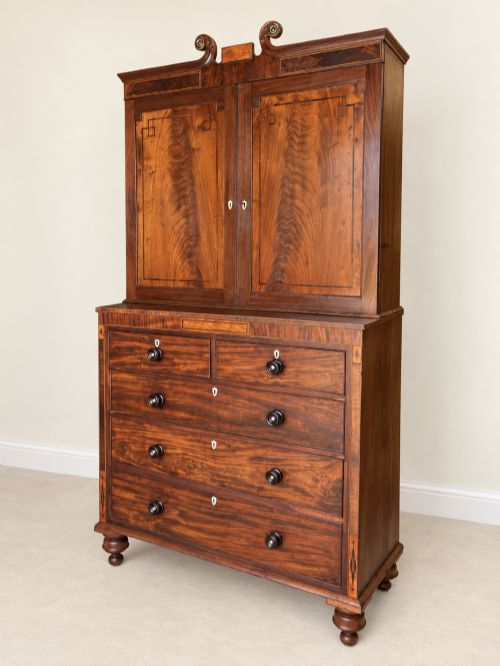
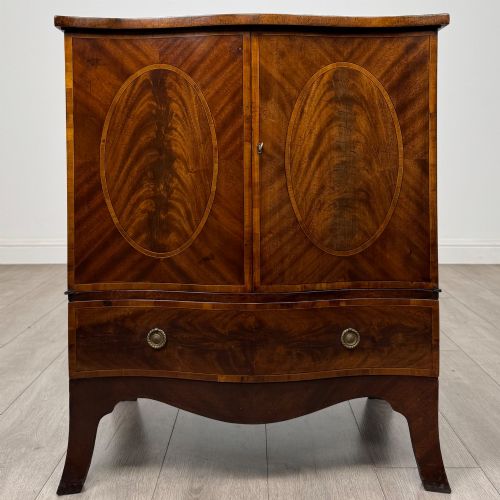
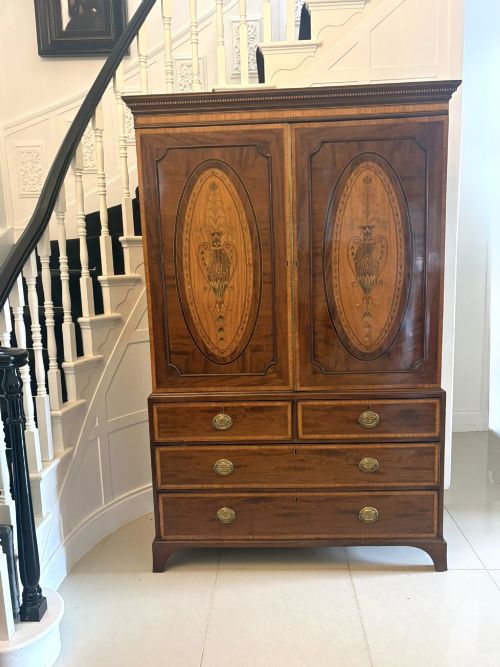
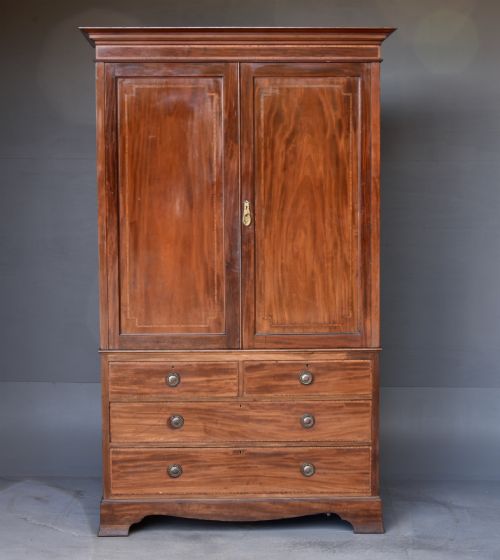
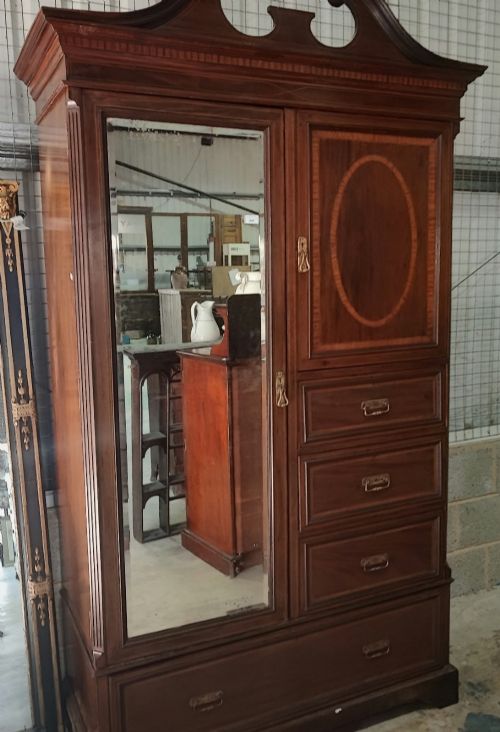
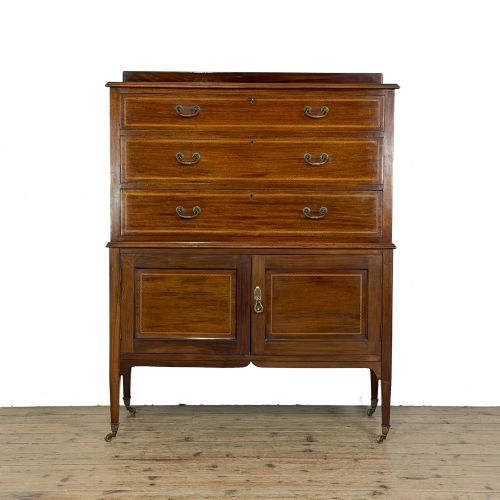
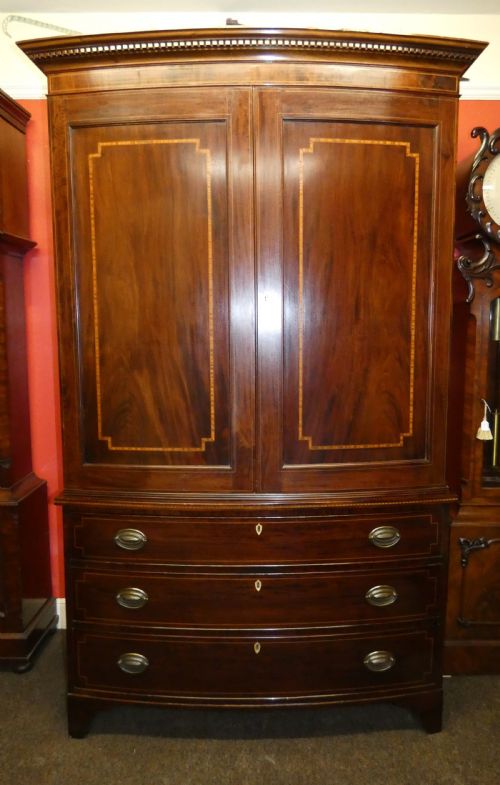
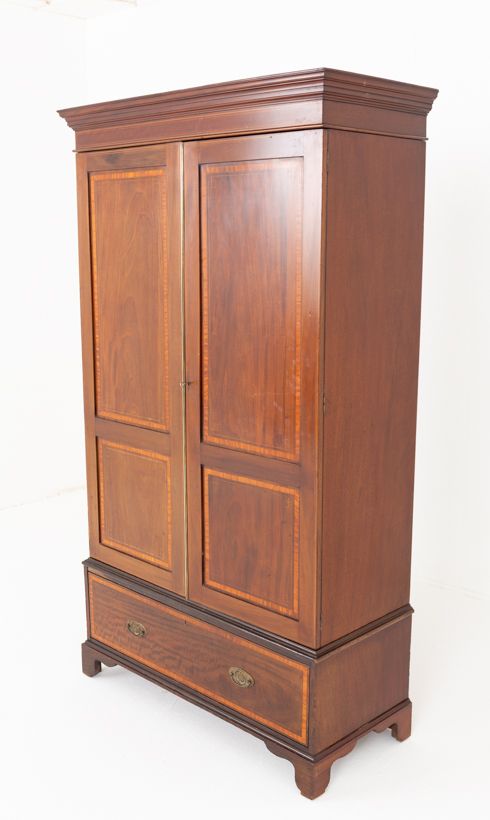
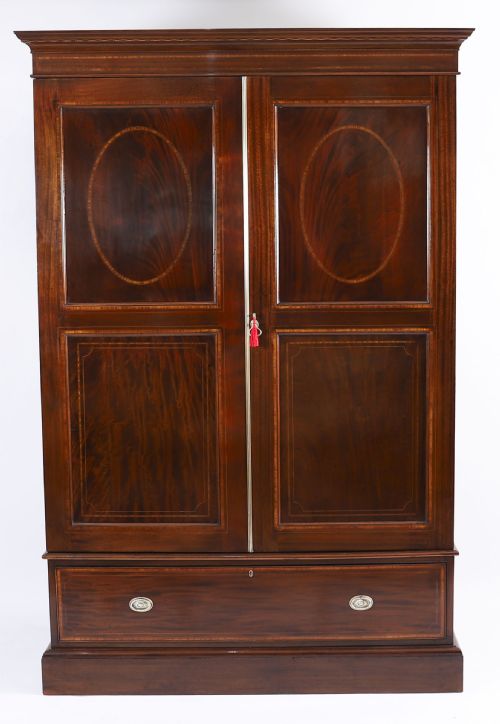
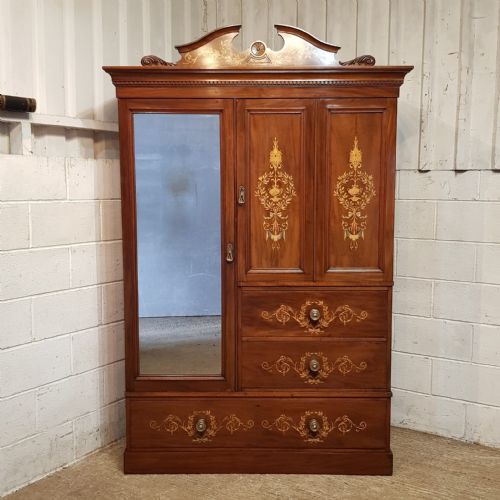
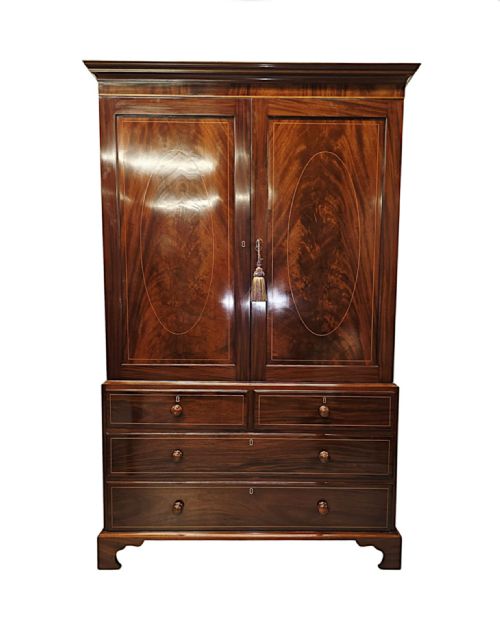
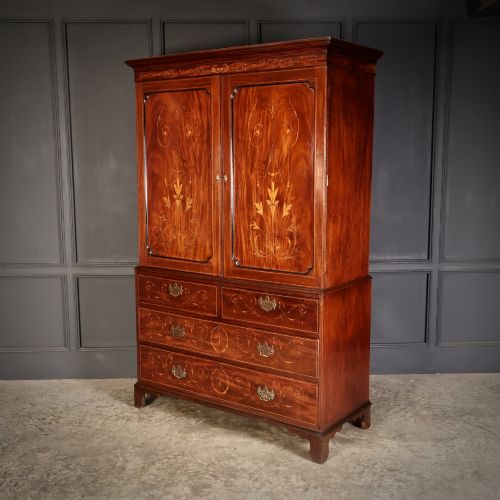

Inlaid Mahogany Linen Press
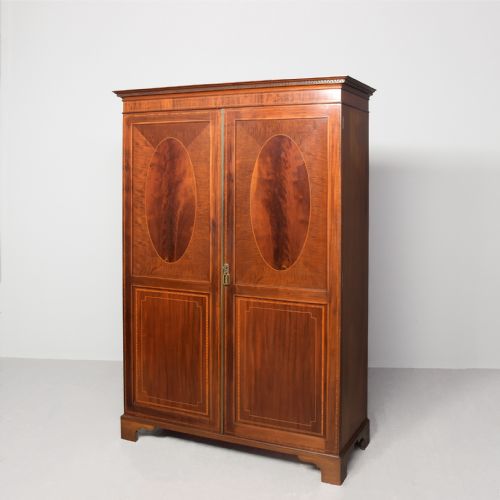
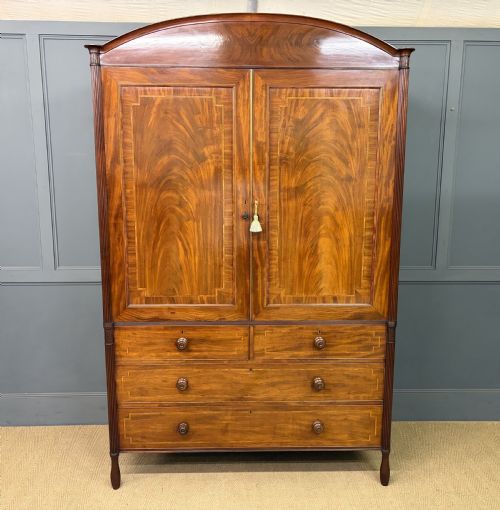
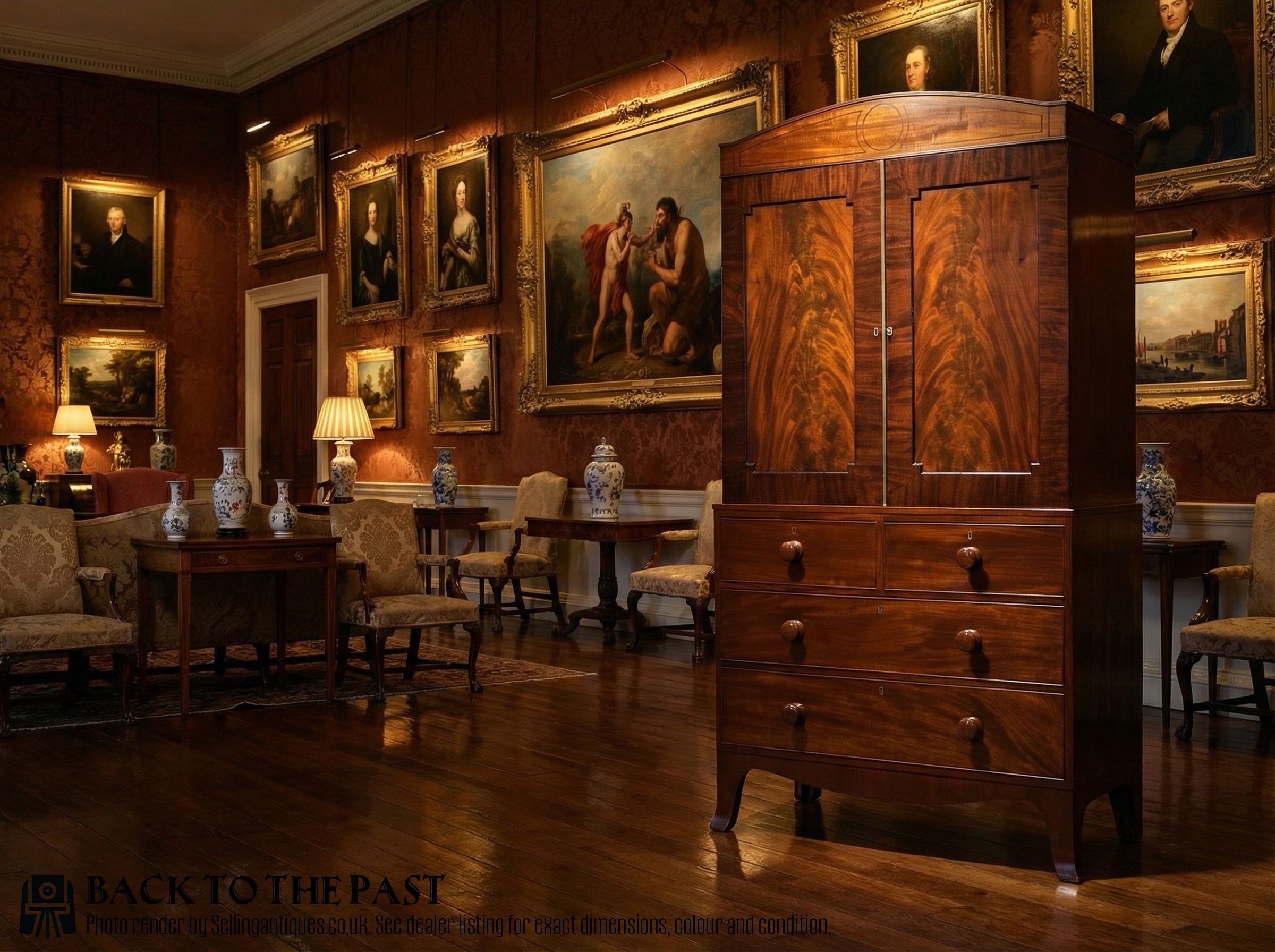
When you search for an inlaid mahogany linen press, you are looking at substantial case furniture designed to store folded textiles and garments.
Inlaid Mahogany Linen Press
The most common formats include George III examples with classical satinwood banding, alongside later Edwardian and Victorian iterations produced by prominent London cabinet makers.
Beyond standard double-door models, variations feature bow-fronted chests, breakfront facades, and compactum configurations designed for modern bedroom storage.
Timber Selection and Inlay Technique
Cabinet makers utilised dense primary timbers such as Cuban and flame mahogany, often paired with secondary woods like oak for internal drawer linings.
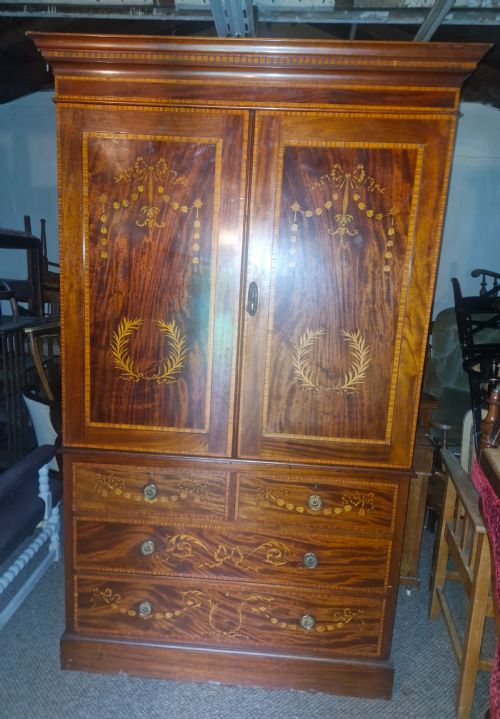
Decorative detailing relies on contrasting stringing and banding executed in satinwood, boxwood, and ebony, occasionally enhanced by marquetry motifs.
Inlaid Mahogany Linen Press Retail Price Guide 2026
Typical asking prices for inlaid mahogany linen press among the pieces listed under this phrase on Sellingantiques today, from the lower quarter to the upper quarter. They describe what is for sale here now, not the wider market.
Woods recorded across the inventory include Cuban mahogany, flame mahogany, walnut, oak, satinwood, boxwood, and ebony.
Distinguishing Features of Fine Craftsmanship
Superior pieces display deep figure in the mahogany veneers, matched grain patterns across drawer fronts, and precise, tight-fitting boxwood or satinwood inlay.
Internal construction dictates value, seen in dust boards between drawers, hand-cut dovetails on oak-lined interiors, and the original sliding linen trays operating smoothly.
maples & co·Edwards and Roberts·Druce & Co.·Shoolbred of London·James Shoolbred
The Inlaid Mahogany Linen Press Glossary
- Linen Press
- A tall piece of case furniture consisting of an upper section with sliding trays for storing folded sheets, positioned above a chest of drawers.
- Compactum
- A large, multi-compartment wardrobe combining hanging space, drawers, and shelving within a single unified case.
- Satinwood Banding
- A narrow strip of pale, exotic hardwood inlaid around the perimeter of drawer fronts or doors to create a geometric border.
- Sliding Trays
- Horizontal internal shelves fitted within the upper cupboard of a press, historically used to keep linens flat and organised.
- Swan-Neck Pediment
- An architectural top featuring a broken scroll curve centred on a plinth, frequently seen on larger Georgian case pieces.
Inlaid Mahogany Linen Press: Frequently Asked Questions
What is inside a linen press?
Traditional linen presses house a series of pull-out wooden trays behind the upper pair of doors, specifically built to hold folded bed linen and table cloths.
Lower sections typically comprise a chest of two short and two long drawers for additional clothing storage.
How do I date a mahogany press?
Dating relies on carcass construction, timber choice, and decorative style. Georgian pieces often show flame mahogany with fine satinwood stringing and bracket feet.
Edwardian versions frequently exhibit heavier proportions, glazed elements, or makers' stamps from firms like Maple and Co.
Can these be used as wardrobes?
Many presses retain their internal sliding trays, which suit folded garments or knitwear rather than long hanging clothes.
Some period examples were later converted by removing the upper trays to insert a modern hanging rail for full-length garments.
How do I care for antique mahogany?
Maintain stable humidity levels and keep the timber away from direct heat sources to prevent the mahogany veneers from lifting or splitting.
Apply a microcrystalline wax periodically to nourish the surface and preserve the polished lustre of the wood.