
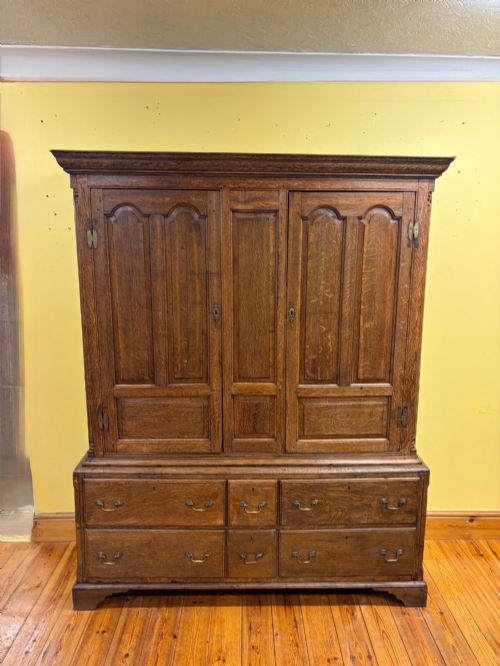
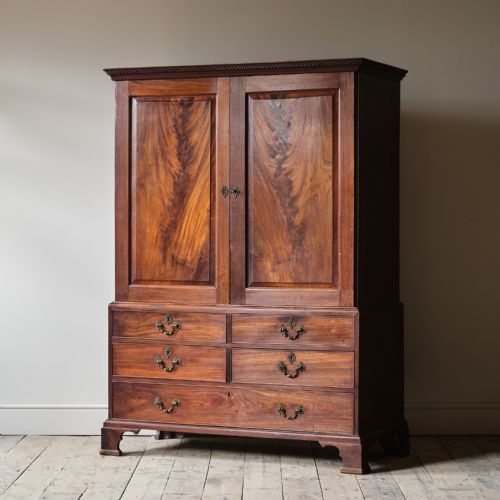
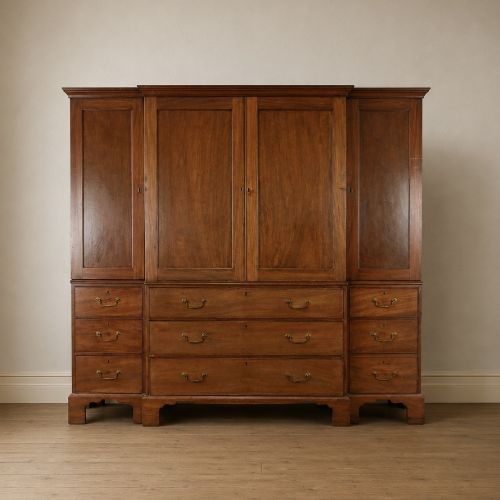
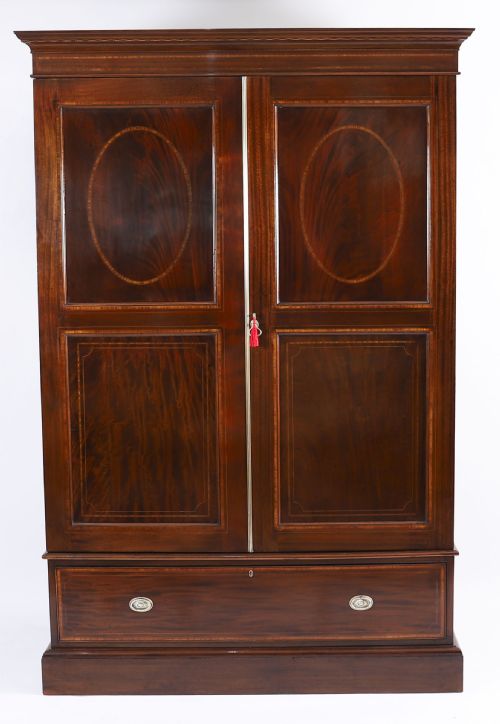




George III Clothes Press
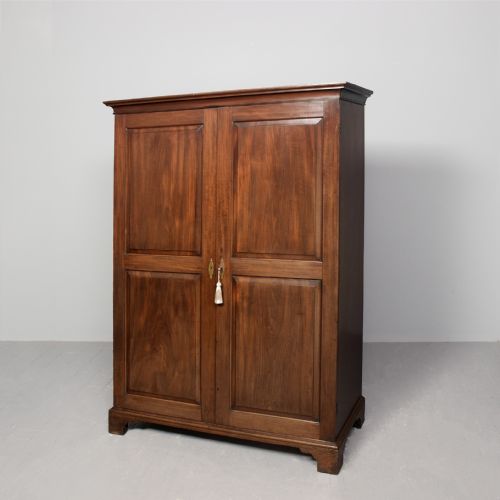
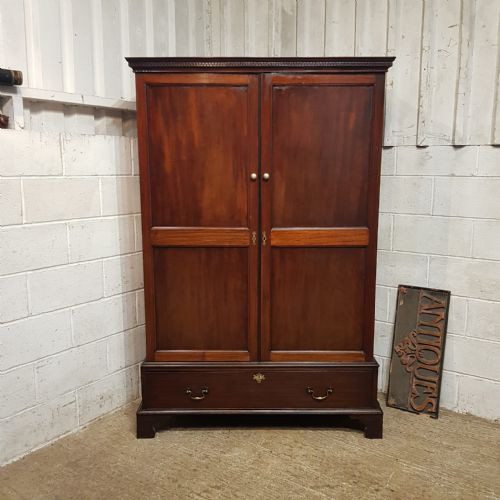
A george iii clothes press is a substantial storage piece built for folding textiles and hanging garments, combining architectural presence with fine cabinetmaking.
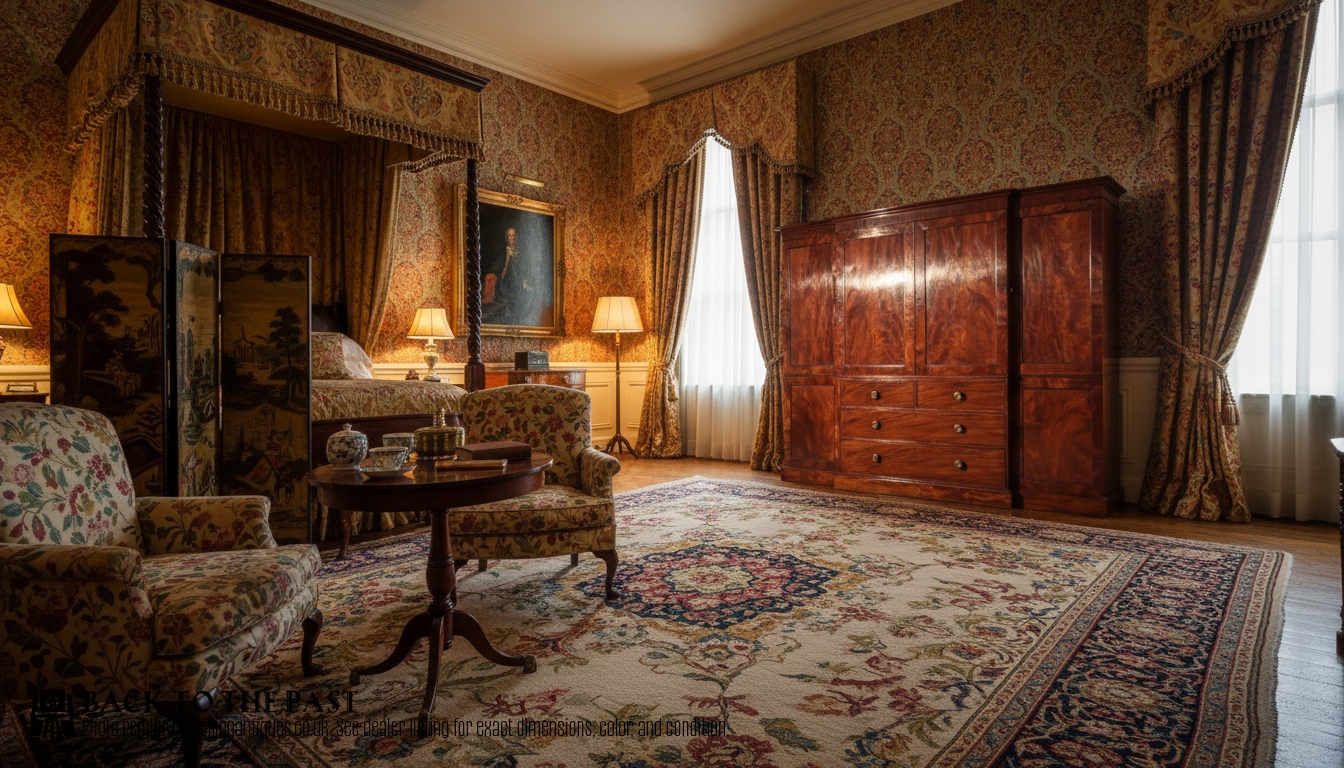
George III Clothes Press
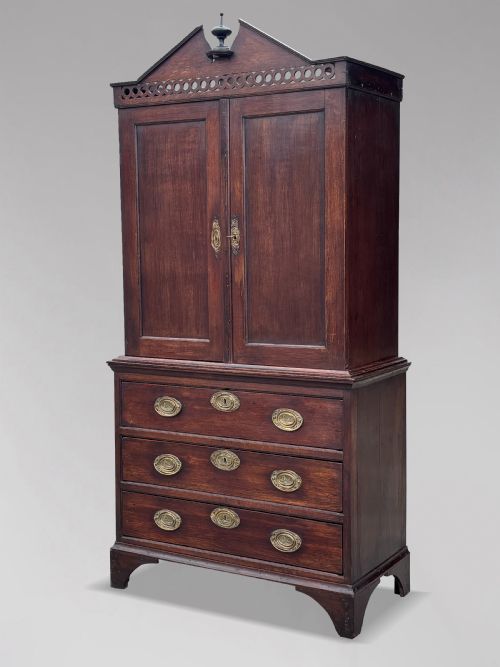
A george iii clothes press is a form of tall furniture designed primarily to store linen and clothing, usually split into an upper section with doors enclosing sliding trays and a lower chest of drawers. The examples found here span the Georgian period alongside later revival interpretations, reflecting both original eighteenth-century craftsmanship and subsequent nineteenth-century reproductions.
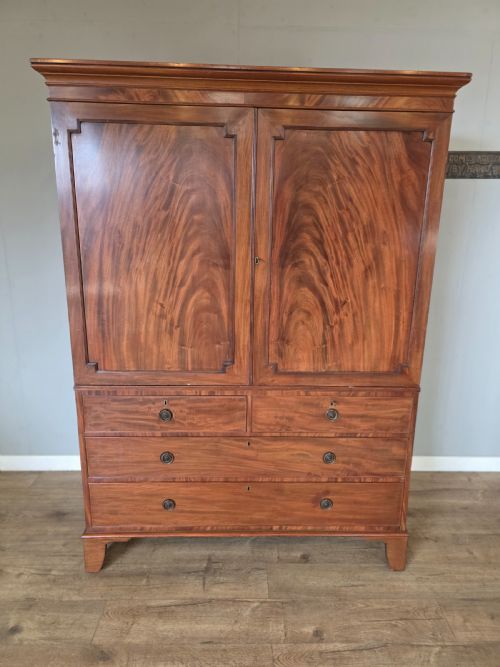
The most common form on this page pairs panelled double doors above a base of multiple drawers, though breakfront configurations and dwarf variants also appear. These pieces serve practical storage needs while bringing substantial timber presence to a room, functioning as linen presses, gentleman's wardrobes, and estate cabinets.
What varies in quality
The distinction between standard utility pieces and finer examples rests on timber selection and decorative restraint. Figured flame mahogany veneers, crisp boxwood stringing, and balanced proportions elevate certain cabinets well above plain oak housekeepers' cupboards.
Cabinetmaking precision dictates overall quality, visible in how smoothly sliding trays operate and how seamlessly secondary woods are integrated into the drawer linings and internal framing.
George III Clothes Press Retail Price Guide 2026
Typical asking prices for george iii clothes press among the pieces listed under this phrase on Sellingantiques today, from the lower quarter to the upper quarter. They describe what is for sale here now, not the wider market.
Listings feature mahogany, oak, satinwood, and brass hardware, spanning Georgian periods through to Edwardian and later revivals.
Gillows
The George III Clothes Press Glossary
- Clothes press
- A tall storage cabinet historically used for flattening and storing linen and garments before the dominance of the modern hanging wardrobe. These pieces typically combine internal sliding trays with a chest of drawers base.
- Breakfront
- A cabinet design where the central section projects forward from the flanking wings, creating a pronounced architectural rhythm across the front elevation. This configuration appears on larger wardrobes and estate cabinets.
- Sliding tray
- A shallow wooden shelf housed inside the upper doors, designed for stacking folded shirts and linens rather than hanging them. They slide horizontally on runners within the interior carcass.
- Swan-neck pediment
- A broken scroll top cornice rising from the outer corners toward a central plinth or finial, frequently seen on grander eighteenth-century case furniture. It adds considerable height and classical dignity to the upper facade.
- Satinwood banding
- A narrow strip of pale exotic timber inlaid around the borders of drawer fronts and door panels to create sharp tonal contrast against darker mahogany.
George III Clothes Press: Frequently Asked Questions
How do I care for mahogany furniture?
Keep wooden pieces away from direct sunlight and rapid temperature fluctuations to prevent the mahogany veneers and solid timbers from drying out or splitting. Regular dusting with a dry, soft cloth maintains the finish without needing heavy polishes.
Apply a microcrystalline wax sparingly once or twice a year if the timber appears dry, buffing it gently to preserve the natural sheen of the polish.
Where were these pieces used in a home?
Historically, a gentleman's press or housekeeper's cupboard stood in a bedroom, dressing room, or dedicated linen store to house folded garments and household textiles. Their substantial proportions meant they were built as permanent fixtures for principal rooms.
Today, they function well in larger bedrooms or hallways as statement storage furniture that conceals modern belongings behind period doors.
How do I distinguish eighteenth-century pieces from later revivals?
Examine the secondary woods inside drawer linings and backboards, as eighteenth-century makers typically used native timbers like oak or pine alongside hand-cut dovetail joints. Construction methods, tool marks, and the ageing of the timber provide clear physical evidence of period manufacture.
Revival pieces from the nineteenth and twentieth centuries often display machine-sawn elements, standardised fixings, and different interior framing techniques even when replicating earlier Georgian styles.