




George III Mahogany Press
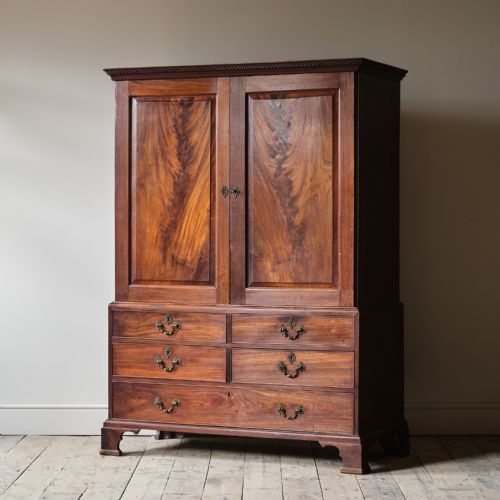
A george iii mahogany press is a substantial storage piece built to hold household textiles and attire, combining architectural presence with fine cabinetmaking.
George III Mahogany Press
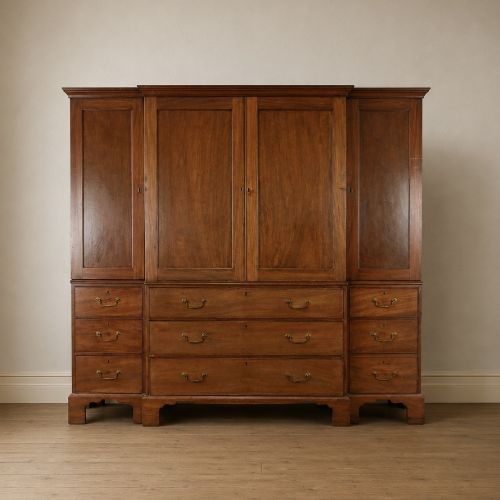
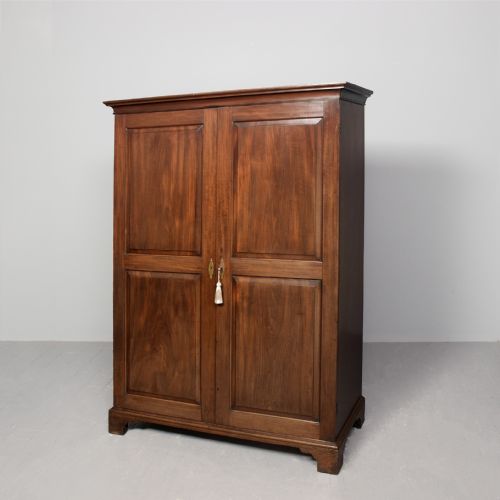
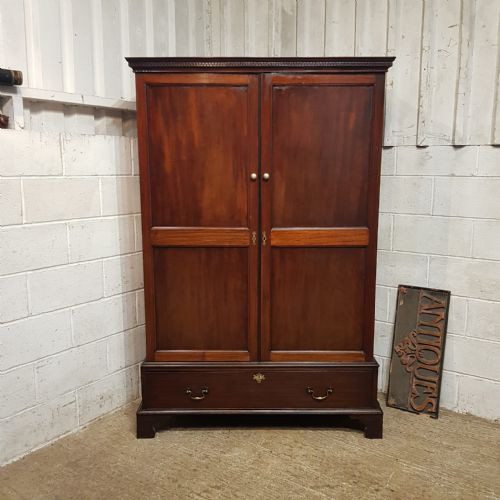
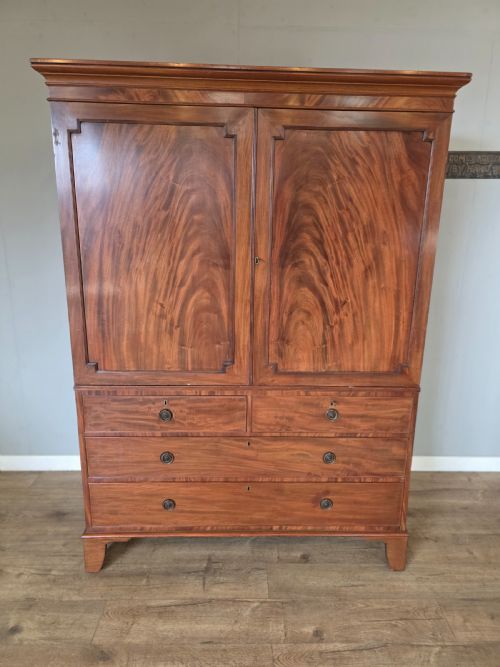
When you search for a george iii mahogany press, you encounter large dual-purpose furniture designed for Georgian homes to store linen and clothing. The upper section generally encloses sliding trays behind panelled doors, while the lower section forms a chest of drawers.
The format varies from tall breakfront wardrobes to dwarf cupboards and low presses. Most examples on this page date from the eighteenth century through the early nineteenth century, constructed with serious utility in mind.
Cabinets often incorporate secretaire drawers or bookcase tops, reflecting the adaptable nature of domestic storage during the period.
How they were made
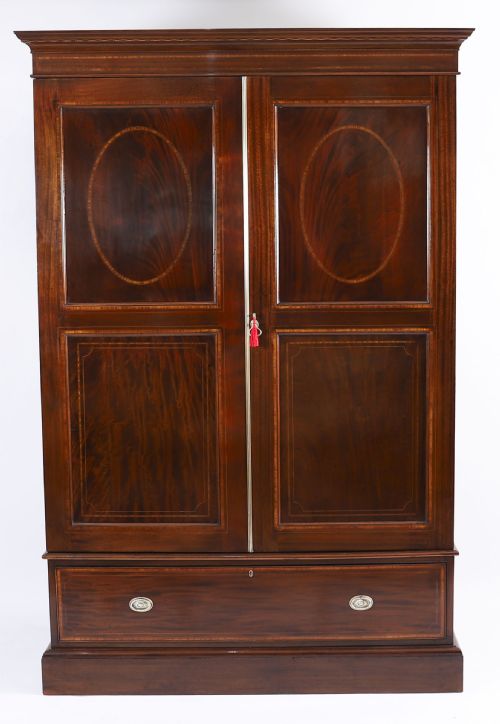
Cabinetmakers utilised solid timbers alongside veneers, selecting flame and curl mahogany to cover broad surfaces with rich natural figuring. Workshops frequently applied satinwood banding, boxwood inlay, and marquetry to accent the primary mahogany grain.
Internal sliding trays, known as slides, were constructed to hold folded textiles flat and accessible without creasing. Mechanical elements such as internal screw mechanisms and brass hardware provided sturdy operation for heavy timber doors.
Several presses retain deep sliding trays specifically sized for storing folded household linen without modern crease lines.
What varies in quality
The distinction between standard utility cupboards and exceptional pieces rests in timber selection and proportion. Grain matching across large doors and drawer fronts demonstrates the cabinetmaker's deliberate planning.
Refined architectural details, including swan-neck pediments, intricate cornice mouldings, and precise stringing, elevate the visual weight of the piece. Untouched internal fittings and original brass handles preserve the historical integrity of the cabinet.
Gillows·Thomas Bradshaw
The George III Mahogany Press Glossary
- Linen press
- A tall storage cabinet featuring upper doors enclosing pull-out trays above a chest of drawers. This form evolved specifically for household textiles before fitted wardrobes became standard.
- Flame mahogany
- A veneer cut from the fork of the mahogany tree where the branch meets the trunk. It creates a distinctive, fiery ripple pattern across flat panels.
- Breakfront
- A piece of furniture where the central section projects forward from the flanking wings. This architectural layout creates depth and shadow on large wardrobes.
- Secretaire
- A desk drawer that pulls out and drops down to reveal a writing surface and small pigeonholes. It adds a hidden workspace within the upper or lower chest.
- Swan-neck pediment
- An arched cornice curving upward and outward, typically ending in a scroll motif. It crowns the top of formal eighteenth-century cabinets.
George III Mahogany Press: Frequently Asked Questions
What is the difference between a press and a wardrobe?
A traditional press contains shallow sliding trays behind the upper doors for storing folded textiles. A wardrobe relies on vertical hanging space with rails for garments.
Many examples listed combine both functions or have been altered internally over the centuries to accommodate modern hangers.
How do I care for mahogany timber?
Keep the wood away from direct heat sources and strong sunlight to prevent the mahogany veneer from drying out or fading. Apply traditional beeswax polish sparingly to maintain the natural lustre of the surface.
Avoid using modern silicone sprays, which can penetrate old finishes and damage the timber grain over time.
Will a large press fit into a modern room?
These pieces were built on a domestic scale for Georgian bedrooms and dressing rooms, but their height and depth require careful ceiling and doorway measurement. Most tall examples separate into upper and lower sections for transport.
Dwarf presses and low cupboards offer a lower profile while retaining the traditional internal slide configuration.
How do I identify a Georgian period piece?
Examine the construction methods visible inside the drawers and carcass, such as hand-cut dovetails and timber backboards. Secondary woods like oak and deal frequently line the interior of eighteenth-century cabinets.
Stylistic markers like bracket feet, cockbeaded drawer edges, and flame mahogany veneers point directly to the late eighteenth-century workshop traditions.