

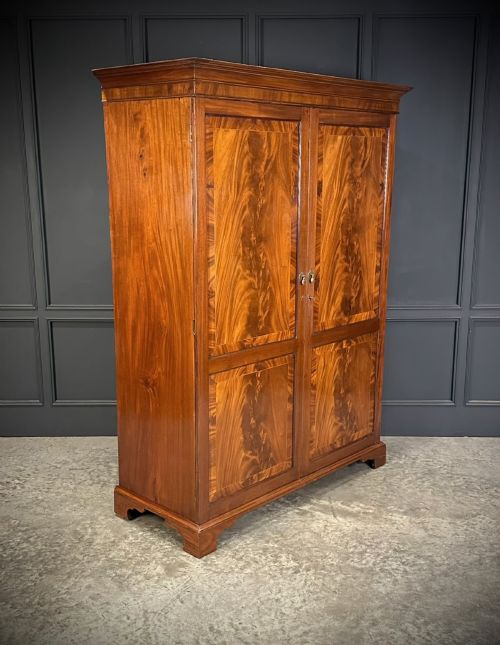
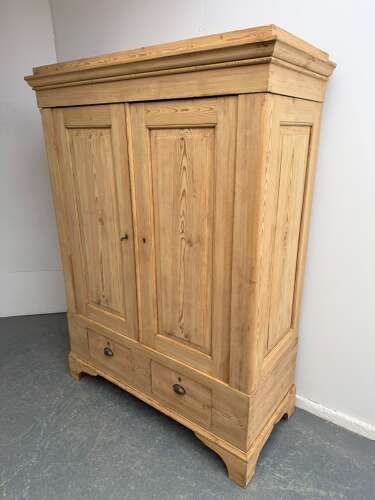
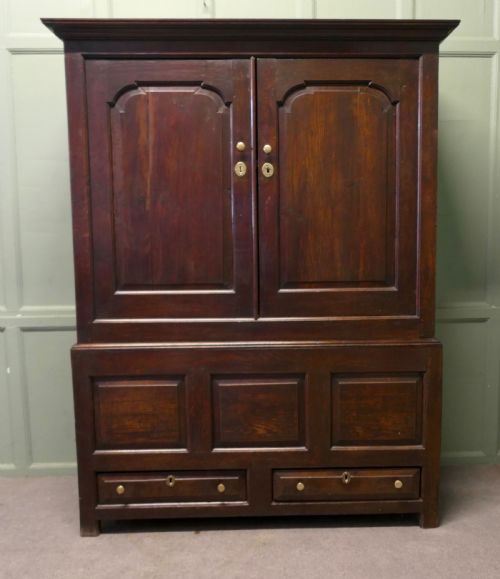
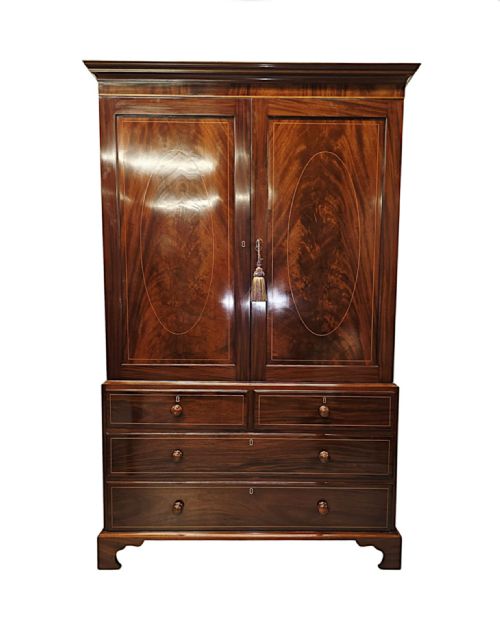
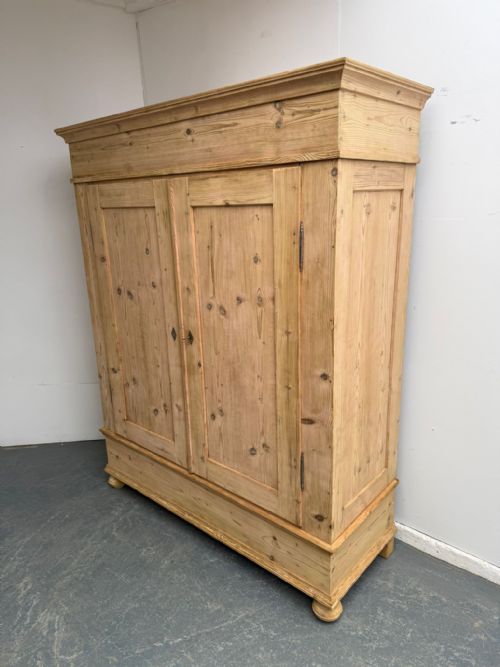
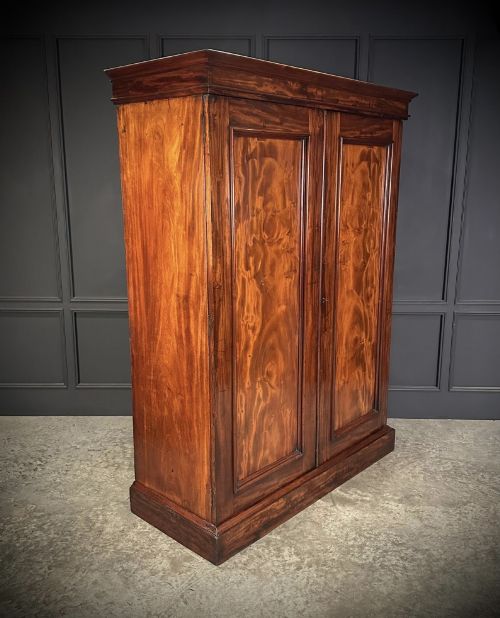
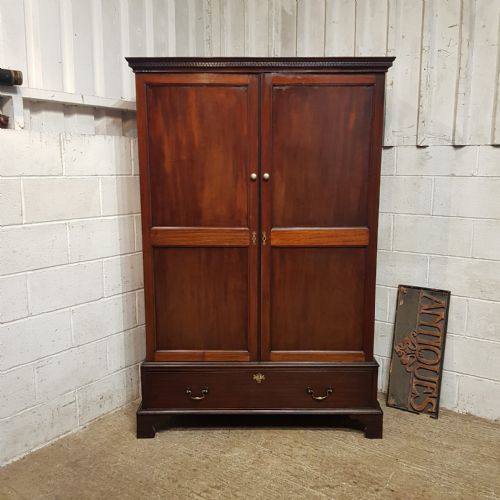
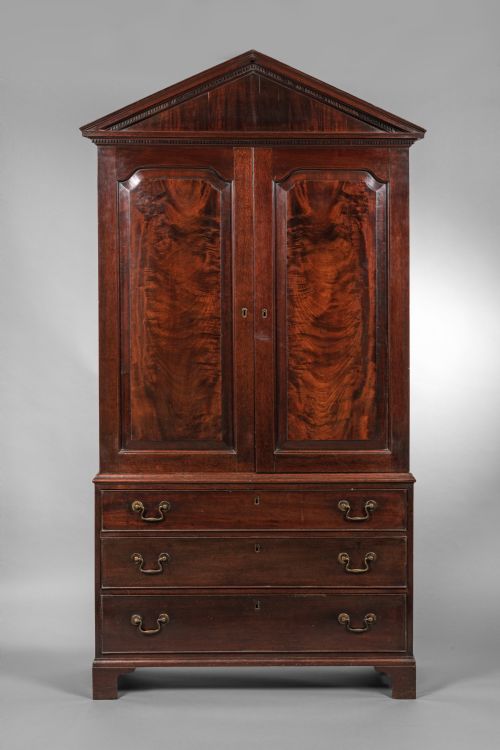
Georgian Double Wardrobe
A georgian double wardrobe offers generous proportions and timber patination, built to house garments in grand bedrooms.
Georgian Double Wardrobe
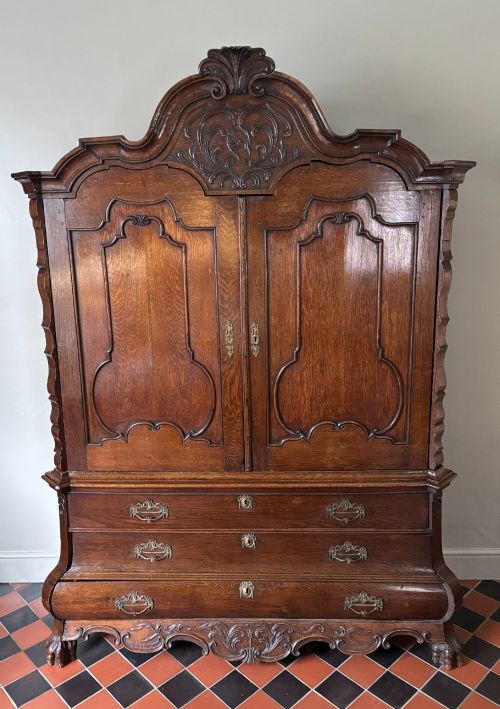
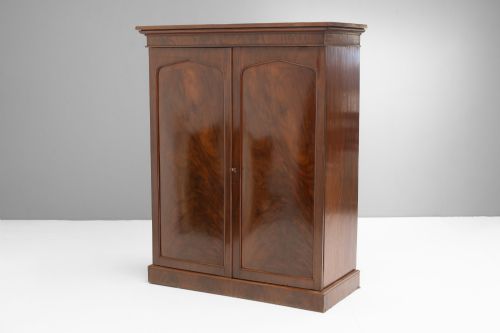
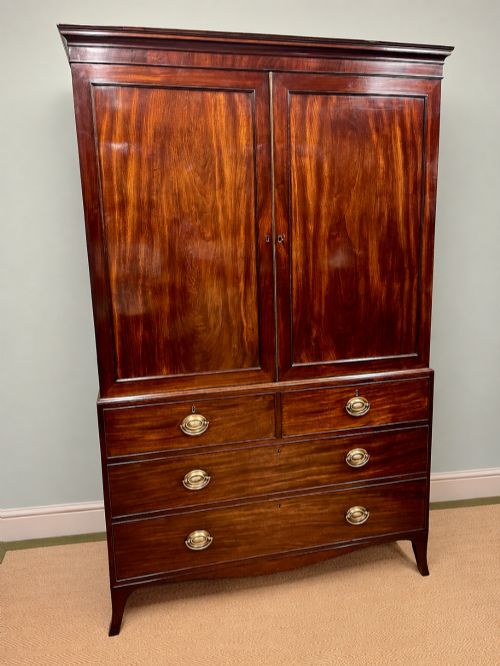
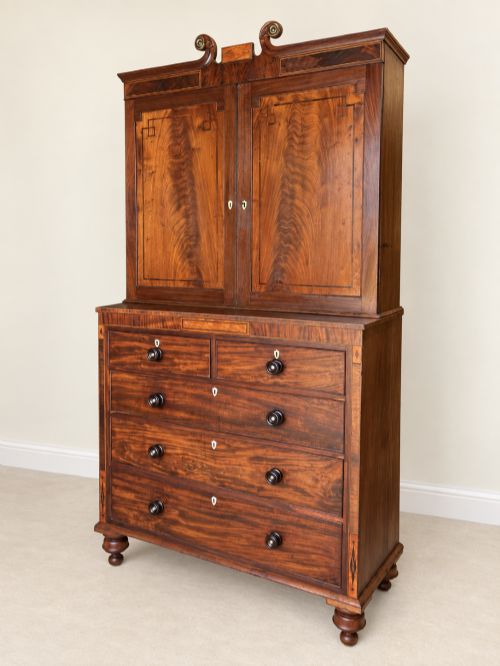
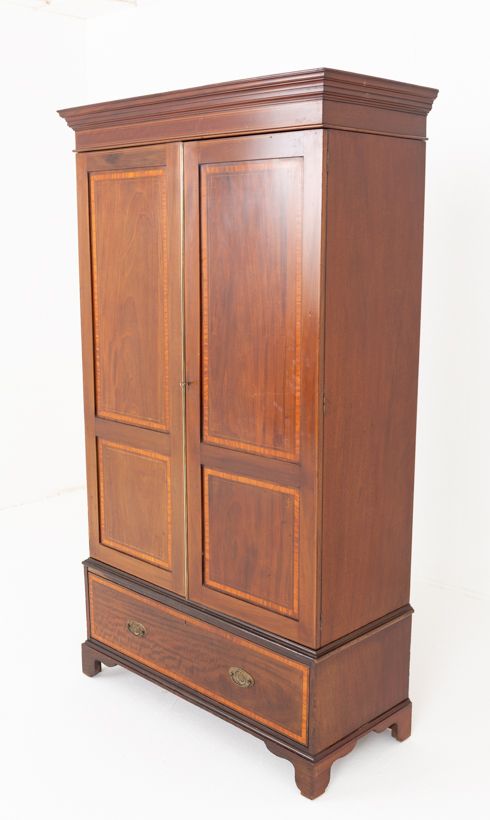
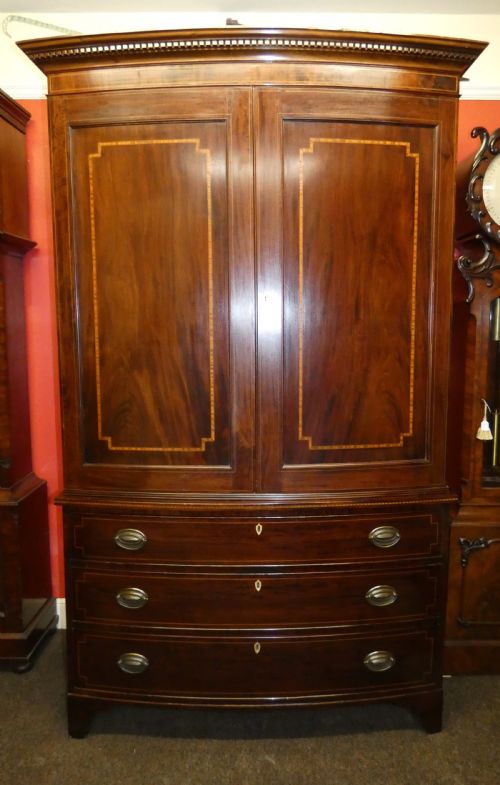
A georgian double wardrobe encompasses timber storage pieces designed with twin doors, often appearing alongside linen presses and cupboards in the archive. These forms emerge from periods spanning the 18th century, Regency, and 19th century eras.
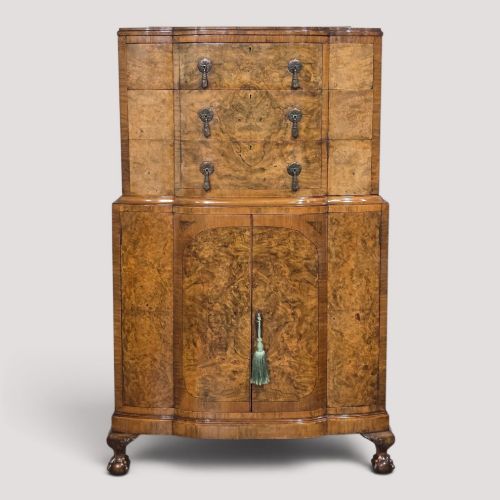
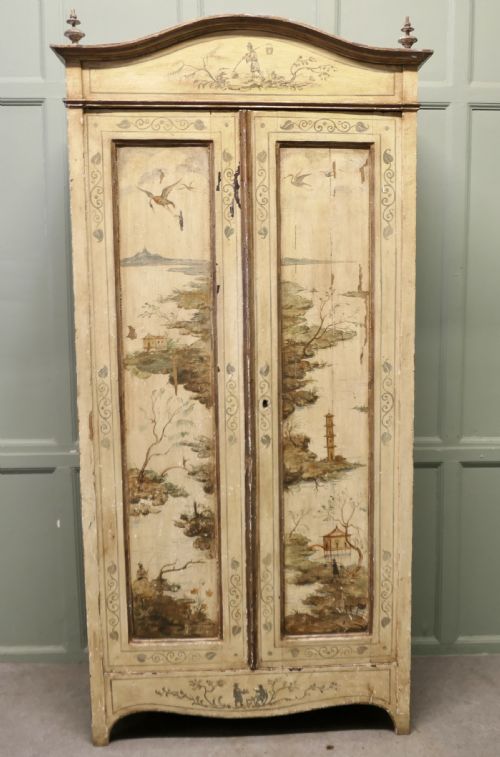
The mahogany version dominates the selection, frequently displaying solid timber, flame mahogany veneer, or cross-banded details. Oak and pine examples also occur, ranging from panelled constructions to painted finishes.
Buyers encounter regional variations such as knockdown carcasses for transport, alongside formal George III designs and later revival pieces. The double configuration provides substantial internal volume compared to single door cupboards.
How They Were Made
Cabinet makers utilised dense hardwoods like mahogany, burr walnut, and oak, selecting flame veneer for decorative door panels and drawer fronts. Brass hardware served for handles and escutcheons, whilst iron appeared in structural fixings.
Joinery methods included panelled door construction and frame assembly, allowing large carcasses to be dismantled into sections for movement. Surface treatments involved wax polish, traditional paint, and marquetry inlay.
Georgian Double Wardrobe Retail Price Guide 2026
Typical asking prices for georgian double wardrobe among the pieces listed under this phrase on Sellingantiques today, from the lower quarter to the upper quarter. They describe what is for sale here now, not the wider market.
Listings feature mahogany, oak, pine, and satinwood constructions alongside painted finishes.
What Varies in Quality
The sophistication of the timber selection dictates visual merit, separating plain boards from richly figured flame mahogany or intricate marquetry. Original brasses and uncompromised surface patination elevate an example above later alterations.
Structural integrity depends on the precision of the panel assembly and the survival of internal sliding shelves or hanging space. Finer pieces demonstrate restraint in inlay and proportion rather than excessive ornament.
The Georgian Double Wardrobe Glossary
- Linen Press
- A storage piece featuring upper sliding trays enclosed by doors, positioned above a chest of base drawers. This form frequently converts to hanging space.
- Flame Mahogany
- A wood veneer cut from timber fork branches to create a distinctive flickering flame pattern. Cabinet makers reserved this for primary display surfaces.
- Marquetry
- Decorative veneer work forming pictorial or geometric patterns using various coloured woods. Craftsmen applied this technique to drawer fronts and door panels.
- Cross-banded
- A border technique where thin strips of veneer are laid perpendicular to the grain of the central panel. This frames the perimeter of doors and drawers.
- Compactum
- A multi-functional wardrobe containing various internal divisions such as drawers, sliding trays, and hanging sections. It combines several storage needs into one footprint.
Georgian Double Wardrobe: Frequently Asked Questions
Will a georgian double wardrobe dismantle for delivery?
Many period examples utilise knockdown construction principles, allowing the main carcass panels to separate for transport through narrow stairwells and doorways.
Buyers should verify the specific assembly method with the dealer before purchase, as solid non-dismantling carcasses require adequate clearance.
How do I maintain the wood surface?
Regular application of bees-wax nourishes the timber and preserves the natural lustre accumulated over centuries. Avoid placing storage pieces near direct heat sources to prevent wood splitting.
Keep humidity levels stable within the room to protect both solid boards and delicate veneer surfaces from lifting.
What is the difference between a linen press and a wardrobe?
A linen press traditionally houses sliding linen trays in the upper section above base drawers, whilst a wardrobe focuses primarily on vertical hanging space for garments.
Many historic presses undergo internal conversion to hanging cupboards to suit modern clothing requirements.
How do I identify a George III piece?
George III pieces date from the reign spanning the late 18th and early 19th centuries, characteristically displaying quality mahogany construction and proportion.
Details such as bracket feet, cornice mouldings, and hand-cut dovetail joints help distinguish this period from later Victorian revivals.