



Marquetry Linen Cupboard
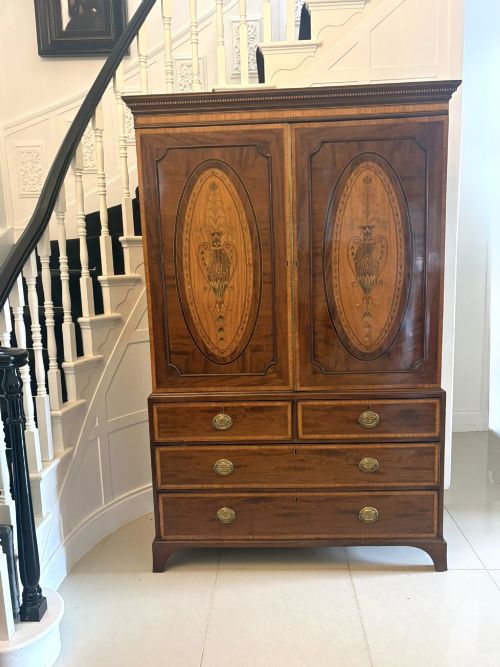
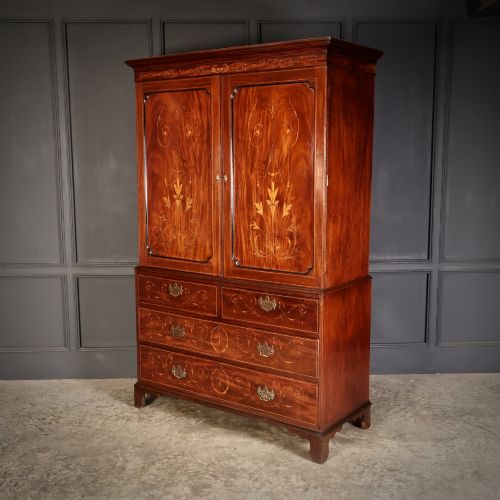
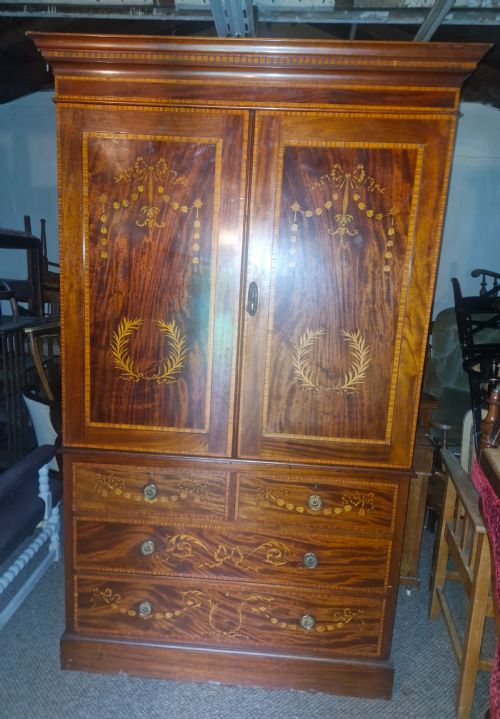
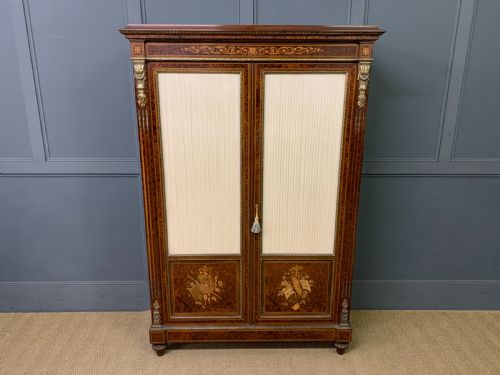
A marquetry linen cupboard is a capacious timber storage piece decorated with elaborate floral and geometric wood inlays.
Marquetry Linen Cupboard
A marquetry linen cupboard serves as a substantial storage vessel, historically designed to house household textiles, garments, and linens. These pieces combine utilitarian hanging or shelving space with decorative cabinet doors, often sitting atop a chest of drawers.
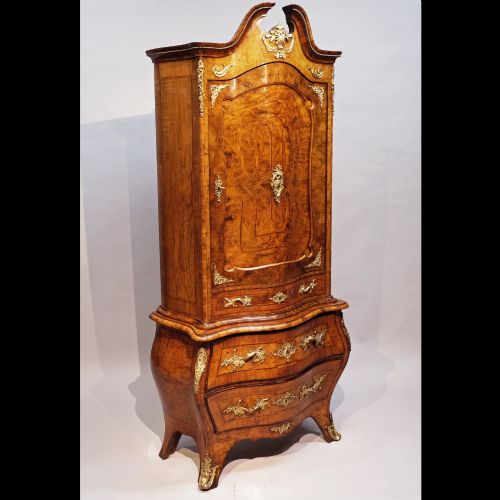
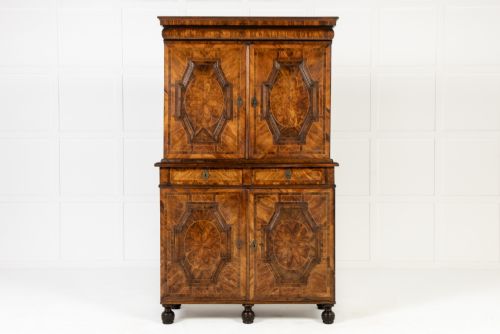
The versions most frequently encountered on this page originate from the Georgian and Edwardian periods, alongside Dutch Baroque and Victorian reinterpretations. Makers utilised native and exotic timbers to construct these monumental items, which range from classic English mahogany presses to heavily figured Dutch walnut cabinets.
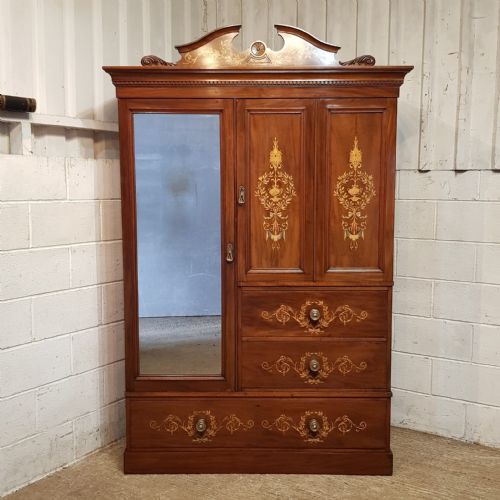
Forms vary from traditional linen presses and housekeepers' wardrobes to cabinets on chests and combination wardrobes. Each iteration balances structural rigidity with elaborate surface decoration, making them central focal points in large domestic interiors.
How they were made
Cabinetmakers constructed the primary carcasses of these cupboards using solid timbers such as mahogany, walnut, and fruitwood, often applying fine veneers over stable secondary woods. Structural integrity relied on robust joinery and heavy panel construction to support the internal sliding trays or hanging space.
The signature marquetry decoration involved precision-cutting thin sheets of contrasting woods, including satinwood, boxwood, and rosewood, to form pictorial floral or geometric motifs. These delicate inlays were then set meticulously into recesses within the primary wood surface and secured with hot animal glue.
Additional embellishments often included cast brass hardware, such as escutcheons and drop handles, which complemented the rich tones of the figured timber. Surfaces were traditionally finished with multiple coats of shellac or wax, rubbed down by hand to achieve a deep lustre.
Current listings feature pieces spanning the seventeenth century through to the Edwardian era, constructed from walnut, mahogany, and rosewood.
What varies in quality
The refinement of the marquetry work dictates the upper tier of quality, distinguishing crisp, tightly fitted botanical inlays from simpler, coarser block-cut patterns. Superior pieces demonstrate exceptional control over grain direction and colour variation within the contrasting woods.
Selection of primary and secondary timber also separates standard production from elite workshop output. The finest examples employ deeply figured walnut, rich Honduras mahogany, or densely grained amboyna veneers across all visible surfaces, including the sides and interior fittings.
Structural complexity and the survival of original fitted interiors, such as sliding linen trays and original brass hardware, elevate a piece's standing. Master cabinetmakers ensured that massive wardrobes and cabinets retained balanced proportions and smooth operational mechanics despite seasonal timber movement.
Druce & Co.·Edwards & Roberts
The Marquetry Linen Cupboard Glossary
- Marquetry
- The art of applying thin veneers of various woods to a structural carcass to create decorative pictorial patterns. This technique differs from simpler inlay by covering the entire surface with a fitted jigsaw of contrasting timber.
- Linen press
- A tall storage piece featuring upper cabinet doors enclosing sliding trays for folded textiles, mounted over a chest of base drawers. They evolved from simple board chests into grand architectural furniture.
- Oyster veneer
- Slices cut transversely across small branches or roots of trees to produce circular or oval patterns resembling oyster shells. This decorative surface treatment gained popularity during the late seventeenth century.
- Breakfront
- A cabinet or wardrobe design where the central section projects forward from the flanking wings. This architectural arrangement creates dynamic shadow lines across the facade.
- Escutcheon
- A protective plate surrounding a keyhole, frequently cast from brass and shaped to complement the surrounding timber or marquetry design. It prevents the wood from splitting around the lock.
Marquetry Linen Cupboard: Frequently Asked Questions
What is a marquetry linen cupboard?
A marquetry linen cupboard is a large storage cabinet decorated with intricate wood-inlaid patterns, typically featuring upper doors and lower drawers.
Historically utilised for storing household linens and garments, these pieces combine grand scale with highly decorative surface artistry.
How do I date a linen cupboard?
Dating relies on examining the timber species, construction techniques, and stylistic markers such as hardware and foot design.
Georgian and Victorian pieces display distinct shifts in veneer choice and carcass depth, helping to establish their period of origin.
Where were these cupboards used?
These pieces traditionally stood in bedchambers, dressing rooms, or large hallways to store domestic textiles and clothing.
Their substantial presence made them important architectural elements within the private quarters of grand homes.
How do I care for antique marquetry?
Maintenance involves keeping the timber away from direct heat sources and sudden humidity fluctuations to protect the delicate veneer.
Regular application of traditional wax helps nourish the wood and maintain the polish of the marquetry surface without sealing it permanently.